Britain’s Largest Prehistoric Structure Unearthed Near Stonehenge
New research has uncovered what may be the largest known prehistoric structure in Britain — an enormous ring of deep pits that stretches around the Durrington Walls site, not far from Stonehenge. This groundbreaking discovery was made possible through detailed investigations led by the University of Bradford, with major scientific input from the University of […]
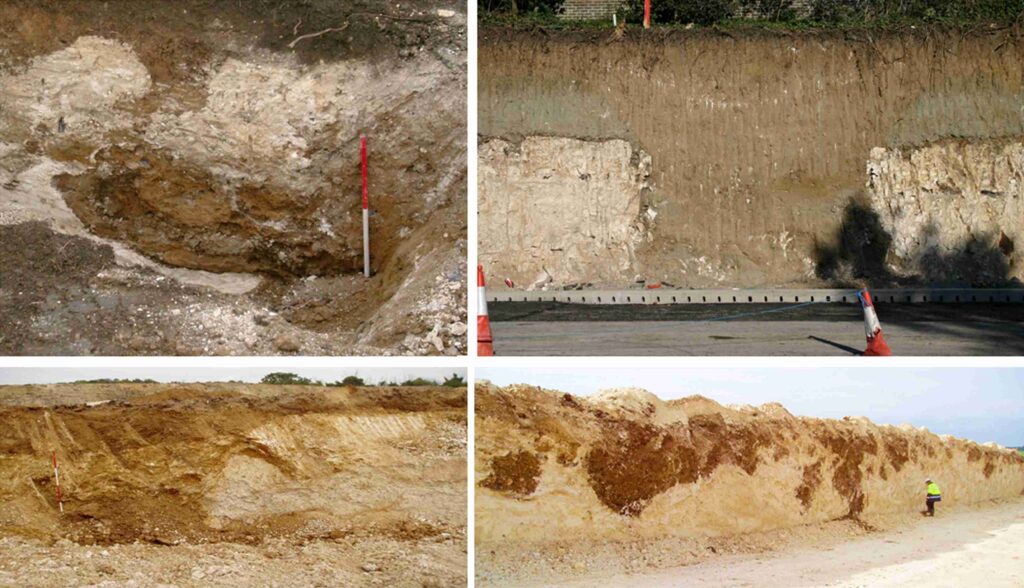
Near the Stonehenge landmark, archaeologists have discovered what appears to be the largest prehistoric structure ever found in Britain. This groundbreaking find consists of a ring of 16 deep pits, each approximately 33 feet wide and 16 feet deep, encircling the Durrington Walls site located near Ebbsfleet, Kent. The discovery was made possible through meticulous investigations coordinated by the University of Bradford and supported by scientific expertise from the University of St. Andrews.
The pits, each dug to a depth of about 16 feet, form a circle that significantly expands the known area of the Durrington Walls complex. Using advanced dating techniques, researchers have determined that the pits were excavated and later refilled around 2480 B.C. This period corresponds to the latter part of the Stone Age, a time when large stone and earth monuments were being constructed.
The investigation team employed advanced underground scanning and environmental testing to ascertain when and how the pits were created. Their findings conclusively indicate that the pits were purposefully constructed by human beings over 4,000 years ago. The consistent material used to fill the pits and their symmetrical arrangement suggest that the pits were meticulously planned and assembled by a community that likely had organized leadership.
Tim Kinnaird, who led the dating efforts at the University of St. Andrews, noted that soil analysis revealed a uniform pattern, suggesting the pits were filled around the same period. This level of coordination points to a society capable of managing large-scale construction projects and possessing a profound understanding of their environment.
Traces of ancient plant and animal life found in the soil provide additional insights into the monument's location within the broader landscape. Despite the many ancient landmarks found near Stonehenge, the precision and scale of this circular formation are remarkable. The precise placement of each pit over a vast area indicates a high level of expertise in terrain knowledge and planning for the time.
Richard Bates, a geophysics expert from the University of St. Andrews, emphasized that the alignment of the pits across such a wide area required advanced surveying skills not typically attributed to prehistoric communities.
This discovery is revolutionizing our understanding of the Neolithic period in Britain. It suggests that the people living near Durrington Walls had the resources and social organization to undertake massive and complex construction projects, adding a new chapter to the ancient history of Britain.
Written by urgent.news from Colombia One's reporting — not their text. Machine-written — may contain errors; check the original before relying on it.