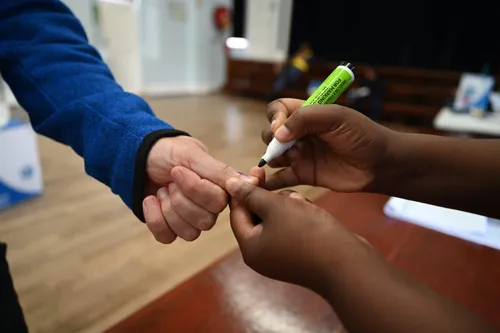
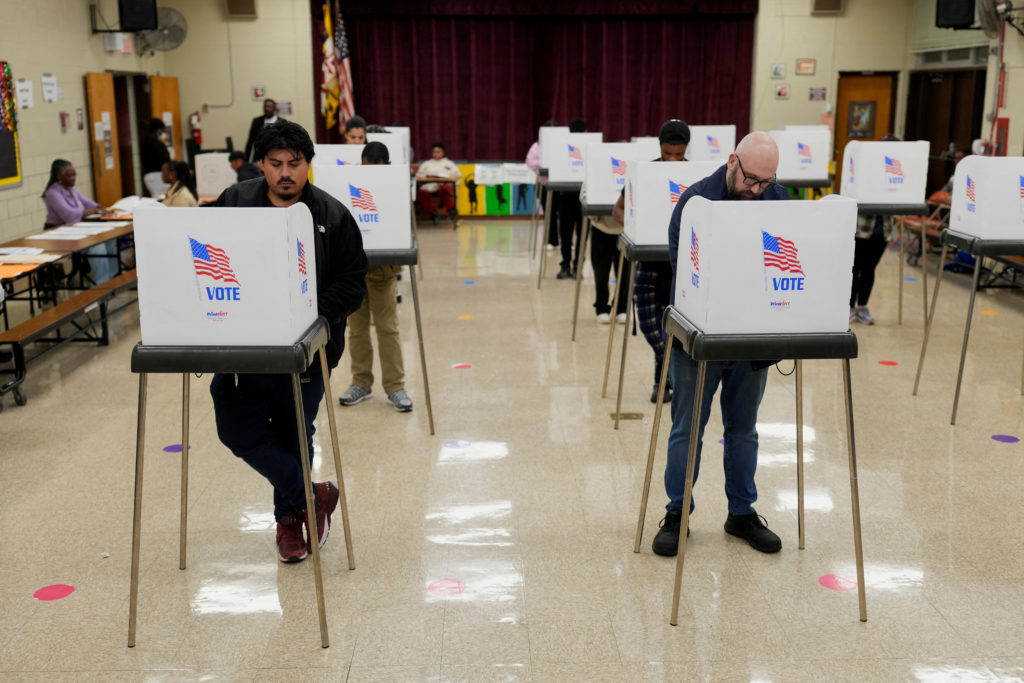
Battle of the metros: Close contests for eThekwini, Joburg, Cape Town and Ekurhuleni
Established parties face an increasingly fractured political landscape across key South African metros, where voter frustration over persistent service delivery failures and rising support for newer contenders make coalition governance nearly inevitable.
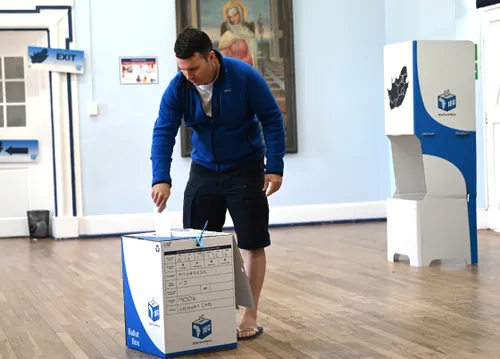
As South Africans vote on Wednesday, the ANC and DA are locked in tight races across several major South African metros, with the MK Party emerging as a strong contender in eThekwini. Recent polling reveals varying opinions across the cities. The ANC and DA are neck and neck in Johannesburg, Ekurhuleni, Nelson Mandela Bay, and Buffalo City, while the DA enjoys 46% support in Cape Town.
MK Party polling stands at 55% in eThekwini, with the EFF securing 27% in Buffalo City. ActionSA holds double-digit support in Johannesburg, Tshwane, and Ekurhuleni. Ipsos, the polling firm behind the survey, emphasizes that these figures should not be seen as a prediction of the final election outcome; they are based on 3,600 interviews conducted in June and July.
Dr Siyabonga Ntombela, a UKZN political analyst, identifies Johannesburg, Ekurhuleni, and Nelson Mandela Bay as metros where the contest could be particularly close. The election results could have significant implications for coalition governments, with the final council composition potentially being as crucial as which party comes out on top.
In eThekwini, the ANC faces a significant challenge in rebuilding public trust, with issues like housing, water shortages, infrastructure, sanitation, electricity disruptions, and unemployment contributing to public dissatisfaction. The ANC's struggle is compounded by its loss of an outright majority in 2021 and an increasingly fragmented political landscape, as demonstrated by the 2024 Ward 34 by-election where an independent candidate defeated established parties.
Low voter turnout in this by-election means it cannot be considered a reliable predictor of the 2026 election. Similarly, the experiences of Wards 34 and 71 illustrate how voter satisfaction can wane when residents do not see improvements in their living conditions. The election also highlights the rise of independent candidates and other political parties, which further challenges the dominance of established parties.
Voters demand greater accountability, consistent community engagement, and transparency regarding service delivery challenges. They expect representatives to remain accessible, address concerns, and provide credible explanations for service delays. Ultimately, the ANC's challenge goes beyond winning votes; it involves rebuilding trust by delivering on campaign promises related to housing, infrastructure, and essential municipal services.
In Johannesburg, local government elections are taking place amid widespread dissatisfaction with municipal service delivery, declining political trust, and increased competition between established parties and new political alternatives. Reports from Alexandra and Eldorado Park reveal ongoing problems including unreliable water and electricity, sewage spills, uncollected rubbish, deteriorating infrastructure, overcrowded housing, unemployment, and crime.
Although the ANC administration claims financial progress, such as settling electricity debts and approving a substantial budget, it acknowledges that service delivery remains inadequate. The challenge lies in translating financial and administrative gains into tangible improvements for residents. The political contest in Johannesburg is becoming more fragmented, with the MK Party, led by mayoral candidate Bongani Baloyi, aiming to capitalize on public dissatisfaction by promising infrastructure improvements, financial reviews, and housing changes.
In Cape Town, the local government elections involve 55 political parties and 10 independent candidates, creating an increasingly crowded political landscape. The DA, seeking a second term under Geordin Hill-Lewis, faces challenges from the ANC, EFF, Patriotic Alliance, GOOD, and other smaller parties. In Cape Town, residents in areas such as Manenberg and Delft have raised concerns about deteriorating housing, inadequate maintenance, unreliable electricity, poor municipal services, and lack of responsiveness from elected officials.
In Delft, households have gone months without electricity, highlighting the extent of basic service failures.
Written by urgent.news from IOL's reporting — not their text. Machine-written — may contain errors; check the original before relying on it.