Baidu’s new AI simulator gives robotaxis a crash course in rare road hazards
For autonomous vehicles, the hardest lessons to learn are the ones that can test the skills of even the most experienced human drivers: an errant cyclist darting through a red light, or an animal bolting into oncoming traffic from behind a corner. The Chinese tech giant Baidu has developed a new AI-driven simulator to prepare its Apollo robotaxis for just such rare but high-stakes road hazards,…
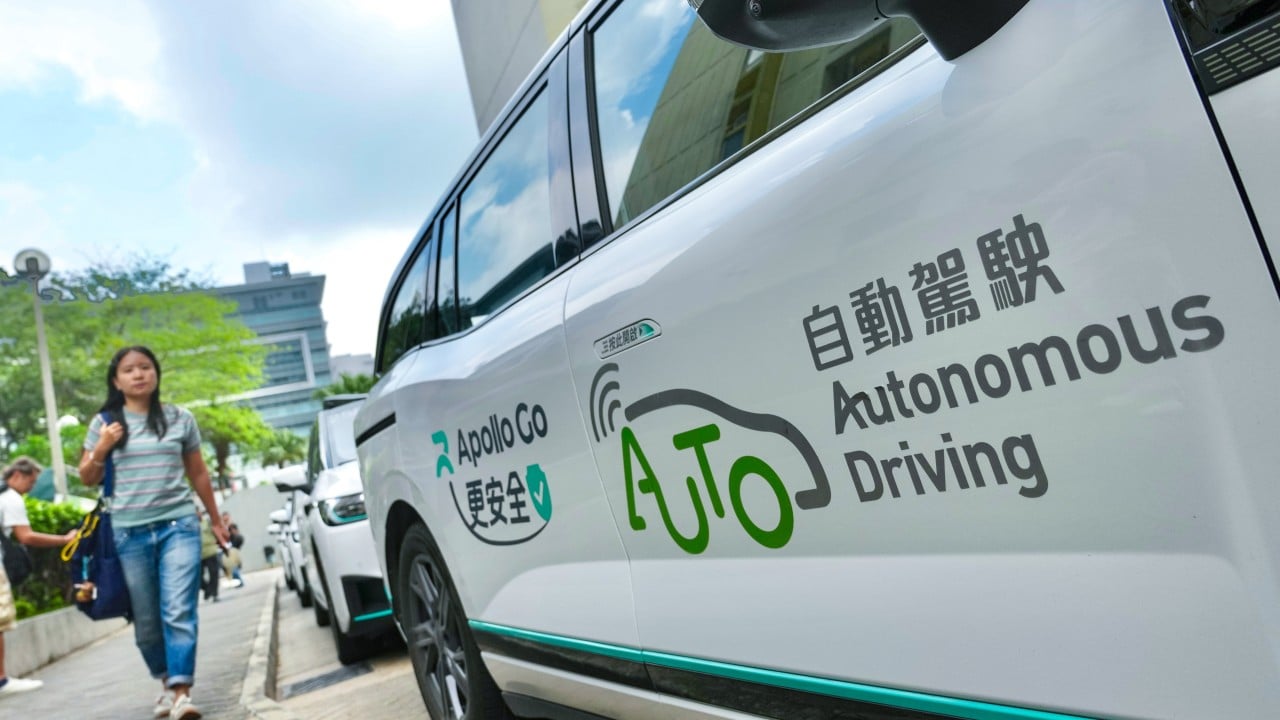
Baidu, the Chinese technology giant, has unveiled an advanced AI simulator called Apollo World to train its autonomous robotaxis for challenging road scenarios. This simulator generates complex virtual journeys, enabling the company to prepare vehicles for rare but critical situations that are difficult to replicate in real-world testing, aiming to secure a competitive edge in the burgeoning self-driving taxi sector.
During a demonstration on Tuesday, Baidu's Intelligent Driving Group unveiled the "world model," illustrating how the simulator reacts dynamically to the vehicle's controls, producing synchronized camera footage and lidar data. Yang Ze, a senior architect and head of world models at the group, expressed hopes that Apollo World could progress from simulating single scenarios to entire tasks.
The platform is crucial for Baidu's expansion into international markets, as it allows virtual trips in Shenzhen and Hong Kong under varying traffic conditions. Traditionally, adapting robotaxis to diverse geographic regions required manual input of local road rules, a cumbersome and scalable process. However, Baidu's next-generation architecture harnesses end-to-end data learning, utilizing sensory inputs from its fleet of robotaxis to refine and enhance the system.
This approach not only streamlines the adaptation process but also leverages real-world data to improve the AI's performance. Baidu's efforts align with a global trend towards AI-driven training environments in autonomous driving. Competitors such as Alphabet's Waymo and Nvidia have also developed world models to simulate hazardous conditions like snow-covered bridges and wrong-way traffic.
Yang emphasized the core objective of autonomous driving: safely transporting passengers from any point A to any point B, rather than merely managing individual driving tasks.
Written by urgent.news from South China Morning Post's reporting — not their text. Machine-written — may contain errors; check the original before relying on it.