Are we raising learners or examination takers? — Muhammad Noor Abdul Aziz and Nurahimah Mohd Yusoff
NOVEMBER 4 — Your child scored straight As. The family is celebrating, social media is flooded with congratu...
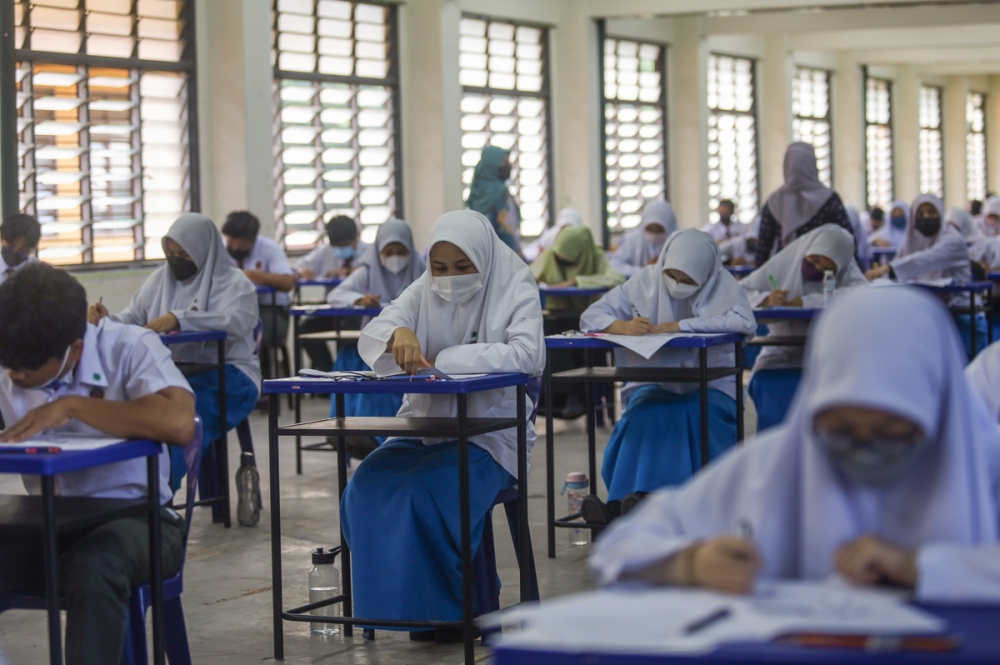
November 4 - Your child's straight-A results have sparked celebrations, with friends and family sharing their pride on social media. However, an unsettling question arises: can your gifted child navigate problems without guidance, manage failure, communicate confidently, or make responsible decisions unaided? If the answer is no, perhaps we need to rethink what we are truly celebrating.
For years, Malaysian parents have been led to believe that exam scores are the ultimate measure of intelligence and success. We allocate significant resources to tutoring, forego weekends for supplementary classes, and view childhood as a relentless pursuit of grades. Yet, we seldom question whether our children are becoming well-rounded individuals or mere top-notch test-takers.
Exams have their role. They gauge specific knowledge and abilities. Nonetheless, when academic performance becomes the only yardstick for success, education loses much of its essence. A student who memorizes scientific formulas but cannot apply scientific thinking to daily situations has gained something, but not enough. Interestingly, several educational systems are already challenging this fixation.
Finland offers valuable insight. Its national curriculum mandates multidisciplinary learning projects that link classroom knowledge to real-world challenges. Students are urged to investigate problems, cooperate, and devise practical solutions. Education is not just about regurgitating textbook answers, but grasping how knowledge operates beyond the classroom.
Children who never encounter obstacles may falter when adulthood denies them second chances. More importantly, global research backs this approach. The OECD's 2024 report, Social and Emotional Skills for Better Lives, revealed that curiosity, perseverance, responsibility, and self-control were consistently linked to superior academic performance.
These revelations remind us that fostering character and learning habits does not have to sacrifice academic progress. So, what should Malaysian parents and educators prioritize? First, teach children to think, not simply remember. Instead of inquiring about how many marks they received, ask what they learned, which questions perplexed them, and how they reached their conclusions.
Encourage them to inquire politely, defend their viewpoints, and contemplate alternative answers. Second, permit children to experience failure. Not every setback needs parental interference. Children who never face setbacks may flounder when adulthood denies them do-overs. Resilience grows when children learn to bounce back, reflect, and try again.
Third, integrate communication and teamwork into daily learning. Let students lead activities, debate issues, collaborate with diverse personalities, and resolve disputes. A student who earns 95 in English but cannot confidently express an opinion still has significant learning to accomplish. Fourth, grant children meaningful responsibilities.
Managing pocket money, aiding at home, volunteering, and solving community issues instill initiative, empathy, and accountability. Such lessons cannot always be quantified through written exams. Teachers must also reconsider whether endless worksheets and examination drills genuinely cultivate independent learners. Parents must resist transforming every hobby into a competition and every conversation into a discussion about grades.
Most importantly, schools should celebrate progress, creativity, kindness, and perseverance with the same fervor reserved for straight-A students. Malaysia does not need to abandon examinations. It requires abandoning the perilous notion that examinations reveal everything worth knowing about a child. After all, the real world rarely presents four multiple-choice answers.
Sometimes there is no right answer, no grading system, and certainly no teacher offering hints. Perhaps the greatest education failure would be producing a generation skilled at passing every examination but struggling to confront life's challenges. When that happens, whose report card should we examine? Assoc. Prof. Dr. Muhammad Noor Abdul Aziz and Prof. Dr. Nurahimah Mohd Yusoff work in the School of Education, Universiti Utara Malaysia.
This piece reflects the personal viewpoint of the writer or publication and does not necessarily mirror the views of Malay Mail.
Written by urgent.news from Malay Mail's reporting — not their text. Machine-written — may contain errors; check the original before relying on it.