A Brief History of the Video Game Parry
From early fencing games and arcade fighters to Bloodborne, Sekiro, and Clair Obscur, the parry has turned a moment of defense into one of gaming's most satisfying attacks. Read Entire Article
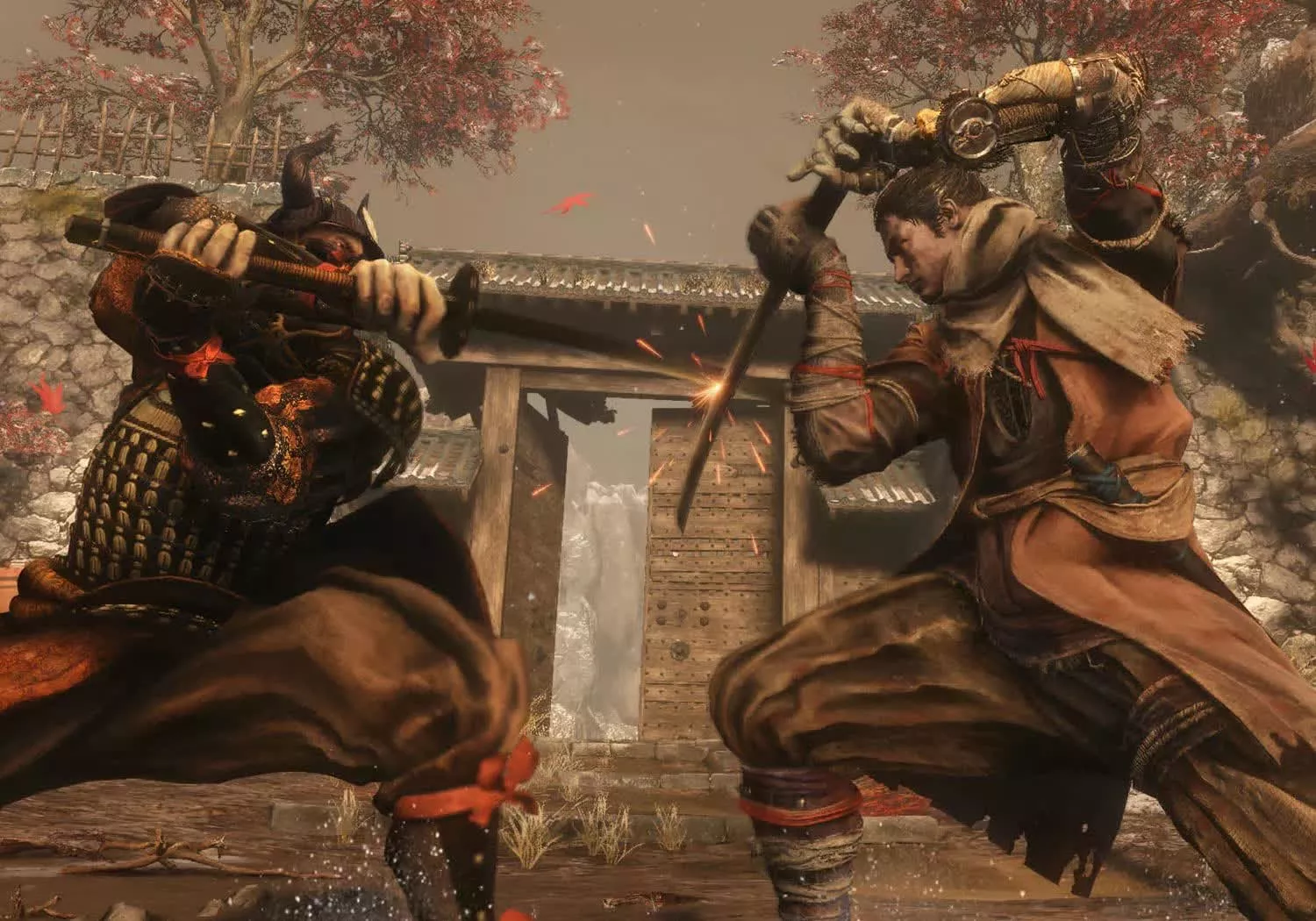
Parrying, the art of timely button presses to counter an opponent's attack, has become a staple feature in modern video games. However, its origins can be traced back to earlier games and its roots can be found in the world of fencing. The term "parry" itself is derived from the French word "parer," which translates to "to ward off."
This connection is evident in early game examples, such as Epyx's Summer Games II (1985), where players had to position their sword and deflect incoming attacks to create openings for counterattacks. Another early instance is found in Takamaru from The Mysterious Murasame Castle (1986), who could deflect projectiles using his katana, emphasizing the timing aspect of parrying.
As gaming technology advanced, so did the complexity of parrying mechanics. In Prince of Persia (1989), players were required to read their opponents' attacks, time their defenses, and choose when to strike back, marking a significant step forward in the evolution of parrying. Mid-1990s fighting games, like Samurai Shodown II (1994) and Namco's Soul Edge (mid-1990s), further refined these mechanics by introducing guard impacts and specific commands for catching opponent's swords.
Tekken series (1997) added low parry options for select characters, allowing them to redirect low attacks and initiate combos.
Street Fighter III: New Generation (1997) is often credited with popularizing parrying in the gaming world. By introducing a system where players could parry with either a high or low input, depending on the attack direction, the game added significant depth to the combat system. This was further enhanced in Street Fighter III: 3rd Strike (1999) with the introduction of Guard Parry, or Red Parry, which allowed players to switch from blocking to parrying during an attack sequence.
This was a crucial development, as it not only prevented chip damage but also allowed players to counterattack without spending a defensive meter.
The impact of parrying on competitive gaming cannot be overstated. The comeback victory by Daigo Umehara in Evo Moment #37 (2004), where he parried all 15 hits from Chun-Li and countered to win the round, showcased the power of parrying in high-stakes gameplay. Tekken series (1997), with its Tekken 3 (1997) low parry options and Tekken Tag Tournament (1999) universal low parry, further popularized this mechanic in another major fighting game franchise.
Tekken 7 (2016) built upon this foundation by introducing new states and extensions, such as Tornado, which immediately used the low parry state, leaving players with limited options for subsequent combos.
In conclusion, parrying has come a long way since its inception in fencing and early video games. From its humble beginnings in Epyx's Summer Games II (1985) to its integral role in modern fighting games like Street Fighter and Tekken, parrying has evolved into a sophisticated mechanic that adds depth and excitement to combat systems.
The influence of early examples, such as Weaponlord (1995) and the adaptions by Namco, also highlights the interconnected nature of game development and the iterative nature of innovation in the gaming industry.
Written by urgent.news from TechSpot's reporting — not their text. Machine-written — may contain errors; check the original before relying on it.