World Bank Report Says India Recorded One Of World’s Fastest Poverty Declines, But The Poverty Numbers Don’t Add Up
The World Bank report on poverty in India, which claims that the country recorded one of the fastest poverty declines globally, has come at the right time for the BJP government currently under the spotlight for all the wrong reasons. But the poverty reduction story seems almost extraordinary. According to the World Bank, between 2011 and 2023, the proportion of Indians living below the…
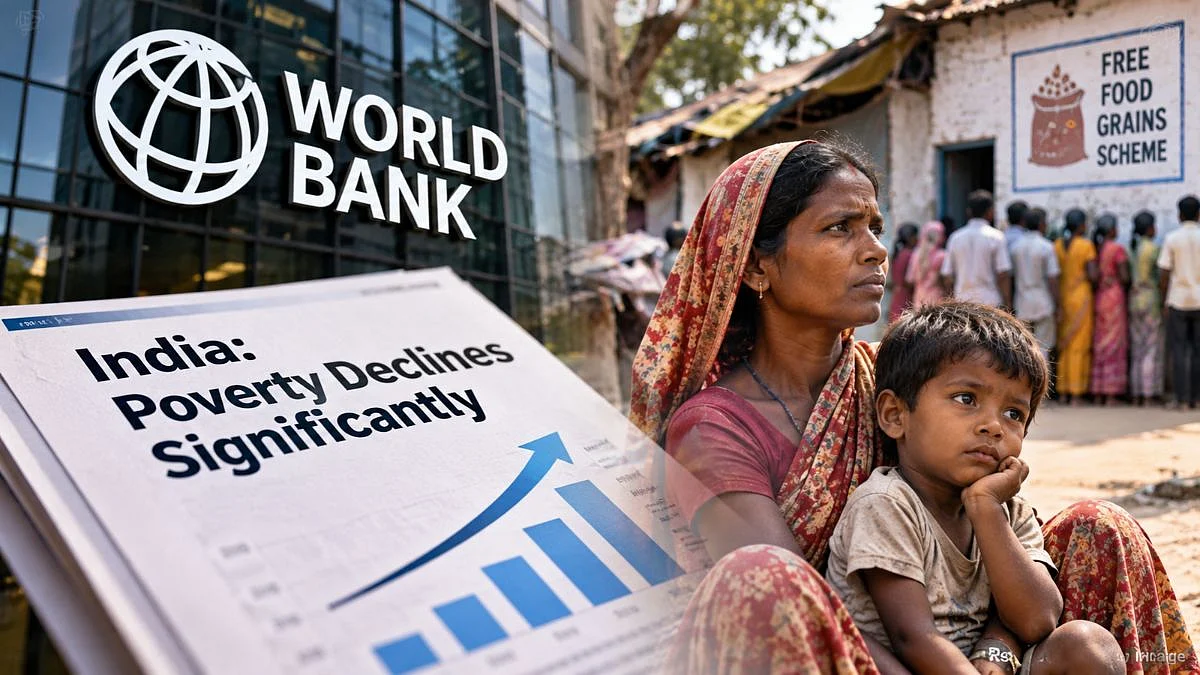
A recent World Bank report has highlighted India's remarkable progress in reducing poverty, with the country experiencing one of the fastest declines globally between 2011 and 2023. According to the report, the proportion of Indians living below the lower-middle-income poverty line of $4.20 a day dropped from 57.7% in 2011 to 16.1% in 2023, representing the escape of 496 million people from poverty.
However, the report's findings have sparked debate due to the apparent discrepancy between the World Bank's figures and the government's own Household Consumption Survey from 2022-23. While the World Bank's estimate of 496 million people escaping poverty appears impressive, it is merely a statistical projection derived from the decline in the poverty headcount ratio and changes in the population over the 12-year period.
This figure does not demonstrate an actual improvement in the standard of living for each individual. Furthermore, the Household Consumption Survey paints a starkly different picture, with the average rural consumption at just Rs 3,779 per person per month, which is less than half of the World Bank's $3 per person per day consumption standard for 2023.
This indicates severe economic hardship, even among those who have reportedly escaped poverty. Despite the 496 million individuals said to have moved out of poverty, the government still provides free food grains to over 800 million citizens through various central schemes. This raises questions about the true impact of poverty reduction efforts in India.
Prime Minister Narendra Modi's recent reliance on World Bank figures, such as his forecast that poverty at the $4.20-a-day threshold will decline from 14.2% in 2026 to 12.1% by 2028, has been met with skepticism. The World Bank report's forecast is based on a survey with several potential flaws, and the long-term success of poverty reduction in India will ultimately depend on factors like job creation, wages, food, and fuel prices.
While the numbers may look promising on paper, the quality of growth and its impact on the livelihoods of the Indian population remain the most critical factors.
Written by urgent.news from Free Press Journal's reporting — not their text. Machine-written — may contain errors; check the original before relying on it.