Why a US-Russia showdown left Morocco celebrating
Morocco has welcomed the end of a decades-long UN peacekeeping mission in Western Sahara, after a diplomatic showdown between the US and Russia left the Security Council unable to agree on its future.
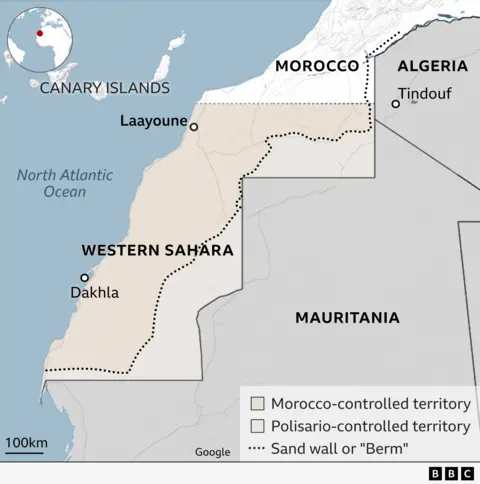
Western Sahara, situated on Africa's northwest coast, was once a Spanish colony until 1975, boasting substantial phosphate deposits and valuable fishing resources along its Atlantic shoreline. The territory's sovereignty remained disputed as Spain prepared to relinquish control. Morocco and Mauritania each laid claim to the region, with Morocco's King Hassan II orchestrating the Green March in November 1975, in which an estimated 350,000 Moroccan citizens entered Western Sahara to pressure Spain into concession.
Following Spain's signing of the Madrid Accords with Morocco and Mauritania in 1975, the two countries inherited administrative control over the territory. Morocco seized the northern two-thirds, while Mauritania acquired the southern third.
However, the Polisario Front, an independence movement established in 1973, vehemently opposed the arrangement, viewing it as a substitution of Spanish rule for Moroccan and Mauritanian dominion. Mauritania abandoned its claim in 1979, yet Morocco persisted in its conflict with Polisario. Algeria took on a pivotal role as Polisario's primary regional ally, offering military assistance and housing Polisario's leadership and thousands of Sahrawi refugees in camps near Tindouf.
Following 16 years of warfare, Morocco and Polisario reached a UN-mediated ceasefire in 1991, which divided the territory with a sand wall, or berm, to separate the rival forces. The UN subsequently established the UN Mission for the Referendum in Western Sahara (Minurso) to oversee the ceasefire and arrange a referendum on the territory's fate.
The Sahrawi people were intended to choose between independence and integration with Morocco. The vote was scheduled for 1992, yet it never materialized due to disputes over voter eligibility and identification. In 2007, Morocco proposed autonomy, which would have allowed Sahrawis to manage their internal affairs while retaining Moroccan sovereignty over defense and foreign relations.
Thousands of Moroccans marched into Western Sahara in 1975 in what came to be known as the Green March. The Polisario Front and Algeria rejected this proposal, insisting on a referendum that included independence as a choice.
Negotiations under UN supervision faltered, and the ceasefire was breached in November 2020 when Polisario declared the resumption of armed conflict. However, after extensive diplomatic efforts by Morocco, the UN Security Council voted in 2025 to endorse Morocco's autonomy plan as the "most feasible" solution for the disputed territory. While the majority of Sahrawis inhabit the portion of Western Sahara under Moroccan control, tens of thousands reside in refugee camps in Algeria.
Written by urgent.news from MyJoyOnline Ghana's reporting — not their text. Machine-written — may contain errors; check the original before relying on it.
This story
This is one outlet's version. Read the fullest account.