‘We were wrong’: From Dewey to Trump, the polling misses hanging over the 2026 midterm forecasts
Forecasters favor Democrats on Election Day. But response rates have collapsed, and presidential polls have missed toward Democrats three cycles running. (153 characters)
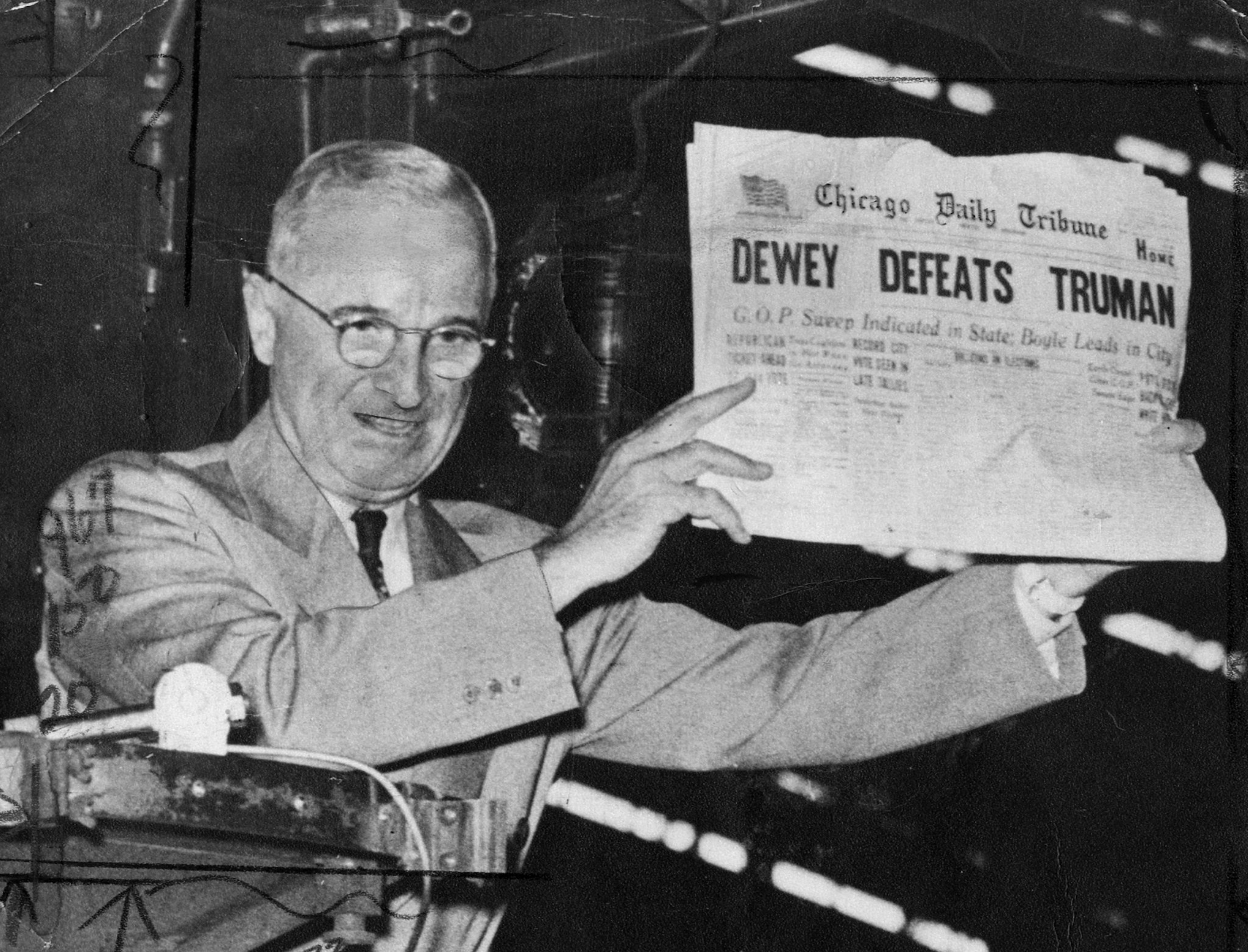
The 1948 presidential election marked a significant milestone in American political history, with President Harry Truman defeating his Republican challenger, Thomas Dewey. However, major polls, including those conducted by Gallup and Crossley, had predicted a Dewey victory by a small margin, leading to the famous Chicago Daily Tribune headline, "DEWEY DEFEATS TRUMAN." This incorrect prediction underscored the inadequacies of poll-based forecasting in accurately predicting election outcomes.
More recent elections have also demonstrated the shortcomings of polling mechanisms. In 1960, Richard Nixon narrowly lost to John F. Kennedy, despite early polls suggesting a close race. The 1980 election between Ronald Reagan and Jimmy Carter similarly saw most polls predicting a close contest, while Reagan won convincingly. More recently, Hillary Clinton's 2016 loss to Donald Trump, despite favorable polling, and Joe Biden's 2020 victory, with polls underestimating Trump, further highlight these issues.
Despite the persistent accuracy challenges, major forecasters predict a strong performance for Democrats in the 2026 midterm elections, potentially gaining control of the House and securing a shot at the Senate. However, the reliability of these forecasts remains questionable. Polling accuracy has consistently been hindered by falling response rates, nonrepresentative respondent demographics, and challenges in collecting raw data.
The recent trend of falling telephone response rates, coupled with a noticeable partisan skew in participation, has made it difficult for pollsters to obtain a truly representative sample of the electorate. This is compounded by the fact that better-educated respondents, who typically lean Democratic, are more likely to answer surveys than less educated voters, who lean Republican.
In an era marked by advanced technologies and sophisticated modeling techniques, polling remains an imperfect science. The industry continues to grapple with the challenge of accurately capturing voter sentiment, especially in the context of increasingly polarized and digitally-driven political landscapes. As the 2026 midterms approach, it remains to be seen whether pollsters can overcome these obstacles and provide a more accurate forecast of voter behavior.
Written by urgent.news from Fortune's reporting — not their text. Machine-written — may contain errors; check the original before relying on it.
This story
This is one outlet's version. Read the fullest account.