Three questions that will define AI's political power
The 2026 midterms will offer the first test of voter sentiment on the AI race, offering a window into how a niche policy debate is transforming into a wedge issue ahead of a presidential campaign cycle. Why it matters: The results will reveal whether explicitly campaigning on AI regulation—or aligning with tech moguls like Elon Musk—is a winning political strategy or a liability for 2028. One…
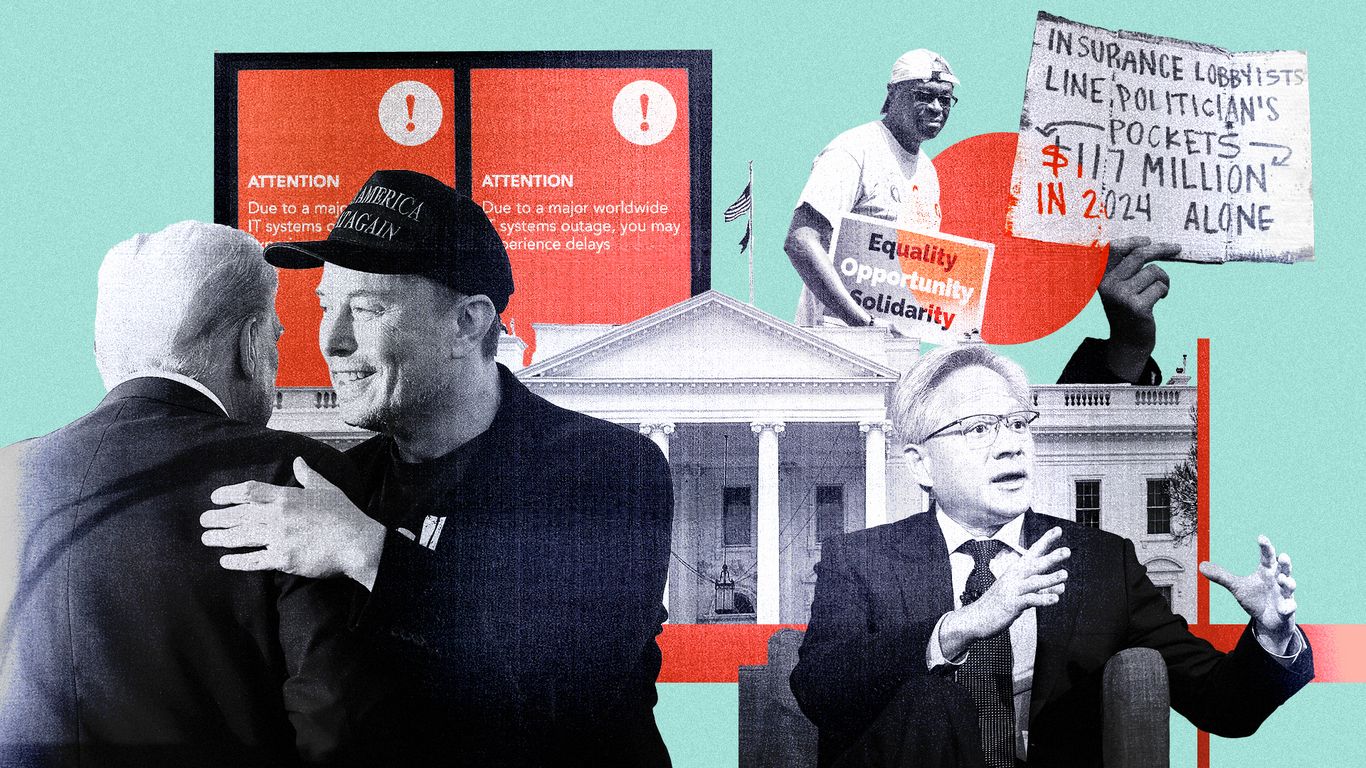
The 2026 midterms will provide the inaugural assessment of voter opinion on the AI race, offering insight into how a specialized policy debate is evolving into a crucial wedge issue before a presidential campaign season. The significance lies in whether explicitly running on AI regulation, or aligning with tech leaders such as Elon Musk, proves effective or detrimental for the 2028 election cycle.
It is evident that candidates cannot afford to have superficial AI policies. Here are three pivotal questions regarding the future of AI politics and policy, along with the races we are monitoring on Election Day for answers.
1. Did AI break through? A novel form of AI political fundraising has surfaced during the midterms. Certain groups are not merely backing or opposing candidates based on their stance on AI, but are aiming to make AI policy a central campaign topic. Guardrails Alliance, an advocacy group promoting regulation, recently aired ads targeting Republicans and Democrats concerning their AI positions in Arizona, Montana, North Carolina, and California.
The organization supported Michigan Senate candidate Abdul El-Sayed, who declared AI to be the most pressing issue heading into Election Day, linking it directly to job creation and affordability. Democratic organization Tomorrow Together also ran ads against Republican candidates in Michigan, Wisconsin, Arizona, and Pennsylvania, leveraging AI as an issue.
Concurrently, rival AI organizations Public First and Leading the Future spent over $50 million across nearly 50 races through super PACs affiliated with them, but their television and digital advertisements largely bypassed AI, the very issue they aim to influence. These races serve as a potential early gauge of whether explicitly campaigning on AI constitutes a viable political strategy for the upcoming 2028 elections.
2. Did Elon Musk aid or hinder candidates? Elon Musk's political contributions, participation in DOGE, and associations with the Trump administration have rendered him both a formidable political supporter and a target for Democratic criticism. He was the primary contributor in the midterms, donating over $400 million. Races to watch include: Texas' 10th District, where Republican Chris Gober, who worked with Musk on DOGE, is contesting against Democrat Caitlin Rourk; Kansas' 1st District, where Democrat Lauren Reinhold has emphasized her experience with DOGE, criticizing Musk's governmental influence in her campaign against Republican Rep. Tracey Mann; Ohio Senate, where Republican Jon Husted has benefited from Musk's America PAC funding in his race against Democrat Sherrod Brown; and Texas Senate, where Musk-backed spending has made the race between Democrat James Talarico and Republican Ken Paxton another test of the billionaire's political sway.
These contests can shed light on whether Musk's financial backing aided Republican candidates or provided Democrats with a valuable opponent.
3. How vociferous will the AI safety movement be in the next Congress? A select group of candidates advocating for stringent AI safeguards could influence the extent to which the next Congress remains critical of the industry's inclination to curtail regulation. Races to monitor include: Michigan Senate, where El-Sayed seeks a new cabinet-level federal agency to regulate AI and a ban on superintelligence; he has leveraged Musk's political influence to attack Republican Mike Rogers, who has benefitted from Musk-related political spending; Colorado's 8th District, where Democrat Manny Rutinel introduced the first comprehensive AI legislation; California's 11th District, where Democrat Scott Wiener's AI transparency bill was at the heart of an industry regulatory dispute, foreshadowing future battles in Washington; and Minnesota's 2nd District, where Democrat Matt Little would strengthen the call to prohibit data center construction and non-disclosure agreements at the national level.
These races will offer insights into the size and impact of the AI safety movement's congressional coalition, a key indicator of how the AI regulation debate will progress in 2027 and beyond. Ultimately, various factors will influence the results of races across the nation. However, competing AI factions will swiftly claim wins, rationalize defeats, and glean lessons for the 2028 campaign.
Written by urgent.news from Axios's reporting — not their text. Machine-written — may contain errors; check the original before relying on it.
This story
This is one outlet's version. Read the fullest account.
- The Power of Three: turning enterprise AI ambition into business reality techcentral.co.za