Three in 10 urban residents live in slums, informal settlements — GSS
Nearly one in three people living in Ghana’s urban areas resides in a slum or informal settlement, highlighting the housing and basic-service challenges accompanying the country’s rapid urbanisation.
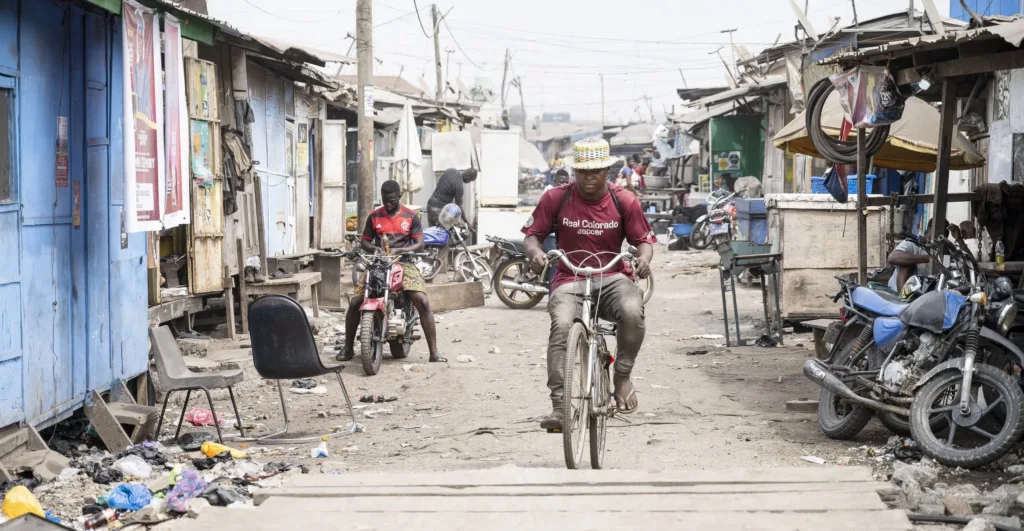
Nearly a third of Ghana's urban dwellers reside in slums or informal settlements, according to the Ghana Statistical Service (GSS). This finding, unveiled in November, underscores the housing and basic-service challenges arising from the nation's rapid urbanization. The GSS's 2025 publication, "Ghana in Numbers," compiles population, housing, and service indicators to illustrate evolving settlement patterns nationwide.
In 2025, the report estimates 19.8 million individuals—comprising 58.7% of Ghana's population—lived in urban areas. Despite advancements in access to electricity, clean water, and sanitation, disparities in living conditions persist, particularly among urban communities. Around one in three households lacks a proper toilet, while roughly one in seven lacks electricity.
Meanwhile, access to improved drinking water has soared from 60.7% in 2000 to 92% in 2021, and electricity access has risen from 43.8% in 2000 to 86.3% in 2021. Sanitation coverage has also improved, from 44.8% in 2010 to 69% in 2022. However, the GSS emphasizes that national averages may mask substantial variations between localities.
The country's housing shortage is estimated at around 1.8 million units in 2021, down from approximately 2.8 million in 2010. The 2021 Population and Housing Census recorded about 10 million dwelling units. The GSS warns that the housing deficit estimate does not account for quality, affordability, or vacant homes. Notably, the average household size has declined to 3.6 people, the lowest ever recorded.
Dr. Alhassan Iddrisu, Government Statistician, urged decision-makers to rely on localized data when allocating public resources and services, cautioning that averages can obscure critical differences between communities. District-level information is crucial for identifying areas with the most acute housing, water, sanitation, electricity, and service deficiencies.
The Ghana in Numbers, 2025 report, alongside district-specific data, is accessible via the GSS website, StatsBank, the Ghana in Numbers portal, and the GSS Stats App.
Written by urgent.news from MyJoyOnline Ghana's reporting — not their text. Machine-written — may contain errors; check the original before relying on it.