The Church as a builder: Loveworld Kingdom brought a different economic proposition to Accra
Loveworld Kingdom came to Accra, Ghana with an economic proposition: the Church should not only raise businesspeople. It should help build businesses, organise capital, create institutions and develop the commercial systems its people need to prosper. The idea ran through the Loveworld Trade & Investment Forum (LTIF) 2026, held in October, where commerce was treated […]
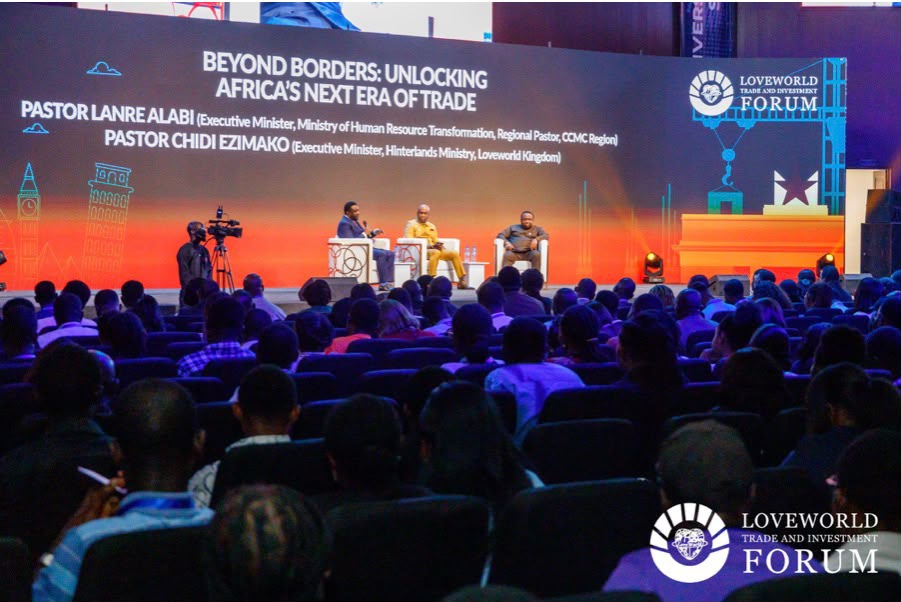
In Accra, Ghana, the Loveworld Kingdom, a religious organization, presented a unique economic proposition centered around the idea that the Church should not only raise businesspeople but also actively contribute to building businesses, managing capital, and developing commercial systems. This concept was showcased during the Loveworld Trade & Investment Forum (LTIF) 2026, which took place in October.
The Loveworld Kingdom's economic mandate, known as the Kingdom economy, seeks to connect entrepreneurs, professionals, capital holders, and businesses by moving them from subsistence to scale, from local markets to regional ones, and from ideas to productive enterprises. The main focus of this initiative is on individual believers, who are expected to become producers, innovators, solution providers, and nation builders.
Pastor Bolaji Akinboro, the Special Adviser on the Economy to Loveworld Kingdom, emphasized the importance of development and enterprise. Drawing inspiration from the economic transformation of countries like China, he argued that Africa's resources are of little value without the ability to convert them into sustained production and rising prosperity. His background as a co-founder of the fintech company Cellulant and his experience in agriculture and technology added a practical dimension to his argument.
Pastor Lanre Alabi, the Executive Minister of the Ministry of Human Resource Transformation, highlighted the Church's expertise in institution-building. He pointed out that the Church already possesses the understanding of how to build structures, cultures, and systems that can endure generations. This discipline, Alabi suggested, can be valuable for entrepreneurs who can learn from it.
Pastor T.T. Temisan, the Executive Minister of the Ministry of Information, proposed that the Church should be directly involved in economic life. He rejected the notion that production, enterprise, and institution-building should be limited to governments, corporations, or development organizations. According to Temisan, Christians should be present wherever systems are being built, bringing capital, ideas, technology, and enterprise along with them.
Pastor Chidi Ezimako, the Executive Minister of Hinterlands Ministries, emphasized the importance of executing purpose and standards in businesses. He stressed that shared faith cannot replace the necessity of fulfilling orders, maintaining quality, and earning the trust of customers and partners. Capital was also deemed crucial for the architectural framework of the economic network.
Pastor Biodun Lawal, the Executive Minister of the Ministry of Discipleship, connected the economic mandate to the need for financing businesses capable of growth. The Ministry of Commerce secured a $1 million boost for a new investment fund to support strategic businesses and entrepreneurs within the Loveworld network, aiming to help them achieve production, expansion, and scale.
Written by urgent.news from MyJoyOnline Ghana's reporting — not their text. Machine-written — may contain errors; check the original before relying on it.