Spanien: Spaniens Verkehrsminister tritt nach Zugunglück zurück
Nach der Katastrophe mit 69 Toten zieht Madrid erste Konsequenzen – und sichert den Opfern auch Millionenhilfe zu. Am Abend dann eine überraschende Entwicklung.
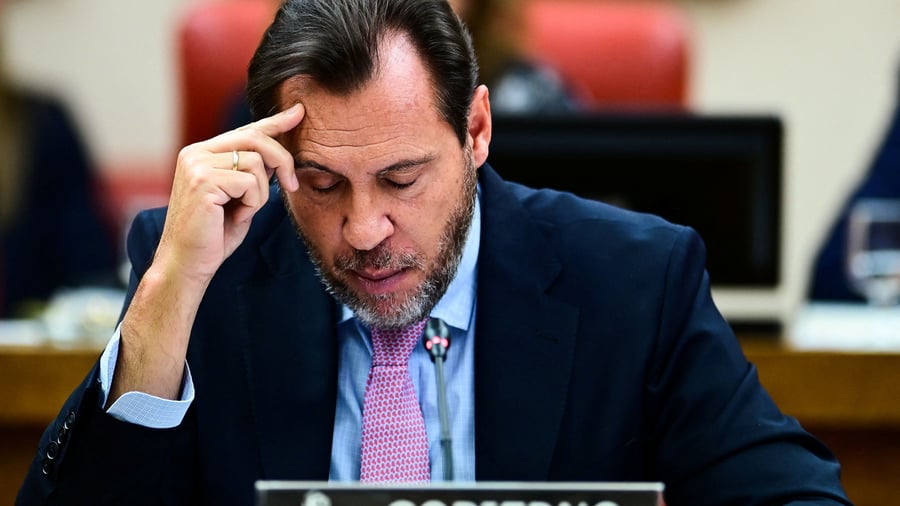
Exactly one week after a train crash in Spain claimed 69 lives, Transport Minister Óscar Puente unexpectedly announced his resignation. At the conclusion of his parliamentary committee hearing in Madrid, he also stated he would not run in the early parliamentary election on November 29th. The resignation came as a surprise since Puente and Prime Minister Pedro Sánchez had ruled him out in recent days.
He explained, "A minister cannot remain in office after two disasters of this severity within less than a year. It is a question of political dignity, consequence, and political empathy." Two high-speed trains collided near the town of Urda, approximately 130 kilometers south of Madrid, on Wednesday last week. A Renfe state railway train rear-ended a standing private train operated by Iryo.
This was the second serious train accident in Spain within nine months. In January, 46 people died in a collision of two high-speed trains in Adamuz, Andalusia. Just hours earlier, Madrid had approved measures to improve rail safety. Shortly after, the government announced a €30 million aid package for victims and their families.
Investigations into the Urda crash primarily focus on the LZB train safety system failure and possible errors in instructions from the network operator Adif's control center. Puente also announced that the number of trains between Madrid and Seville would be reduced until the new European rail safety system ERTMS is in operation.
All 69 victims have been identified, with 54 being Spanish nationals and four US citizens. The rest came from Japan, Australia, Canada, France, Czechia, Portugal, Argentina, Mexico, and Tunisia. Thirty-seven of the injured are still in hospitals. The government also set price ceilings for alternative transport during the suspension of the accident route between Madrid and Seville to prevent overcharging for passengers.
The aid package includes direct state assistance, advance payments for future compensation, and a doubling of benefits from the statutory passenger insurance scheme. Victims and their families will be supported through dedicated help centers, and special provisions are made for injured workers to return to work temporarily.
Written by urgent.news from Handelsblatt's reporting — not their text. Machine-written — may contain errors; check the original before relying on it.