Spain’s transport minister resigns after train crash that killed 69
Spain’s transport minister handed in his resignation on Tuesday following a train crash that killed 69 people last week, one of the worst railway disasters in Europe this century. Oscar Puente, who had earlier pledged to work “tirelessly” to restore confidence in the world’s second-largest high-speed rail network, also said he was withdrawing from the country’s coming general election. Last…
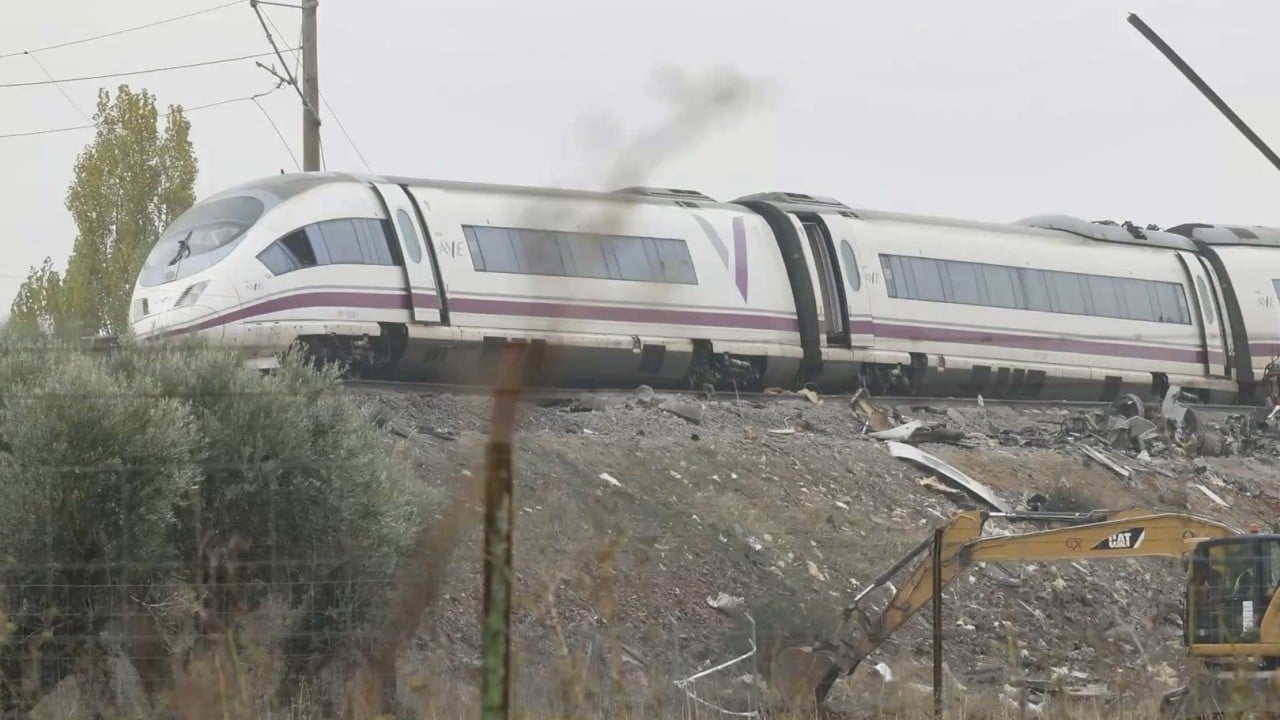
Spain's transport minister, Oscar Puente, resigned on Tuesday following a train crash that claimed 69 lives last week, marking one of the most severe railway disasters in Europe in the current century. Puente, who had pledged to restore confidence in Spain's high-speed rail network, also announced his withdrawal from the upcoming general election scheduled for November 29.
The crash, along with a previous disaster earlier this year, has overshadowed campaigning for the election, in which Socialist Prime Minister Pedro Sanchez is trailing in opinion polls.
Puente had resisted resigning despite the accident, but ultimately announced his departure during a lengthy hearing before lawmakers. In his resignation statement, he expressed his wish to step down from his position and withdraw his name from the lists for the early legislative elections. The right-wing opposition and unions criticized Puente for blaming the disaster on a single control center operator.
The accident occurred when a state-owned Renfe train collided with a stationary train operated by the private Spanish company Iryo outside Urda, about 80 miles south of Madrid.
Puente had previously announced several safety measures, including the creation of software for control centers to issue automatic alerts and identify anomalies in traffic. He also proposed an AI agent to oversee the system and minimize human error. In scenarios where a control center operator made decisions while the automatic safety system was down, a second operator would have to confirm the action.
Puente also committed to reforming the working conditions of control center operators, including their breaks and fatigue monitoring. Additionally, he announced a €30 million aid package for the families of the deceased and injured in the crash.
The train drivers' union Semaf had previously called strikes at Renfe for November 10 and 12, criticizing the worsening of working conditions and the use of degraded systems. Puente acknowledged these concerns by announcing reforms in working conditions for control center operators, including their breaks and fatigue monitoring.
The accident came in the wake of another collision in the southern region of Andalusia in January, which killed 46 people on the same key line connecting Madrid with Seville, Spain's first high-speed route when it opened in 1992.
Written by urgent.news from South China Morning Post's reporting — not their text. Machine-written — may contain errors; check the original before relying on it.