Seven Games Like GTA That Do Some Things Better Than Grand Theft Auto
The label “GTA clone” often makes open-world crime games sound like cheap copies of Grand Theft Auto, but several titles have developed strengths that Rockstar’s series does not always match. These games stand out for their storytelling, distinctive combat, deeper customization, humor and wider variety of activities. The debate feels especially relevant as Grand Theft […]
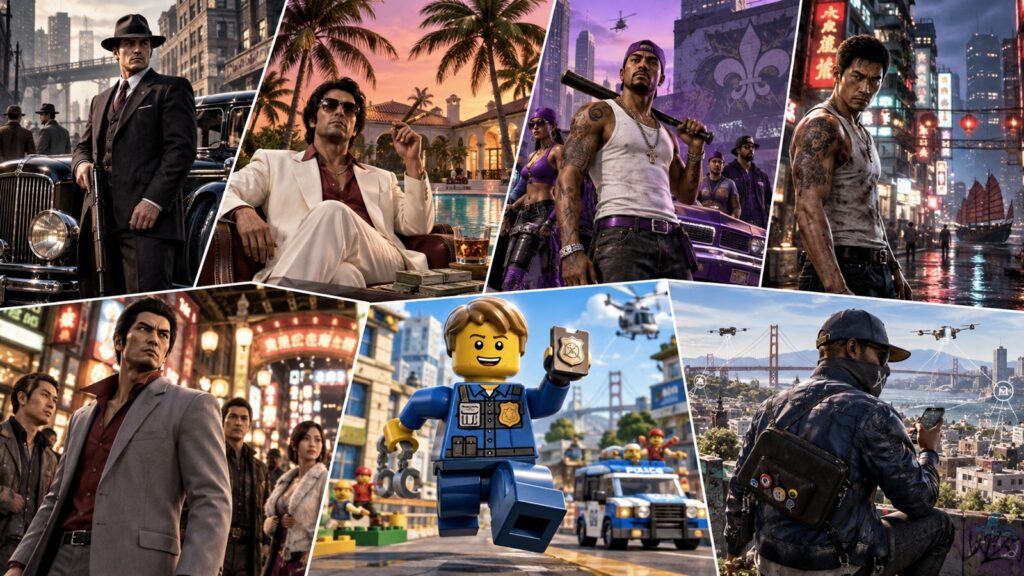
GTA clones often receive criticism for being "cheap copies" of Grand Theft Auto, but several titles have developed unique strengths that Rockstar's series does not always match. These games stand out for their storytelling, combat, customization, humor, and variety of activities. As Grand Theft Auto VI approaches its release, the debate surrounding GTA clones gains relevance.
The list below showcases seven games from two decades that demonstrate different adaptations of the open-world formula. Each offers a compelling reason to look beyond Rockstar's series and explore what a "GTA clone" can truly accomplish.
Mafia (2002): Illusion Softworks crafted a realistic gangster world in Lost Heaven, inspired by 1930s America. Unlike GTA's chaos-driven gameplay, Mafia focused on a serious period drama about a humble man rising and falling in the world of organized crime. Vehicles suffer real-time damage, and police react to offenses differently, creating a more immersive crime story. The game's tight, focused world proved more powerful than a larger, more open environment, showing that depth can be more impactful than sheer scale.
Scarface: The World Is Yours (2006): Ubisoft's licensed game lets players control Tony Montana, the iconic gangster from the 1983 film. Unlike GTA's generic crime stories, Scarface allows players to live inside a gangster's world, expanding the original story instead of copying it. The game introduced a unique targeting system and a money-laundering mechanic that affected police and rival gang reactions, proving that licensed games can innovate.
The "Balls meter" meter, inspired by later GTA games, showcased how a licensed property could merge humor and intensity.
Saints Row 2 (2008): Volition's game redefined the "GTA clone" with its over-the-top humor and total character customization. Players create their own "Boss" character, with a fully voiced female protagonist—years before Rockstar offered a playable heroine in a main GTA story. Saints Row 2 emphasized personality over tone and allowed players to customize their appearance, vehicle, and fighting style. The game's humor, character development, and unique gameplay made it a standout title in the genre.
Sleeping Dogs (2012): Warner Bros. Montreal set Sleeping Dogs in Hong Kong, focusing on martial arts combat and immersive world-building. The game's realistic combat features brutal takedown animations and bullet-time effects, reminiscent of John Woo films. While its driving mechanics received criticism, players could jump out of speeding cars to hijack others in mid-chase. Sleeping Dogs proved that a smaller, well-designed open world can deliver a more engaging experience than GTA's sprawling environments.
GTA clones demonstrate that innovation and creativity can thrive beyond Rockstar's series. By focusing on storytelling, combat, customization, humor, and world-building, these games offer unique experiences that challenge the conventional open-world crime game formula. As the release of Grand Theft Auto VI approaches, these alternatives provide valuable insights into what a "GTA clone" can achieve, proving that variety and quality can coexist in the world of open-world gaming.
Written by urgent.news from Colombia One's reporting — not their text. Machine-written — may contain errors; check the original before relying on it.