Nature already invented biodegradable plastic. Scientists want to reverse engineer it.
Cellophane bees make a polyethylene-like plastic that breaks down in soil within a year. A new PNAS study shows how it could inspire biodegradable bioplastics.
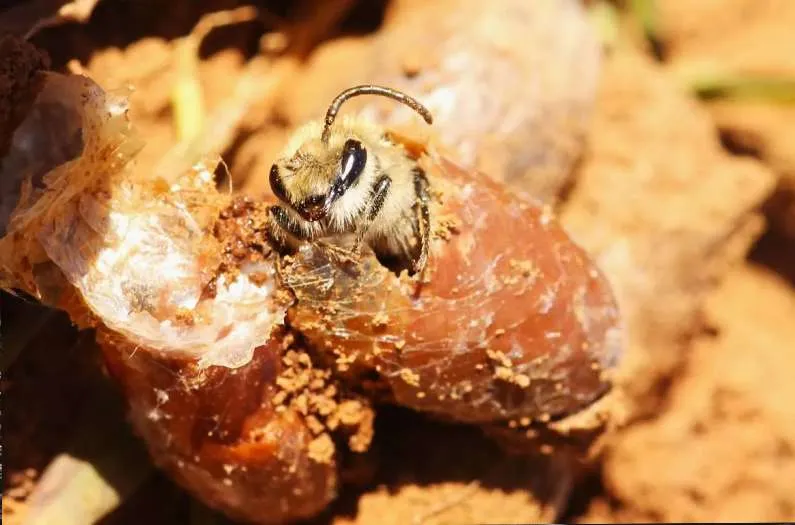
Cellophane bees line their nests with a biodegradable, silk and polyester film, offering a potential solution to plastic pollution, according to a new study. Assistant Professor Jonathan Coote of Virginia Tech explains that nature has already solved the problem of creating a bioplastic that mimics conventional plastics yet doesn't persist in the environment.
Cellophane bees, unlike their honeybee counterparts, construct their nests in the soil, with females laying eggs in individual chambers lined with their secretions. These linings consist of silk fibers and a polyester reminiscent of polyethylene, the most commonly used plastic for packaging. While lab-made polyethylene-like polyesters don't degrade well in the environment, the bees' material biodegrades rapidly in soil.
The researchers collected nest linings from Tennessee sites of Colletes inaequalis, observing a 73% polyester and 27% silk composition in fresh linings. Within four months, only 40% polyester remained, showing faster degradation than silk. The linings remain flexible and intact for up to seven months, offering protection before breaking down completely in 11 months, just as the bee has developed.
The researchers are now investigating the rapid degradation process, hypothesizing that the polyester's crystal structure may expose more bonds to enzymes in the nest lining, possibly from the mother bee's saliva. The ultimate goal is to reverse engineer this natural process to create similar lab-made materials at a practical scale.
Written by urgent.news from Anthropocene Magazine's reporting — not their text. Machine-written — may contain errors; check the original before relying on it.