Mining giant joins fight to stop killer toad march across Australia
Rio Tinto is jointly funding a A$28m "toad containment zoe" to protect the Pilbara region.
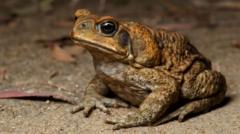
Rio Tinto, a major mining company, is investing millions of dollars to prevent the invasive cane toad from reaching the Pilbara region in western Australia. The company, in collaboration with Curtin University and other partners, will allocate A$28m (£14.5m) to establish a toad containment zone that spans 7,500 sq km (2,895 sq m) of land between the Great Sandy Desert and the Indian Ocean.
The primary goal is to block the toad's access to water supplies, as the amphibian is lethal to native wildlife and poses a threat to the Pilbara's ecosystem. While the company's operations are not directly at risk from the cane toad, it has previously faced backlash for damaging Aboriginal cultural sites in the region, which led to a commitment to rebuild trust with Indigenous communities.
Roberta Hunter, a ranger in the Nyangumarta Warrarn Indigenous Protected Area, emphasized the importance of stopping the toads, stating, "Cane toads destroy the water and animals. When toads come close to our country, we want to be there to stop them because we don't want the country to be destroyed." The five-year project, set to commence in 2027, aims to protect various native species, such as the northern quoll, goanna lizard, and ghost bat, from the toad's arrival.
The cane toad was introduced to Australia in 1935 to control beetles in the sugar cane industry, but has since spread across the northern landscape, traveling between 40 km and 60 km per year. Without intervention, the toads are expected to reach Pilbara within the next two decades, as noted by Ben Phillips, a professor at Curtin University.
Written by urgent.news from BBC Business's reporting — not their text. Machine-written — may contain errors; check the original before relying on it.