Louisiana’s accidental blueprint for restoring its coast
In 2002, the U.S. Army Corps of Engineers stumbled on a way to create new land. Now the state wants to do it on purpose.
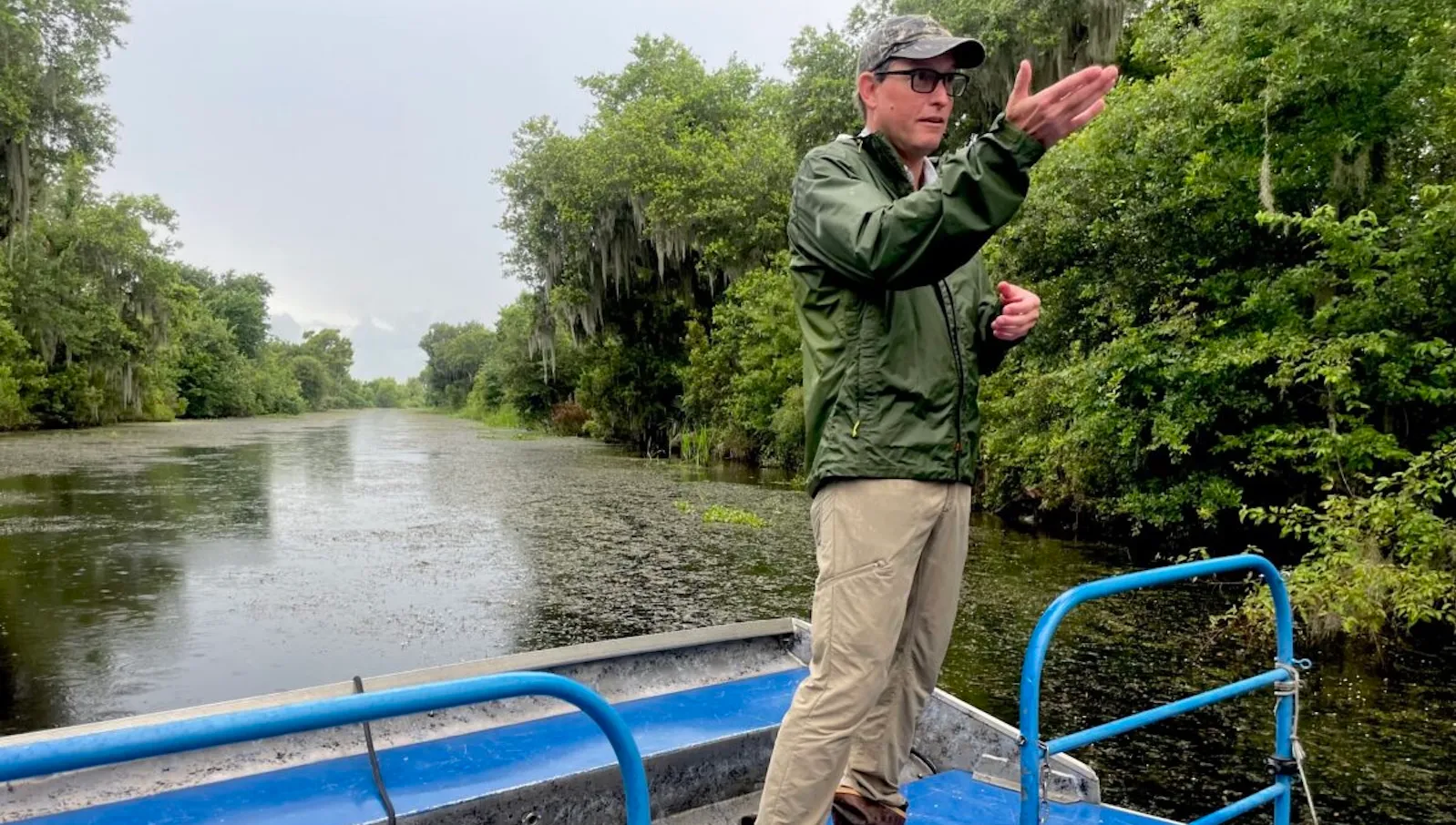
Arthur Matherne, a semi-retired tour guide, navigates through tighter channels in a part of the Barataria Basin where marshes and swamps are shrinking as saltwater from the Gulf of Mexico encroaches. What he observes is a surprising reversal of the coastal trend: the wetlands here are gaining land. The cause is a few miles away, where the Davis Pond Freshwater Diversion channels Mississippi River water into the basin since 2002.
This has carried sediment into the wetlands, raising the bottom and helping create new land. Jacob Berkowitz, an Army Corps of Engineers wetland scientist, notes that the diversion has had an unintended consequence: building land in the area. However, despite the success of Davis Pond, Louisiana has abandoned its largest coastal restoration project, the Mid-Barataria Sediment Diversion.
Governor Jeff Landry, a critic of the project, canceled it in 2025, calling it a costly experiment that would harm commercial fishing. The state is still planning diversion projects, though to a lesser extent, with a $340 million plan for five projects over the next few years to restore coastal wetlands. CPRA scientists believe diversions, which mimic the natural process of the Mississippi before levees, are a sound approach to rebuilding land and restoring wetlands.
One such project, the restoration of Maurepas Swamp, will install gates in the Mississippi River levee near Garyville and channel up to 2,000 cubic feet per second of water into the swamp, aiming to rebuild lost land and rejuvenate about 45,000 acres.
Written by urgent.news from Grist's reporting — not their text. Machine-written — may contain errors; check the original before relying on it.