Indonesia-EU trade: Mapping smallholders is the next step
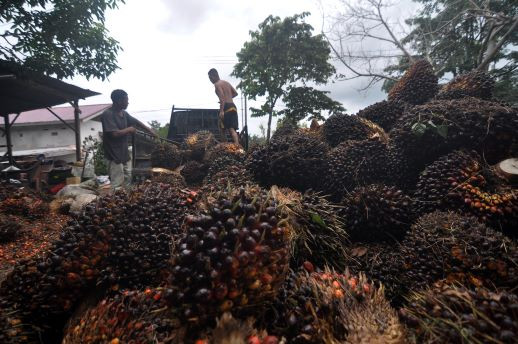
According to Statistics Indonesia (BPS), smallholders tend 99.6 percent of its cocoa area, 98.6 percent of its coffee, 91.3 percent of its rubber and 43.9 percent of its oil palm, and most of this land is yet to be registered.
Indonesia and the European Union recently finalized negotiations on the Indonesia-EU Comprehensive Economic Partnership Agreement (IEU-CEPA). The agreement, which awaits signature and European Parliament consent, will open a market of around 450 million consumers in the EU. However, it comes with a condition - the EU Deforestation Regulation (EUDR), which requires companies selling certain commodities to trace shipments to the plot where they were grown.
Smallholders make up the majority of Indonesia's cocoa, coffee, rubber, and oil palm production, with most of this land yet to be registered. For plantation exporters, the EUDR presents a challenge, as it requires traceability for their exports to the EU. This has raised concerns about whether the smallholders can register their land soon enough to benefit from the agreement.
The IEU-CEPA will eliminate tariffs on over 98 percent of tariff lines, but for processed goods, the EU is removing Indonesia from its Generalized Scheme of Preferences, which will result in standard tariffs on these goods. Despite this, the agreement is still seen as an opportunity for Indonesia's plantation exporters, as long as their exports meet the EUDR requirements.
To capitalize on the IEU-CEPA, the Indonesian government should prioritize mapping smallholder lands, particularly in coffee and cocoa areas, where exposure to the EUDR is highest. This could be achieved by leveraging existing tools, such as the Cultivation Registration Certificate (STDB) for plantation crops. The government should also explore expanding export markets beyond the EU, starting with countries like the United States, Canada, Japan, South Korea, and China, which are significant buyers of Indonesian coffee.
Finally, regular publication of export data by commodity, tracing back to mapped plots, would demonstrate progress in meeting the EUDR requirements.
Written by urgent.news from The Jakarta Post's reporting — not their text. Machine-written — may contain errors; check the original before relying on it.