Hubble Telescope sees cosmic 'cat's tail' that could wrap around Earth and the sun 500 times
Using the Hubble Space Telescope, astronomers have investigated a cosmic cat's tail formed when two Pluto-sized bodies smashed together.
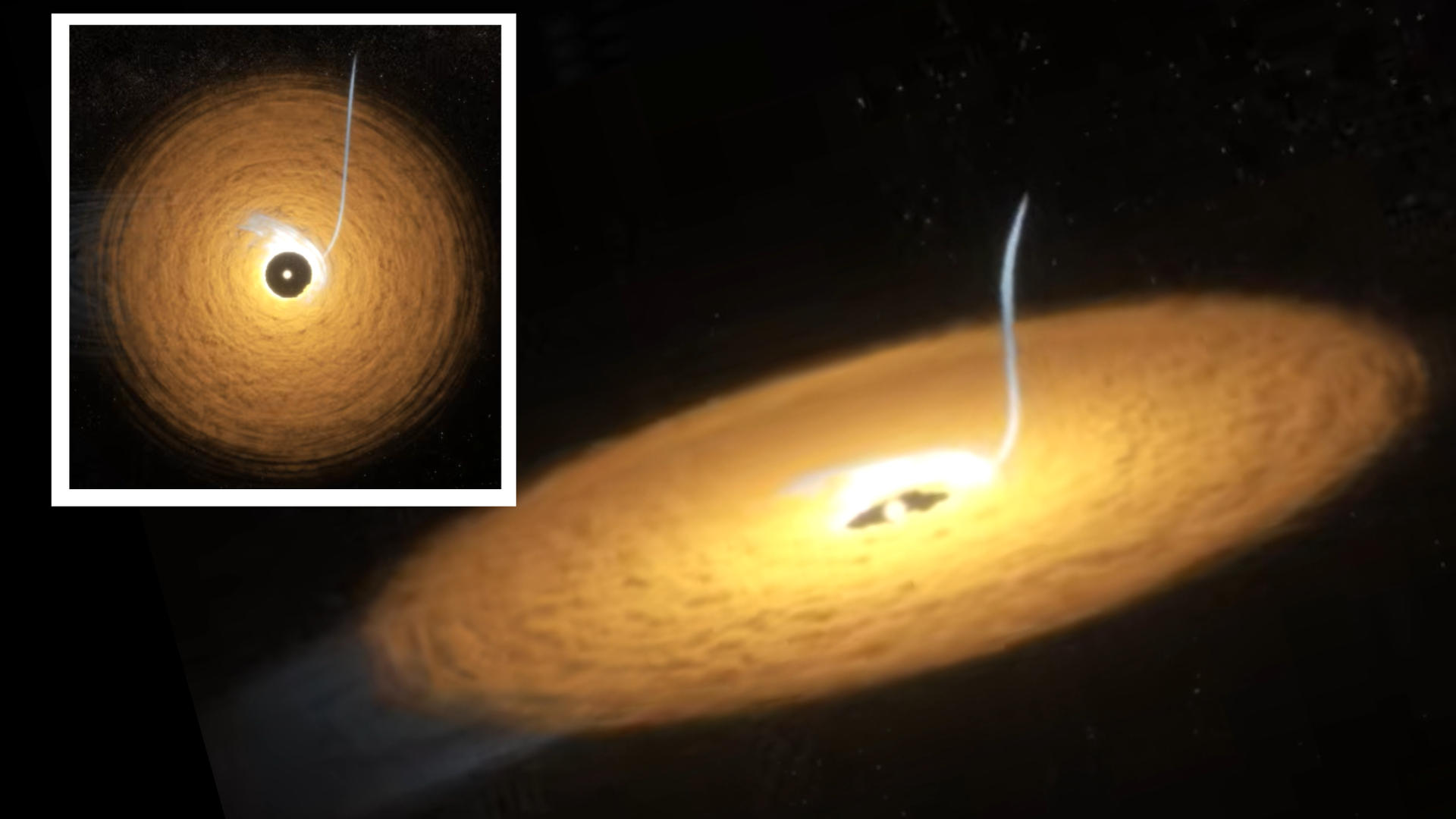
Using the Hubble Space Telescope, astronomers have discovered a cosmic cat's tail extending from the debris disk Beta Pictoris, located 63 light-years away. This tail, nicknamed the Cat's Tail, is so long it could wrap around the sun-Earth system about 500 times, or as long as 200 trillion house cats. The unique feature is thought to have formed from a collision between two Pluto-sized bodies, similar to those that occurred during the early stages of our own solar system.
The team behind the discovery used 14 years of observations to understand the violent conditions that led to the formation of the Cat's Tail. The feature is also fluffy, as its grains are extremely porous, a result of the high velocities involved in the collisions that created it. The Cat's Tail may also be interacting with one of the planets in the Beta Pictoris system, Beta Pictoris b, a massive gas giant.
This interaction provides further evidence of how giant planets influence their surrounding dust and icy bodies, highlighting the significant impact these massive celestial bodies have on their surroundings.
Written by urgent.news from Space.com's reporting — not their text. Machine-written — may contain errors; check the original before relying on it.