Hindsight-Driven Development: An Iterative Approach to Building Software With AI
Spec-driven development asks you to guess before you build. With AI coding agents, build first, fix what you see, and leave the spec for last.
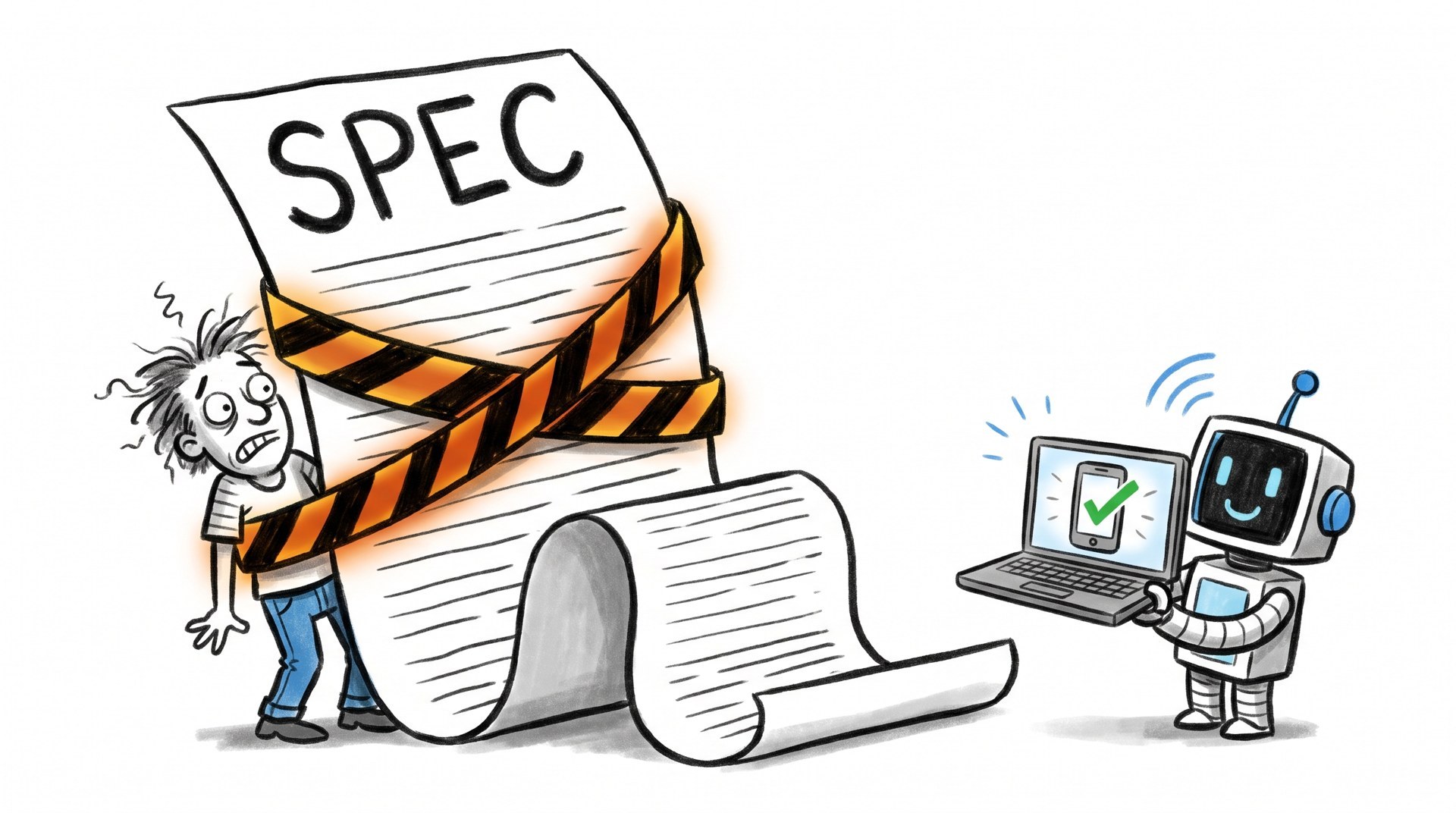
The article discusses an innovative approach to software development called Hindsight-Driven Development, which leverages AI to challenge traditional spec-driven development methods. In the past, developers spent valuable time writing detailed specifications for features before building them, often guessing what users wanted without seeing the actual product. This process was expensive and inefficient, as changes were costly, and the final product often didn't meet user needs.
AI has changed the game by allowing developers to build features quickly, often in minutes, using an AI coding agent. The article suggests that instead of relying solely on upfront specifications, developers should adopt a Hindsight-Driven Development approach. This approach involves writing a single sentence of intent, building a rough version of the feature, using it, and making corrections based on real user feedback. The idea is to let the product dictate the development process, rather than the other way around.
The key to Hindsight-Driven Development is to recognize that recognizing what's wrong with a product is easier than predicting what's right. By putting a rough version of the feature in front of users early and often, developers can gather valuable feedback that leads to better requirements. This approach trades the hard problem of predicting the right solution for the easy problem of recognizing the wrong ones.
Hindsight-Driven Development differs from Agile and vibe coding. While Agile still involves writing tickets and features upfront, Hindsight-Driven Development emphasizes the importance of building, testing, and refining the product based on real user feedback. Vibe coding accepts whatever the AI produces without questioning it, whereas Hindsight-Driven Development questions every result, corrects it, and keeps every correction as a test or a line in the spec.
The article also highlights the historical context of this approach. Fred Brooks, a pioneer in software development, suggested in 1975 that teams should plan to throw away one version of the software. Later, he refined this idea to "grow, not build, software" in 1986. Slack, an in-house chat tool initially developed for an online game that later became a standalone product, exemplifies this idea.
The article argues that the price of building prototypes has decreased, making it easier and more affordable to adopt this approach.
In conclusion, Hindsight-Driven Development flips the traditional spec-first approach on its head, encouraging teams to base their development process on what they have already seen rather than what they imagine. By allowing the product to drive the development process and incorporating user feedback early and often, teams can create more effective, user-centered software.
Written by urgent.news from HackerNoon's reporting — not their text. Machine-written — may contain errors; check the original before relying on it.