Here's what to know about another cyberattack on European supermarket fridges
Experts say outdated technology and weak passwords are to blame.
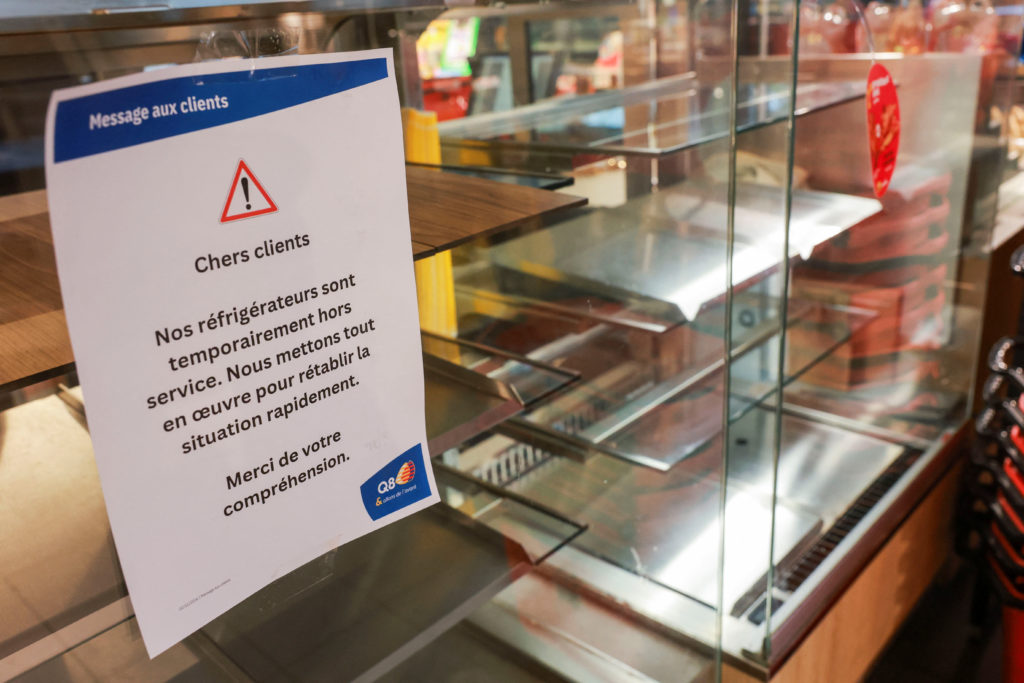
Mysterious cyberattacks on European supermarket fridges have caused officials to scramble to understand the situation. Supermarkets in various European countries reported that their refrigeration units warmed up after being remotely controlled, leading to significant food spoilage and financial losses. Swedish supermarkets experienced fridges and freezers set to 50°C (122°F), reminiscent of earlier incidents in France, Belgium, and the Netherlands.
At least half a dozen European countries, including Sweden, Belgium, Luxembourg, Ireland, Italy, and Estonia, reported issues on Monday.
In Athens, Greece, a butcher shop owner reported that someone hacked into a refrigeration unit's temperature control, raising it to 150°C (302°F). The technician required two hours to regain control, and the shop resorted to disabling Wi-Fi to restrict outside access.
Cybersecurity experts emphasized the risks of connecting devices to the internet, comparing it to treating small computers like ordinary appliances. A cybersecurity professor at the University of St. Gallen in Switzerland stated that fridges don't appear to be security risks, which is why attackers find them appealing. The attacks highlight the need for businesses to secure their connected systems, as they serve as entry points for malicious actors.
French cybersecurity investigators attributed the earlier incident to outdated remote control modules from Danish company Danfoss and U.S. company Copeland. Danfoss and Copeland have since identified vulnerabilities in their discontinued controllers.
The issue stems from the widespread use of outdated technology, with experts noting that many businesses prioritize new technology without addressing the underlying technical debt. British cybersecurity officials pointed to "legacy technology" as the cause of the latest attack, noting that French fridges were connected directly to the internet with default passwords. The French National Cybersecurity Agency (ANSSI) is investigating compromised refrigeration controllers and has issued security alerts to potential victims.
Italian cybersecurity and intelligence officials were scheduled to meet to discuss the ongoing investigations. While no evidence suggests AI was involved, the attacks exploited well-known vulnerabilities that have been available for some time. Experts stress the importance of addressing these vulnerabilities to prevent further cyberattacks on critical infrastructure.
Written by urgent.news from PBS NewsHour's reporting — not their text. Machine-written — may contain errors; check the original before relying on it.
This story
This is one outlet's version. Read the fullest account.
- European supermarket fridges got hacked. Again. Here’s what to know winnipegfreepress.com
- European supermarket fridges got hacked. Again. Here's what to know gulfnews.com
- UK also affected by cyber-attack which hit European supermarket fridges bbc.co.uk
- European supermarket fridges got hacked. Again. Here's what to know koreatimes.co.kr