Handelsblatt-Auswertung: Bei einigen Aktien gehen Vorstände und Aufsichtsräte ziemlich ins Risiko
Nur wenige Insider haben im Oktober Aktien der eigenen Unternehmen gekauft. Zugegriffen haben sie bei stark gefallenen und deutlich schwankenden Papieren.
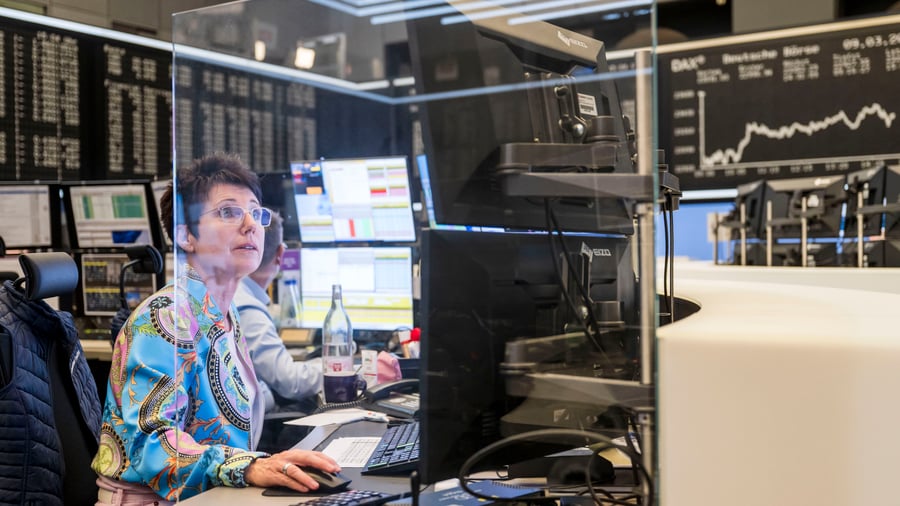
Recent data from Handelsblatt analysis reveals that some executives and supervisory boards are taking substantial risks with their company stock investments. The increasing volatility in stock markets has left investors torn between optimism and pessimism, especially regarding the profitability of massive corporate investments in artificial intelligence (AI).
German executives and supervisory boards have largely refrained from trading company stocks amid this environment. Olaf Stotz, a professor at the Private University Frankfurt School, regularly assesses executive stock transactions reported to the German financial oversight authority, Bafin, for the Handelsblatt. Stotz has categorized several of the largest insider purchases in October as highly speculative, particularly those of Hellofresh.
Hellofresh's supervisory director Florian Schumacher bought over a million euros worth of the company's shares in an investment firm called Active Ownership after the stock had fallen further following a reduction in the company's annual forecast in September. This reduction was due to Hellofresh's weak financial performance. Schumacher's purchase was near the stock's low point, which had dropped to around 2.30 euros.
Since then, the stock has risen to 2.90 euros, though still far below its record high of over 97 euros five years ago. In the case of two other top insider purchases, the executives were "quite risky," according to Stotz. Hellofresh and Deutz, a motor manufacturer, are both cyclical values heavily influenced by economic cycles that also fluctuate significantly.
Deutz saw insider buying in August and September, after which the stock rose by more than 30% to 13.35 euros, before falling again. The reason was, among others, that the company planned a capital increase. Supervisory directors then bought the stock again at prices between nine and ten euros, spending over 400,000 euros in total.
For MBB, a similar pattern emerged, with founder and supervisory board chairman Christof Nesemeier increasing his stake by nearly 300,000 euros via MBB Capital Management GmbH. The stock had risen from 167 euros after Nesemeier had purchased it at that price in July. However, the stock subsequently fell back below 190 euros. The supervisory purchase was after the company's third-quarter results, which exceeded expectations, led to a rise in the company's earnings forecast for the current year.
Insider risks are increasingly seen in Rheinmetall, the stock of which has lost a third of its value since January, but the defense contractor regularly appears on the Handelsblatt list of the largest insider purchases. Unlike previous years, there were no sales. Supervisory director Arthur Georgi purchased Rheinmetal shares worth nearly 240,000 euros via a foundation, paying about 955 euros per share.
The stock has since risen to over 1,000 euros. Since early 2022, it has risen by 1,100 percent. Krones, a beverage bottling equipment manufacturer, also saw significant insider buying this year. Supervisory director and major shareholder Petra Schadeberg-Herrmann increased her stake by nearly 550,000 euros via her asset management company Schawei GmbH, paying about 105 euros per share.
Since then, the stock has risen to over 1,000 euros. The stock has been down 1,100 percent this year. Schadeberg-Herrmann saw an opportunity to buy Krones stock for the first time in a long time after selling her shares at 142 euros in January. While there were few insider sales this October, Stotz interprets it as evidence that executives and supervisory boards are being cautious about the future developments in the stock markets.
However, a positive sign for the broader market is the lack of significant sales. The only outbound transaction was by Fuchs, a lubricant manufacturer, where the CEO sold preferred shares worth around 260,000 euros. At the same time, the Fuchs family bought treasury shares worth 2.2 million euros, which are not listed on any German stock exchange.
Stotz's Insider Barometer, calculated from monthly transactions, remains at 120 points, indicating a continued buy signal that the stocks should perform better than bonds over the next three months.
Written by urgent.news from Handelsblatt's reporting — not their text. Machine-written — may contain errors; check the original before relying on it.