Govt assures public of meeting gas demand in winter, pledges to ensure supply during mealtimes
Petroleum Minister Ali Pervaiz Malik on Tuesday assured the public that the government will make utmost efforts to meet the demand for liquefied petroleum gas (LPG) during the winter months. His remarks come as LPG supply has been disrupted due to the closure of Iranian border crossings, resulting in gas cylinders being sold at twice the official rate in the open market. LPG is widely used for…
Pakistan's Petroleum Minister Ali Pervaiz Malik has assured citizens that the government is taking all necessary steps to meet the country's demand for liquefied petroleum gas (LPG) during the winter season. The announcement follows a disruption in LPG supply due to the closure of Iranian border crossings, causing LPG to be sold at twice the official rate in the open market. LPG is widely used for cooking and various other purposes, especially by those not connected to the piped gas network.
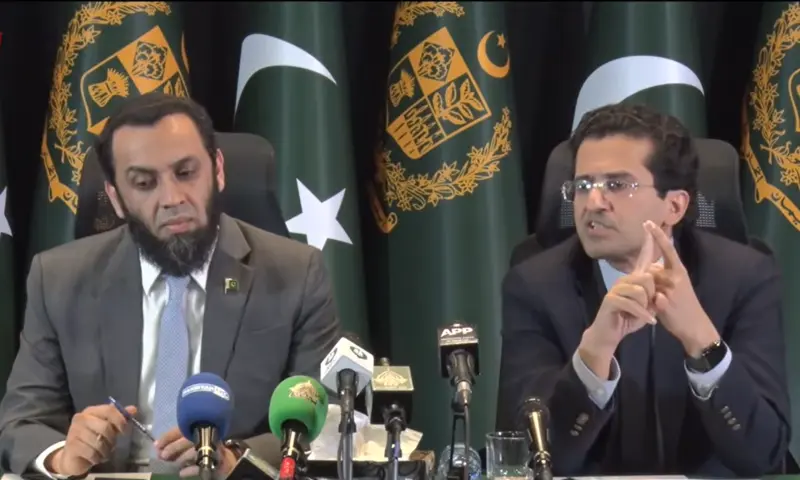
Addressing reporters, Malik stated that despite the winter peak in December and January, the government will strive to meet the demand by purchasing expensive fuel for the piped network and using liquefied natural gas (LNG) if necessary. The minister emphasized that the government will ensure piped supply of domestic gas for meal times, as LPG is needed for other essential purposes and by those without piped connections.
Regarding fuel prices, Malik noted that the latest reduction had taken effect, and the international market had shown a decline on Tuesday. He also mentioned that oil refineries would contribute to the petroleum levy by shouldering a cumulative impact of Rs15 billion for 30 days, potentially leading to a Rs14.71 reduction in the petrol price for consumers. Malik added that efforts were underway to introduce a similar system for LPG.
The minister highlighted that Pakistan faces numerous challenges in ensuring the availability of LPG, with some individuals attempting to exploit the situation after supply disruptions on the western border. The total LPG demand is approximately 2.4 million tonnes, with locally produced quantities ranging from 2,000 to 2,500 tonnes per day, depending on the crude used and the amount of LPG produced.
Currently, nearly half or more than half of the demand comes through the western border, which has been affected by difficulties. The remaining demand is met by two terminals, Engro and SSGC LPG, with a combined storage capacity of around 14,000 tonnes.
Malik emphasized the need to build Pakistan's energy security infrastructure from the ground up, regretting that no work had been done on fuel storage or refineries before the war. He lamented the absence of pressurised ships and Very Large Gas Carriers (VLGCs) that could have facilitated gas storage, emphasizing the importance of addressing these issues promptly.
Responding to a query, Malik explained that domestic demand for LPG is expected to surge by 400 to 500 million cubic feet per day (mmcfd), necessitating curtailment measures during meal times. The minister also revealed that Prime Minister Shehbaz Sharif had directed the government to make alternative arrangements for RLNG (reformed LPG) for power generation, with November being well-covered for both requirements.
Information Minister Attaullah Tarar, speaking alongside Malik, highlighted that the Prime Minister prioritizes the public's interests and has implemented strong and bold decisions, such as the fuel subsidy scheme. He also emphasized that the monopoly in the LPG sector has been abolished, the quota system has been eliminated, and competition has been introduced.
Tarar noted that the Prime Minister has directed Malik to draft a plan for LPG supply during the winter and ensure that there is no load-shedding during meal times.
Written by urgent.news from Dawn - Pakistan's reporting — not their text. Machine-written — may contain errors; check the original before relying on it.