Edelmetall: Zentralbanken nutzen Goldpreis-Schwäche für Zukäufe
Nach der Korrektur am Goldmarkt haben besonders zwei Notenbanken ihre Devisenreserven mit Edelmetall aufgestockt. Das könnte als Einstiegssignal für weitere Anleger wirken.
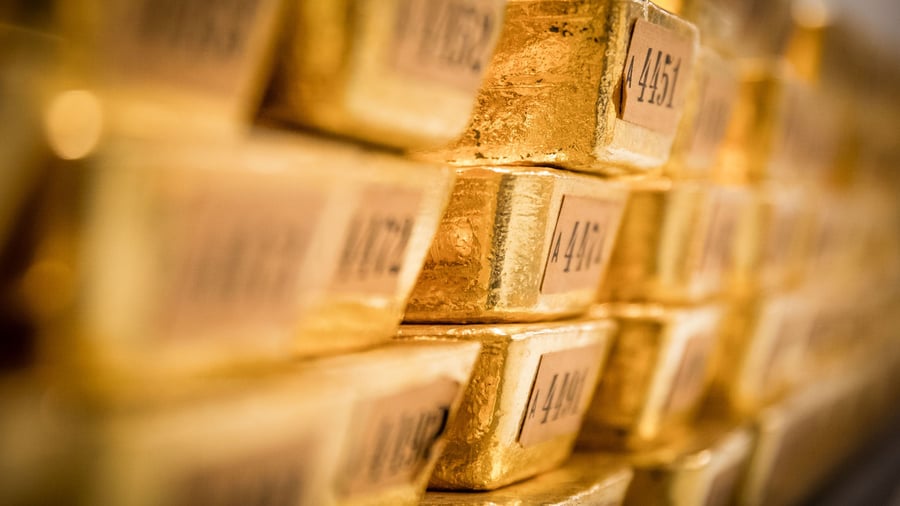
Zentralbanken have taken advantage of the recent dip in gold prices to increase their precious metal holdings. In the third quarter alone, central banks bought 321 tonnes of gold, according to figures released by the World Gold Council (WGC) on Tuesday. This marks a 42% increase from the previous year's quarter and significantly surpasses the five-year average of 227 tonnes per quarter.
John Reade, chief market strategist at the WGC, stated, "Central banks remain very keen on adding gold to their foreign exchange reserves." The opportunity for this is favorable as the gold price has come down significantly after reaching an all-time high above $5,400 per fine ounce (around 31.1 grams) in January. Currently, the gold price is nearly 28% lower at around $3,900.
Reade notes, "Central banks are currently using the lower prices to expand their gold purchases." Two central banks were very active in recent purchases. The Chinese central bank, with over 63 tonnes of purchases, was the biggest buyer. Second was Poland's central bank, which supplemented its foreign exchange reserve by 40 tonnes of gold.
Smaller amounts of 14 tonnes were also acquired by the banks of Kazakhstan and Uzbekistan. The WGC estimates that central banks have purchased an additional 120 tonnes, likely hidden. Central banks are not obligated to disclose their gold purchases. Historically, Chinese and Russian central banks have bought gold on a large scale without revealing these purchases, thus keeping them confidential.
Interest from central banks in adding gold to their foreign exchange reserves remains strong, as shown by a survey conducted by the WGC in June. Of the 76 participating central banks, 89% expected their gold holdings to grow generally. Moreover, 45% - the highest ever - stated that they intend to expand their own holdings. "The actual purchases confirm the survey results," emphasizes Reade.
"Central banks are indeed a price-sensitive buyer: the fundamental decision for a gold buying program may be taken at the top of the central bank, but it is customary for a team managing the daily foreign exchange portfolio to implement the purchases in the market. The average price paid for the bought gold remains under observation.
Hence, central banks tend to buy a bit more gold when prices are low." Recent central bank purchases have helped stabilize the gold price near the $4,000 mark per ounce. Reade believes that announcing new gold purchases often generates enthusiasm among other investor groups. "The signaling effect should not be underestimated." Therefore, asset strategists at DZ Bank write in a recently published forecast, "Gold has comeback qualities."
While changing interest expectations in the US have pressured the gold price, the gold price may rise again on a yearly basis: "On an annual basis, intact drivers such as central bank purchases point towards a return to the $5,000 range." More: Stocks, Bonds, Gold – which returns are there in the long run?
Written by urgent.news from Handelsblatt's reporting — not their text. Machine-written — may contain errors; check the original before relying on it.