Chinese University of Hong Kong to offer free AI dementia screening to 2,700 seniors
The Chinese University of Hong Kong (CUHK) will launch its first free, district-based dementia screening programme next year, using artificial intelligence (AI)-powered retinal imaging to detect early signs of cognitive decline in 2,700 older residents within two years. The programme will be implemented in Wong Tai Sin, which has the highest proportion of elderly residents among Hong Kong’s 18…
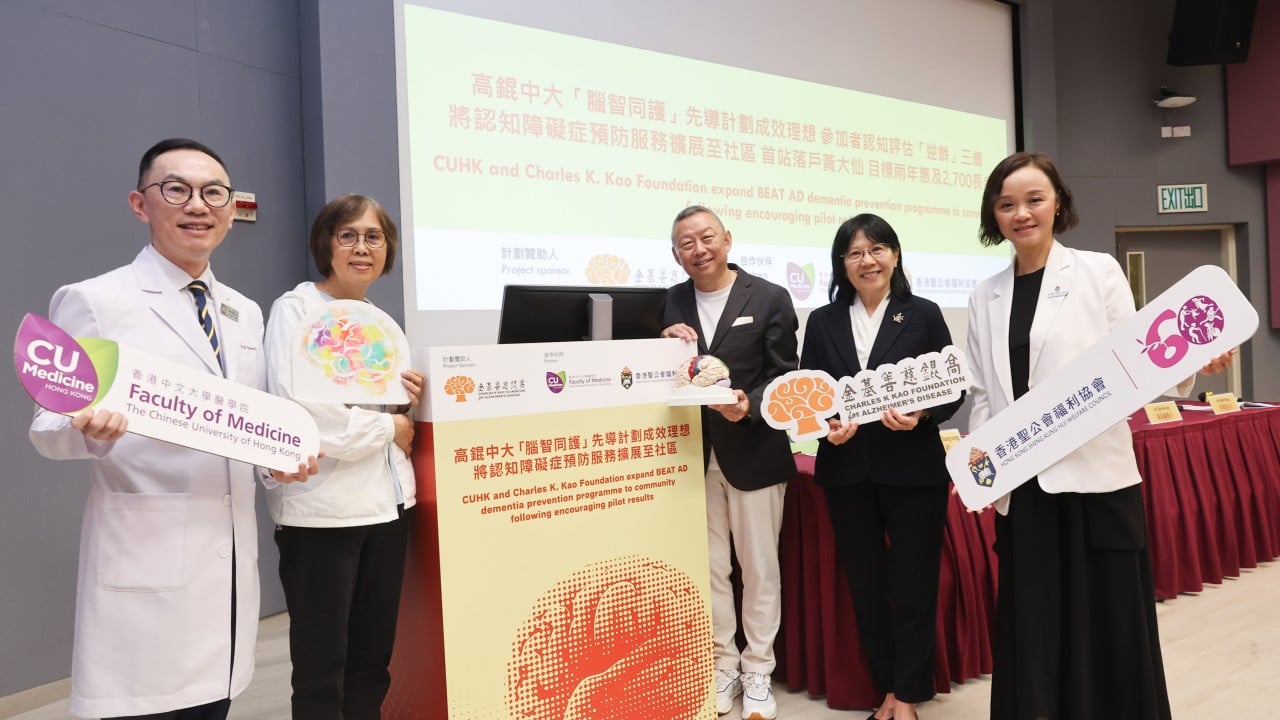
The Chinese University of Hong Kong (CUHK) is set to launch a free, district-based dementia screening programme using AI-powered retinal imaging, targeting 2,700 seniors in Wong Tai Sin, the district with the highest elderly population in Hong Kong. The initiative, named BEAT AD@WTS and sponsored by the Charles K Kao Foundation, aims to detect early signs of cognitive decline and prevent dementia by addressing risk factors such as physical inactivity and social isolation.
Professor Vincent Mok, co-director of the screening programme, warns that Hong Kong's rapidly ageing population will see the number of dementia patients increase from 180,000 in 2026 to 240,000 in 2036, with about 100,000 cases potentially preventable through early intervention. The screening, set to begin in January 2027, will involve a brain health evaluation followed by AI retinal imaging and cognitive assessment, with participants who test positive paired with trained volunteers for a year of support and personalised care plans.
Brief written by urgent.news from South China Morning Post's own syndicated text. Machine-written — may contain errors; check the original before relying on it.
This story
This is one outlet's version. Read the fullest account.
- iCOMPASS unveils KY AI platform for Hong Kong bank governance vir.com.vn
- Meta says it met Hong Kong privacy watchdog over AI-enabled glasses concerns scmp.com
- HSBC to open Hong Kong AI institute following Singapore launch businesstimes.com.sg
- HSBC to open Hong Kong AI Institute following Singapore launch investing.com
- HSBC to open Hong Kong AI Institute following Singapore launch channelnewsasia.com
- HSBC to open Hong Kong AI and emerging technology institute finextra.com
- HSBC to open Hong Kong AI Institute following Singapore launch economictimes.indiatimes.com