Can agent standards keep up with the companies building them?
Mazin Gilbert, executive director of the Linux Foundation’s Agentic AI Foundation, left Google earlier this year to lead the new AAIF, The post Can agent standards keep up with the companies building them? appeared first on The New Stack .
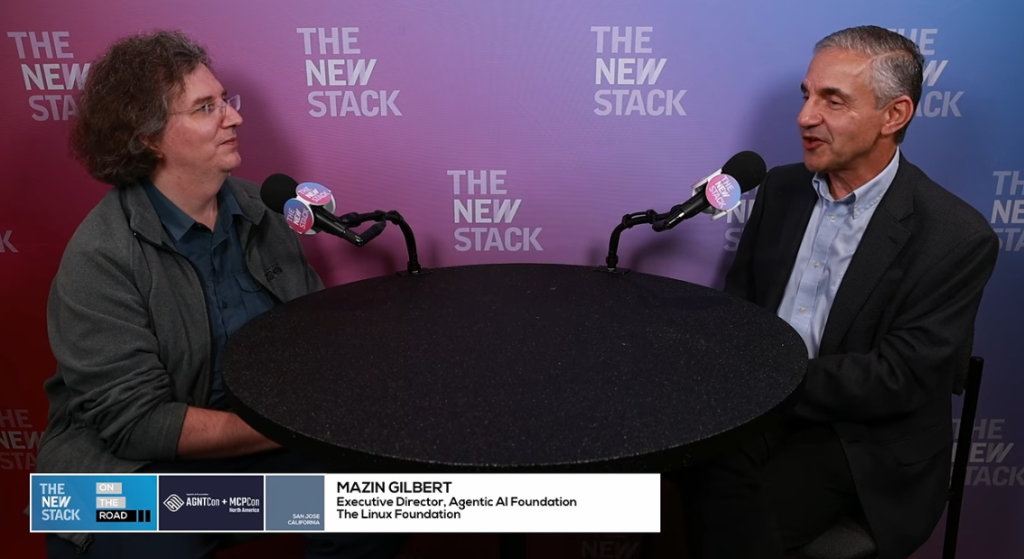
Mazin Gilbert, executive director of the Linux Foundation’s Agentic AI Foundation, recently shared insights about the challenges of maintaining standards in the rapidly evolving agentic AI landscape. Gilbert, who recently left Google to lead the new AAIF, emphasized the importance of moving faster than its members to remain relevant. He highlighted the need for standards as even the companies competing with each other will build products "with and without the standards."
The AAIF, which drew 4,300 registrants at its San Jose event, is grappling with a multitude of challenges. While some members are contributing to protocols and shipping products, others are still figuring out how to build and use agents themselves. Some companies are even "panicking" due to the lack of an agent strategy.
Gilbert stressed the significance of protocols in the agentic AI space, comparing them to the "air we breathe" or the "plumbing" that may not be glamorous but is crucial for the system to function effectively and efficiently. The Model Context Protocol (MCP) specification, for instance, was updated to be stateless, leading to a tenfold increase in downloads within the first ten months of its release.
Gilbert explained that large companies typically contribute the protocols, while smaller companies build on top of them, extending their functionality and developing business models. The foundation currently has 305 members, with about one new company joining daily, making it the fastest-growing foundation in the Linux Foundation’s history. About 40% of its members are startups, and 19% are nonprofits, national labs, and academic institutions.
Despite the rapid growth and diverse membership, Gilbert has not observed any clashes between nonprofits and for-profit companies. He emphasized that the value of a member depends on their contributions, regardless of their for-profit or nonprofit status. The foundation is actively seeking contributions, as none of its members are experts in building agents.
Moreover, the AAIF is also dealing with the challenge of accepting projects. The community submitted 65 projects through its public intake process, and the AAIF has declined some, focusing on the first 10 to 20 projects to define the foundation's DNA. The foundation recently announced four projects (Agent Skills, Open Responses, OpenEnv, and OpenSandbox), which now constitute ten of its total ten projects. The foundation is also exploring the need for multiple gateways and evaluating whether harmonizing them is necessary.
Written by urgent.news from The New Stack's reporting — not their text. Machine-written — may contain errors; check the original before relying on it.