Banks face rising bad debts amid push for debt market development
Rising bad debts and shrinking provisioning buffers are prompting tighter credit discipline while state owned Vietnam Asset Management Company s expanded mandate and a new trading platform offer fresh momentum for debt resolution
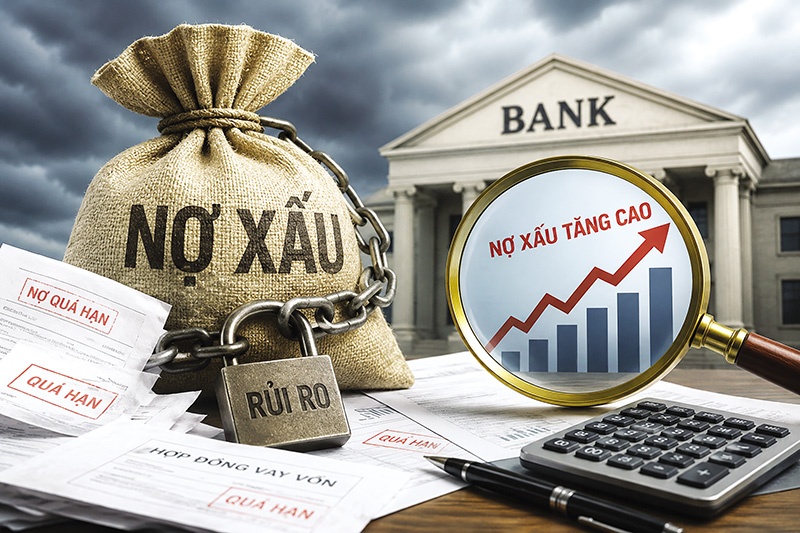
Recent financial statements of banks reveal a significant rise in bad debts. Notably, non-performing loans (NPLs) and special-mention loans (Group 2 debts) have expanded considerably at various lenders. For instance, PGBank reported nearly $77.9 million in on-balance-sheet non-performing loans at the end of September 2026, marking a 78.4% increase from the previous year.
The bank's NPL ratio reached 3.93%, surpassing the warning threshold established by the State Bank of Vietnam (SBV) and significantly higher than the 2.36% recorded at year-end 2025. Additionally, the bank's Group 3 (substandard) and Group 4 (doubtful) loans nearly tripled. The State Bank of Vietnam has responded to this trend by requiring banks to strictly adhere to credit standards.
Despite the surge in bad debts, the bank's NPL coverage ratio has declined to 30.5% as of September 2026, placing PGBank among the institutions with the lowest coverage ratios in the banking system. Techcombank has also seen a rise in its NPL ratio, from 1.13% to 1.36% in the same period. Moreover, Group 2 loans have doubled, indicating a substantial volume of debts at risk of deteriorating into non-performing loans. Techcombank's NPL coverage ratio currently stands at 107%, down from 128% at the end of 2025.
LPBank's bad debts increased by approximately 36.5% from the end of 2025, raising its NPL ratio to 1.87% from 1.68% as of December 31, 2025. The bank's special-mention loans (Group 2) also increased by more than 72% from the beginning of the year. The NPL coverage ratio for LPBank fell to 62.8% from 73.9% at the end of 2025. Similar to PGBank, the SBV has urged banks to maintain strict credit standards, given the erosion of provisioning buffers across the banking system.
In light of the deteriorating property market and the slow disposal of collateral, the SBV is encouraging banks to diversify their debt resolution methods through the debt trading market. Although a debt trading exchange has been established, banks have yet to make use of it. The new Vietnam Asset Management Company (VAMC), under a revised legal framework, is set to play a significant role in resolving bad debts and developing the debt trading market, with the platform expected to become operational in late 2027 or early 2028.
Written by urgent.news from Vietnam Investment Review's reporting — not their text. Machine-written — may contain errors; check the original before relying on it.