Amyloid/RNA Condensates with Germ Granule Characteristics Are Present in Rat Epididymal Spermatozoa and Exhibit Prion-Like Propagation Activity
Environmental exposures to the germline can alter its epigenome resulting in new traits being acquired by offspring. While the epigenetic carrier in mammalian spermatozoa remains unknown, studies in C.elegans show that amyloids and sperm-specific populations of germ granules, phase-separated biomolecular condensates enriched in RNA-binding proteins and small noncoding RNAs, transmit heritable…
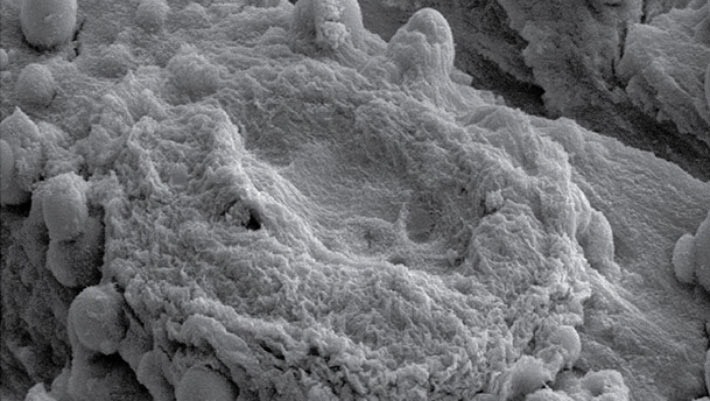
Recent research has uncovered intriguing structures within rat epididymal spermatozoa, known as germ granule-like condensates. These structures, found in the head perforatorium, exhibit characteristics similar to germ granules seen in C.elegans. The condensates contain markers and small noncoding RNAs, and are enriched in amyloid proteins such as androgen receptor (AR) and TDP43.
The most striking finding is that these condensates demonstrate prion-like propagation activity. When extracted, they can act as molecular seeds, facilitating the assembly of amyloid structures in recombinant AR and TDP43. This discovery suggests that sperm germ granule-like condensates may have evolved to enable organisms to adapt to environmental changes through a non-Mendelian protein-based form of inheritance.
Written by urgent.news from bioRxiv's reporting — not their text. Machine-written — may contain errors; check the original before relying on it.