AI Is Changing How Semiconductor Fabs Work — and Engineers Are Moving Faster Because of It
Demand for advanced chips is rising. The processes to build them are getting more complex. And the margin for error is shrinking. For engineers, understanding how a process change will behave, how a material will interact with a new step, how a defect maps back to a root cause are critical, challenging steps in semiconductor […]
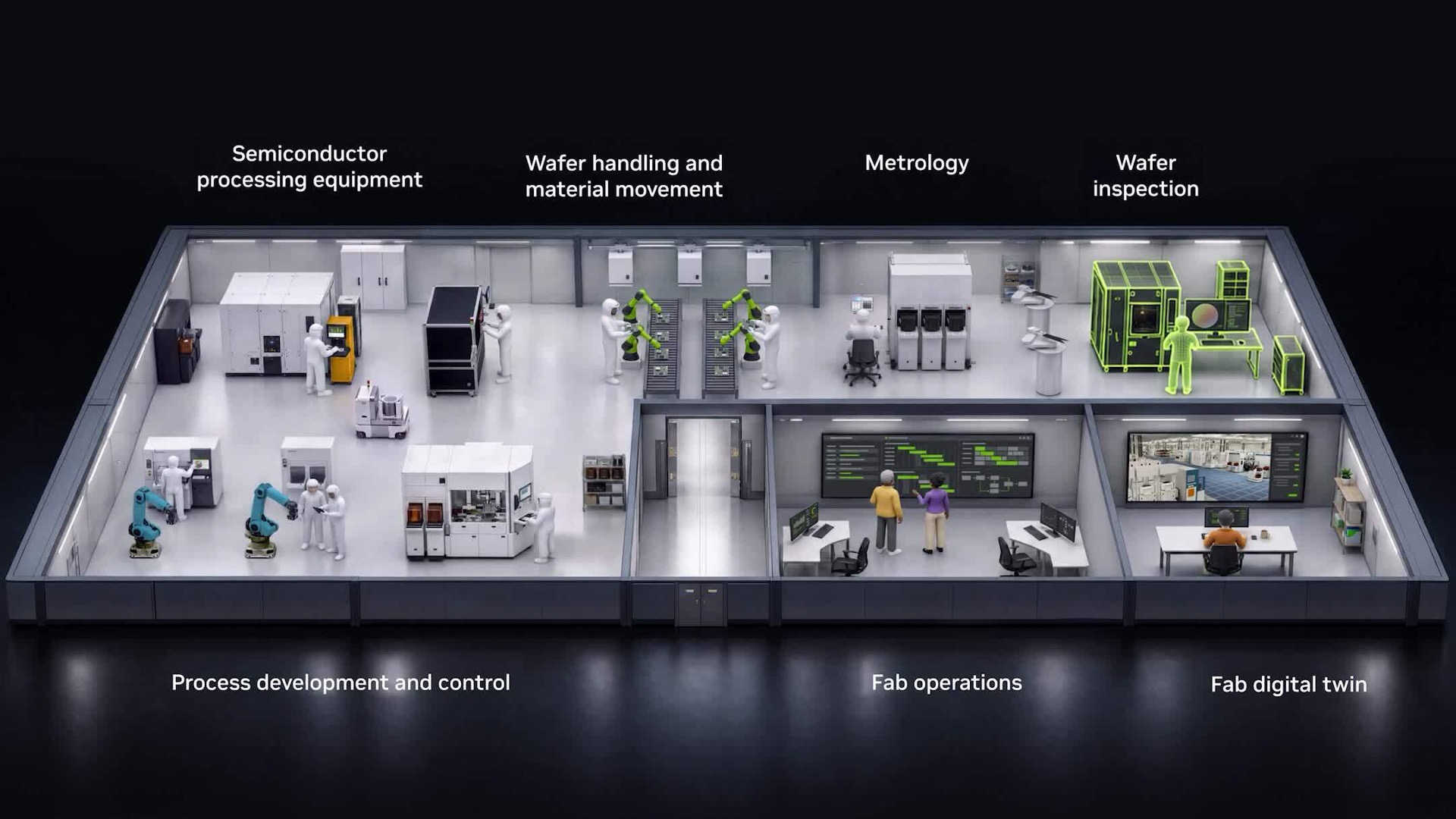
Chip production is becoming increasingly intricate, with engineers facing tighter tolerances for error. Traditionally, understanding how a process tweak will perform, or how a material will react to a new step, involves time-consuming physical experiments on semiconductor fabrication lines. Mistakes in yield or quality can have serious consequences.
Artificial intelligence (AI) is revolutionizing semiconductor manufacturing, streamlining engineers' decision-making process and expediting the development cycle. By leveraging accelerated computing, physics-based AI, AI agents, and digital twins, engineers can now test multiple alternatives within a fraction of the time previously required.
These AI-driven tools facilitate accelerated simulations, predict process behavior, and enable teams to explore material behavior and process reactions, ultimately leading to more informed decisions across the entire chip lifecycle.
Written by urgent.news from NVIDIA Blog's reporting — not their text. Machine-written — may contain errors; check the original before relying on it.