Why Elon Musk is weighing a Tesla-SpaceX merger: What a combined entity could mean for his business empire and investors
Elon Musk is weighing a potential merger between Tesla and SpaceX, a move that could create a $3.5 trillion technology giant. With both companies expanding into AI, robotics, semiconductors, a merger could unlock synergies but also raise regulatory, and governance concerns for investors.
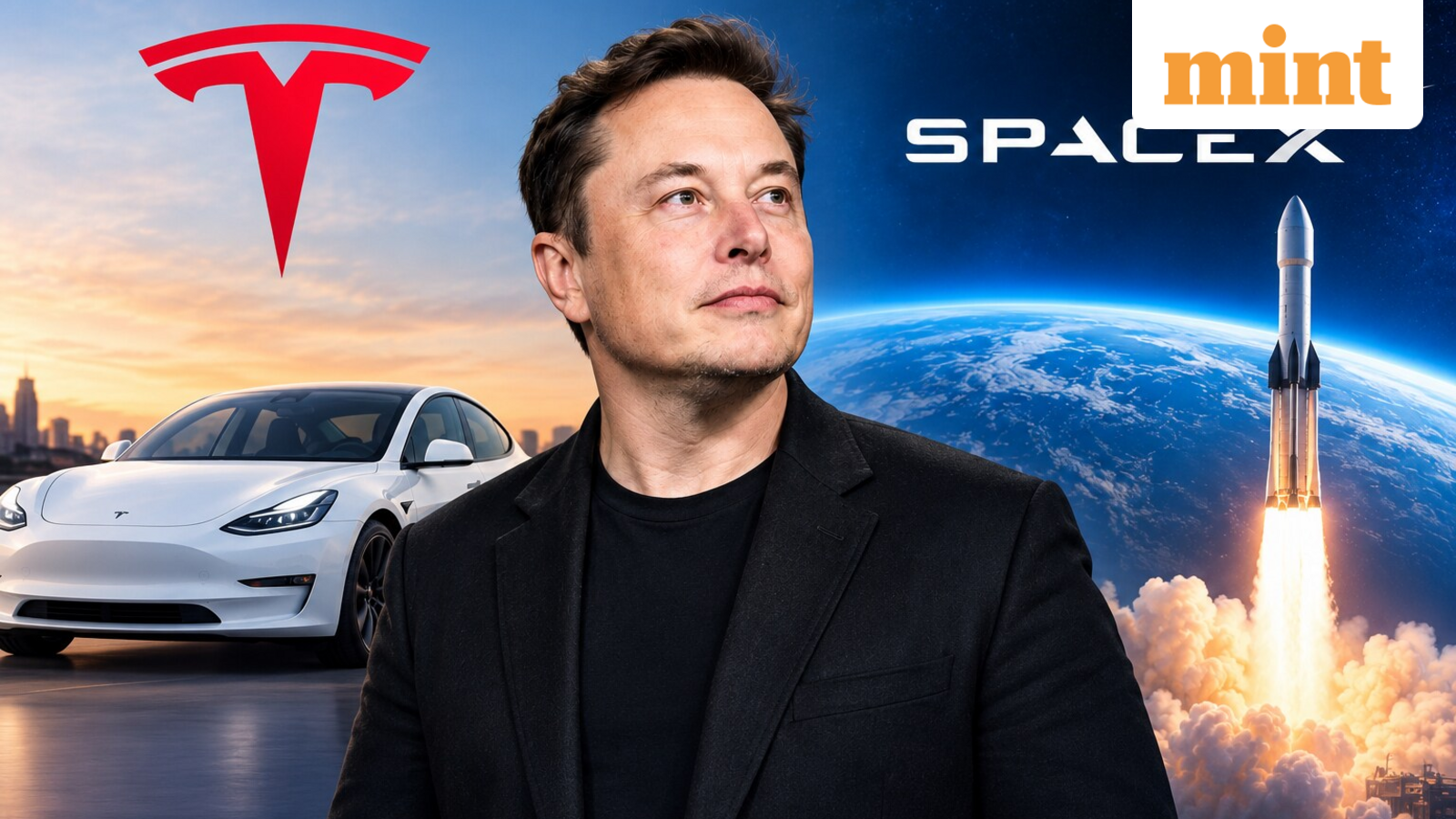
Tesla and SpaceX are two of Elon Musk's most prominent ventures, valued at around $1.5 trillion and $2 trillion respectively. A potential merger of the two companies could create a corporate entity valued at nearly $3.5 trillion, making it one of the world's most valuable companies. Musk has expressed strong support for the idea, stating that merging Tesla and SpaceX would create a technology and manufacturing ecosystem spanning transportation, energy, robotics, communications and space exploration.
The proposed merger would bring together various interconnected parts of Musk's business ambitions, including AI, advanced chip design, robotics, satellite communications and advanced computing infrastructure. A combined entity could accelerate development in areas such as AI, chip design, robotics and next-generation computing infrastructure.
However, the merger would require shareholder approval and face significant regulatory and corporate governance challenges. Bringing Tesla and SpaceX under one corporate structure could also raise concerns over regulatory scrutiny, national-security interests and Tesla's relationship with Beijing due to SpaceX's government contracts and satellite operations.
If approved, investors would gain exposure to a broader range of businesses through a single corporate entity, including Tesla's electric vehicles, battery storage systems, autonomous driving technology and humanoid robotics ambitions, as well as SpaceX's rocket-launch operations, Starlink satellite internet business and future space-based ventures.
Written by urgent.news from Live Mint's reporting — not their text. Machine-written — may contain errors; check the original before relying on it.