Why driverless trucks won’t be taking over highways just yet
Driverless trucks with artificial intelligence on board could dramatically change the landscape of freight shipping. A few companies have begun testing early models on some limited routes in Texas and California. Simulations of automated fleets show the potential benefits of the technology: The vehicles could improve safety, enhance fuel economy, and lessen transit times. Truck makers and…
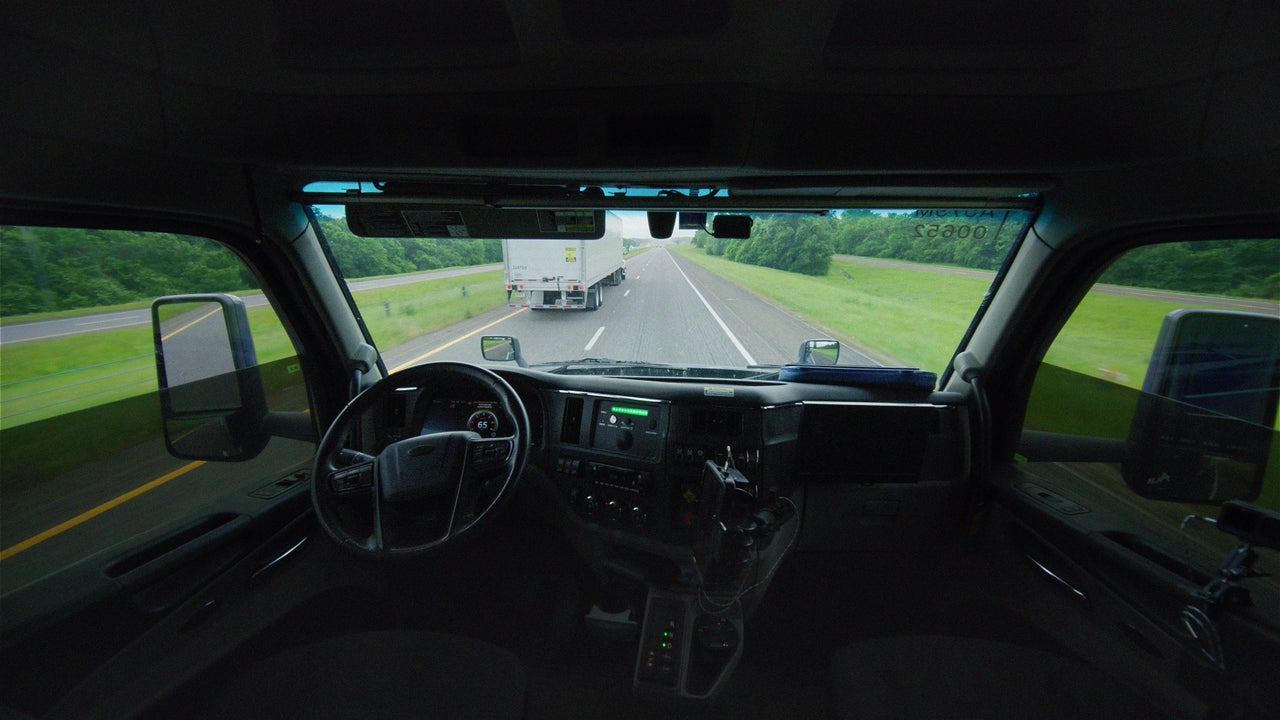
Driverless trucks equipped with artificial intelligence are poised to revolutionize freight shipping, according to experts. Several firms have started testing these early models on limited routes in Texas and California. Simulation studies indicate that automated fleets could improve safety, fuel efficiency, and transit times. However, significant challenges remain, such as operating in variable weather and road conditions, and deciding whether drivers should still be present in the trucks.
As an engineer specializing in human factors and transportation safety, my assessment is that automated trucks and human drivers will collaborate for an extended period. Fully automated trucks, capable of driving on interstate highways in favorable weather conditions, leverage AI, machine learning, computer vision, pattern recognition, and adaptive decision-making.
Companies like Torc utilize AI to combine data from multiple sensors, generating models that predict truck performance. These fully automated trucks could significantly reduce accidents, save fuel, and lower costs by optimizing driving patterns and enabling continuous operation without idling. Additionally, they could help alleviate the current driver shortage by making driving less physically demanding and stressful.
However, automated trucks face difficulties in unpredictable weather conditions, construction zones, and urban environments filled with pedestrians, bicyclists, and traffic lights. Consequently, companies are primarily testing these trucks on straightforward highways. While some companies have scaled back or exited the market, others are focusing on trucks for specific routes or narrowing their scope.
Experts believe that for the foreseeable future, automated trucks will still require a human driver, ideally working in tandem to harness their respective strengths. Collaboration among vehicle manufacturers, technology developers, regulators, and drivers will be crucial to unlocking the full potential of driverless trucks.
Written by urgent.news from Fast Company's reporting — not their text. Machine-written — may contain errors; check the original before relying on it.