Why Doctors Are Last to Know What’s in the Drug Supply
The FDA should create an expedited pathway for clinical tests targeting emerging drug threats, write Dr. Shravani Durbhakula and Jeremy Kourvelas.
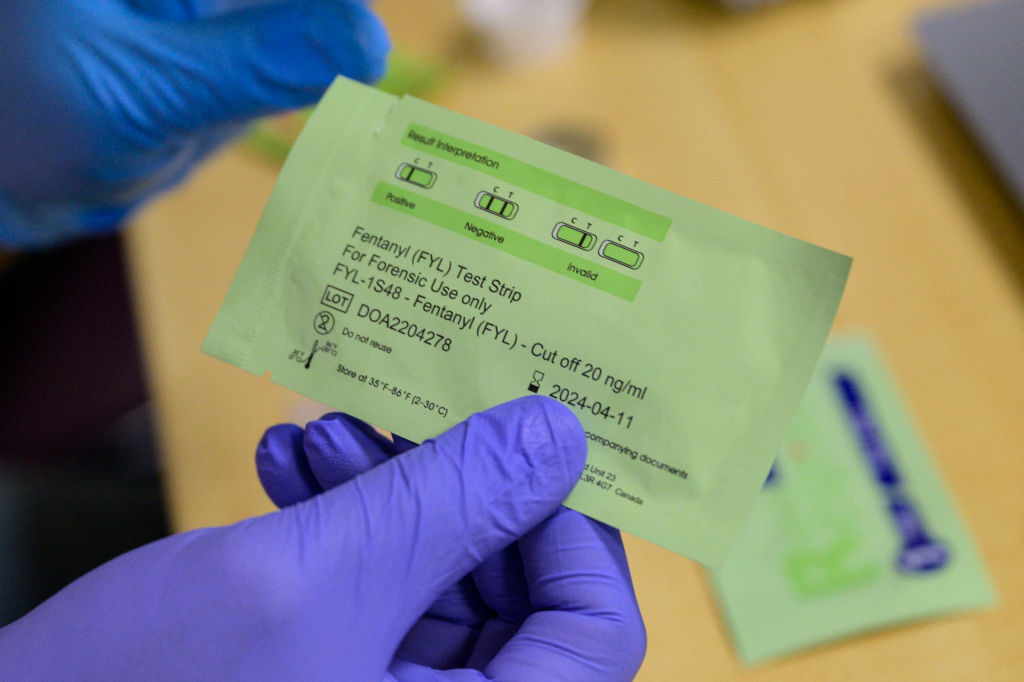
As the illicit drug supply rapidly evolves, new synthetic substances like nitazenes, medetomidine, and cychlorphine have emerged, often appearing in quick succession. Rapid tests for these substances can provide results within minutes, benefiting law enforcement, medical examiners, employers, and the general public. However, doctors and emergency room staff face a significant obstacle: these tests are not available for use in treating patients in real-time.
The primary reason for this disparity lies in regulatory constraints. Many rapid tests for emerging drugs are classified as forensic use only, meaning they cannot be legally utilized by medical clinics adhering to federal law and funding policies. To be used in patient care, these tests must meet the Food and Drug Administration (FDA) requirements for clinical diagnostics.
Additionally, point-of-care testing—testing performed at or near the bedside—must demonstrate simplicity and low-risk status to qualify for waived status under the Clinical Laboratory Improvement Amendments (CLIA).
One such drug that has gained prominence is fentanyl. Early rapid fentanyl tests existed outside clinical medicine, yet hospitals relied on expensive spectrometry testing that could take an hour or longer. By the time FDA-cleared rapid fentanyl tests became available, the illicit market had already shifted again. In 2020, xylazine began spreading through the fentanyl supply, complicating treatment as naloxone, the standard opioid reversal agent, does not work against xylazine.
This leads to patients remaining dangerously sedated or unstable even after naloxone is administered. Furthermore, xylazine is linked to necrotic skin wounds, increasing the risk of sepsis, and its withdrawal syndrome is more complex than opioid withdrawal alone.
The situation worsened with the rise of medetomidine, which also does not react to naloxone and can cause profound sedation and cardiovascular instability. Its withdrawal syndrome can lead to extreme hypertension and tachycardia, even triggering heart attacks in younger individuals. These facts are crucial in determining appropriate treatment and discharge plans for patients, yet they are inaccessible to clinicians until they can be identified in seized samples or through autopsy data.
A more effective approach is needed. The FDA should establish an expedited pathway for clinical tests targeting emerging drug threats, triggered by agencies like the CDC or the Office of National Drug Control Policy when a substance is deemed of significant and growing public-health concern. This pathway could facilitate faster approval and use of point-of-care tests for these drugs, rather than forcing each new threat through the standard timeline.
Additionally, federal agencies could support independent validation of these tests, as a small market does not equate to a small public health or public safety need. By treating point-of-care testing as a presumptive tool, positive results can be confirmed when necessary, enhancing clinical care and enabling hospitals to serve as early-warning systems.
Emergency departments, on the front lines of the overdose crisis, should have access to the most innovative testing tools at the bedside, where every minute counts.
Written by urgent.news from Time's reporting — not their text. Machine-written — may contain errors; check the original before relying on it.