True or false? How fake online reviews are concerning businesses
There are things people can do to take precautions when shopping, including caution when "flawless" ratings are given, and that the best advice is word of mouth.
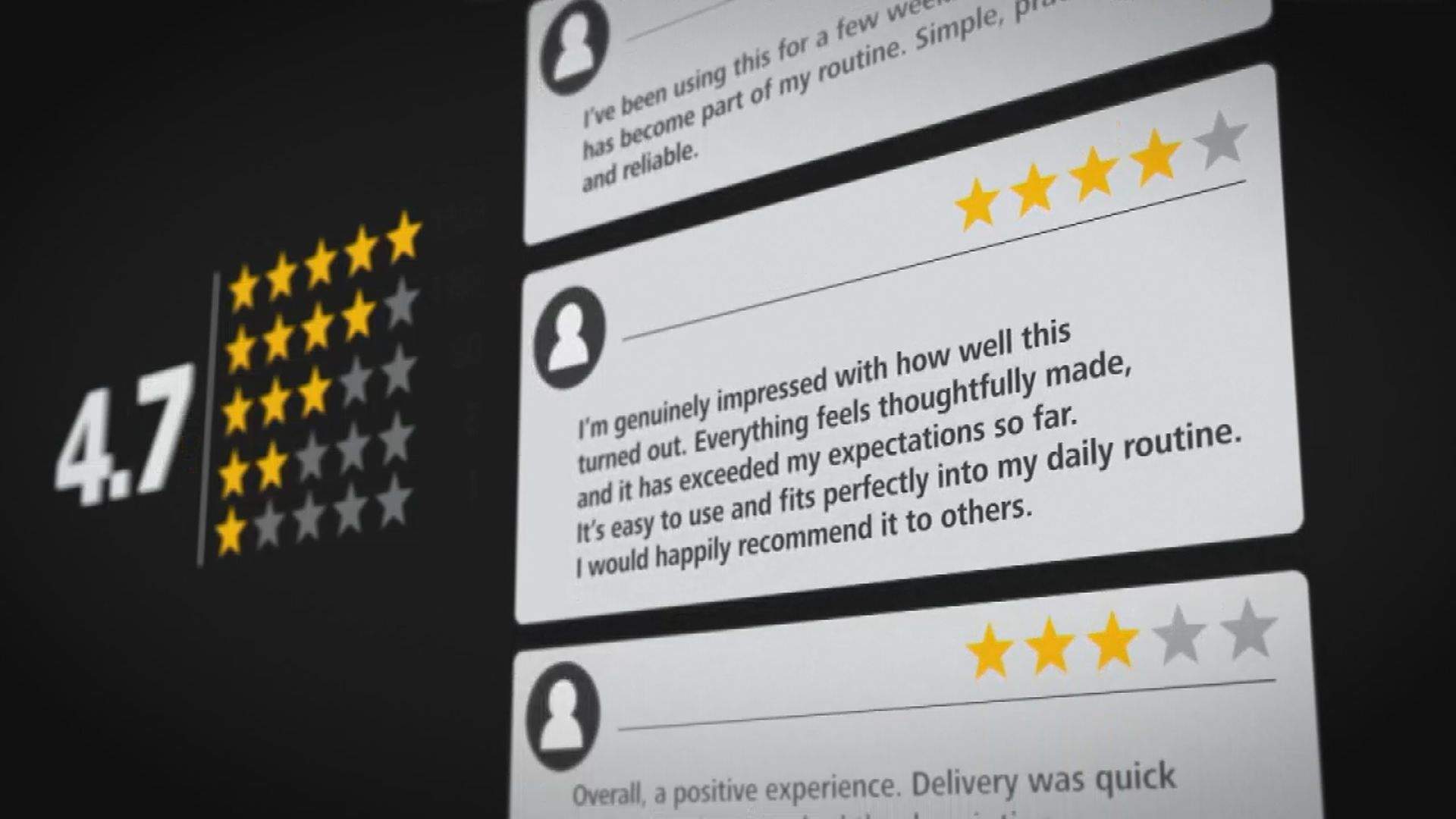
Fake online reviews are a growing concern for businesses and consumer watchdogs, as they can mislead customers and create confusion. Charlotte Ashley, owner of Trident Booksellers and Cafe in Halifax, Canada, has experienced this issue firsthand, with fake reviews leading customers to request items her business does not carry. One such review gave the business a five-star rating, yet also mentioned a mushroom quesadilla, which Trident Booksellers and Cafe does not serve.
The practice of fake reviews is not a new phenomenon, with a report by the Canadian Anti-monopoly Project revealing a market for them on Google and Amazon. This market can harm consumers, honest sellers, and the platforms themselves. Consumers are left with "obscured" true quality information, honest sellers face an unfair disadvantage, and platforms suffer when consumers lose trust in them.
Emily Osborne, a fellow at the Canadian Anti-monopoly Project and policy researcher at the Canada Shield Institute, explains that there is a substantial market for fake reviews on various platforms, often facilitated through social media groups. Sellers can offer to provide five-star reviews in exchange for free products. Companies like Amazon have taken steps to address the issue, but there is still room for improvement, according to Osborne.
The Canadian government could play a role in enforcing better regulations against fraud on these platforms, Osborne suggests. Consumer watchdog Kay Dean, a U.S.-based expert, emphasizes the enormity of the problem, stating that it distorts the small business economy globally. Dean's investigations have uncovered businesses trading reviews with each other on social media and the presence of marketers and search engine optimization companies with networks of fake review profiles.
Although it is challenging to determine the exact number of fake reviews online, a 2023 U.K. government report found that 11 to 15 percent of all reviews for three common product categories on e-commerce platforms were likely fake. These categories included consumer electronics, home and kitchen, and sports and outdoors. The report also found that well-written fake reviews can increase the likelihood of consumers purchasing a product by 3.1 percent.
Experts recommend taking precautions when shopping, such as being cautious of flawless ratings and relying on word-of-mouth for guidance. To stay informed about the issue, consider adding Global News as a Preferred Source on Google to view more stories in your search results.
Written by urgent.news from Global News's reporting — not their text. Machine-written — may contain errors; check the original before relying on it.