This 'truly modular' keyboard can be built like a Lego set — meaning you can add as many keys as you like
Keybytes project uses magnetic key modules and individual microcontrollers to create custom keyboards.
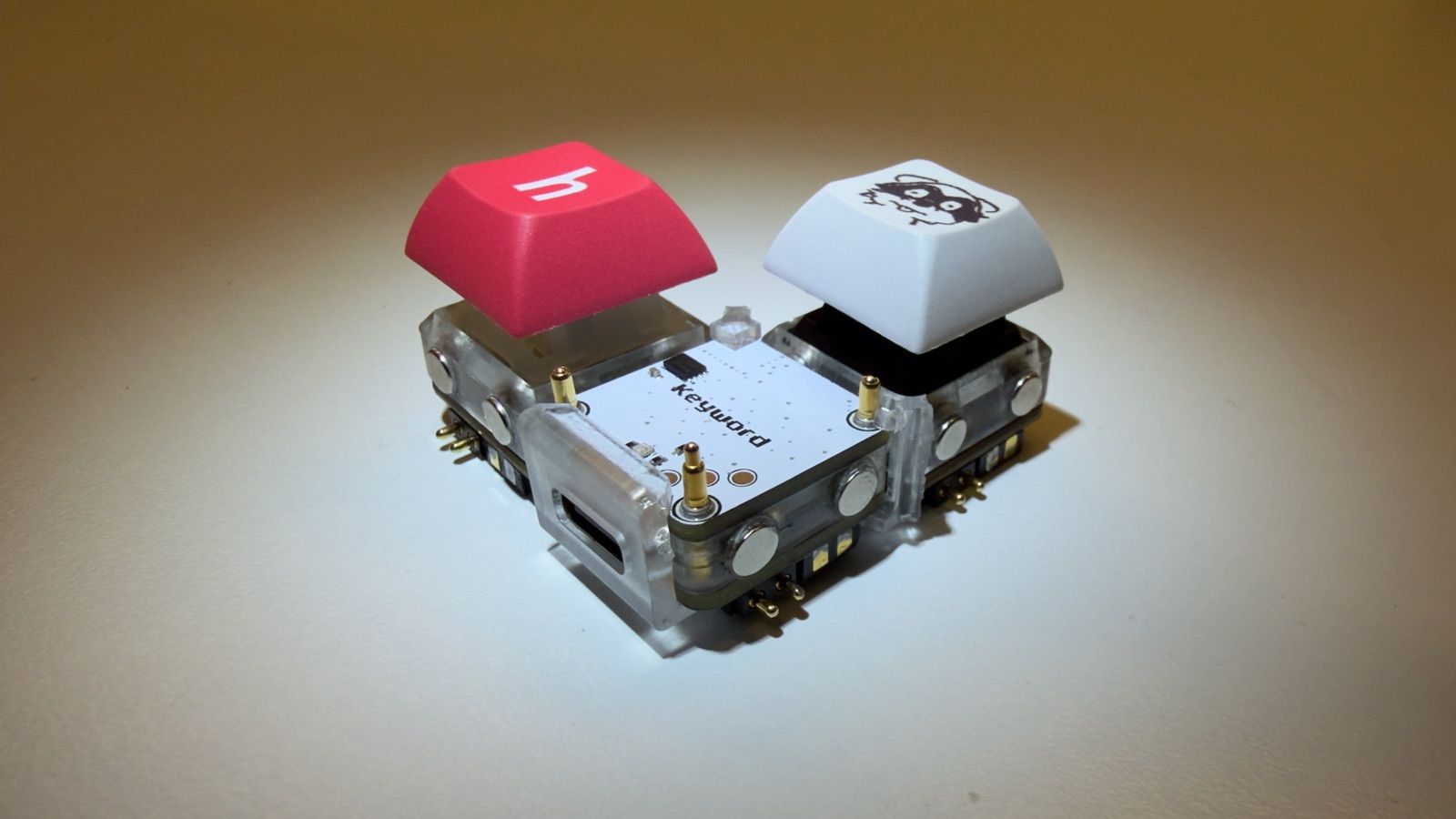
Keybytes represents an open-source, modular keyboard system developed by MIT student Nathan Alspaugh. This unique keyboard allows users to assemble their own custom layouts by connecting individual magnetic key modules to a central controller. Each Keybit module comprises a RISC-V microcontroller, enabling independent operation of each key, rather than relying on one central processor for all keys.
The design utilizes magnetic connections to facilitate flexible arrangements, with each Keybit measuring 19.05 x 19.05mm and featuring four-sided pogo pin connections for power and I2C communications. The central Keyword controller houses an Arm Cortex-M4 microcontroller, Bluetooth antenna, flash memory, USB-C connectivity, charging functions, and a buck-boost converter for power management.
Keybits accommodate Cherry MX mechanical switches, allowing builders to choose the switches that best suit their typing preferences. The magnetic connections enable keys to attach to the Keyword controller or alongside other modules, removing the fixed layout limitations of conventional keyboards. However, the current project remains in its early stages, with Alspaugh stating that the basic system has only recently become functional.
Despite its flexibility, assembling a full-size Keybytes keyboard could cost around $900, considering the cost of components, printed circuit board production, component purchases, soldering, and custom 3D-printed enclosures. The project's documentation is available on GitHub under the MIT licence, allowing others to examine the design, build their own units, and modify the hardware according to their needs.
The current design lacks dedicated lighting options for individual Keybits, as only the central Keyword module includes a status indicator. Future versions of the keyboard may incorporate features such as customizable RGB lighting, rotary controls, fingerprint recognition modules, or a compatible touchpad. These enhancements are currently proposed additions rather than confirmed developments.
Written by urgent.news from TechRadar's reporting — not their text. Machine-written — may contain errors; check the original before relying on it.