South African company builds rural Zimbabwe school laboratory in just 14 days
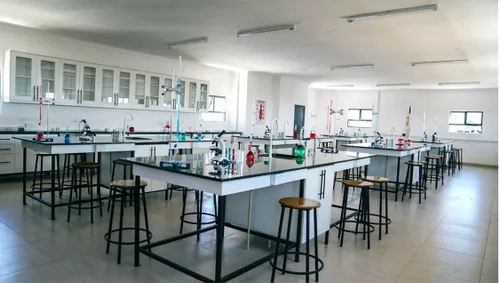
A South African company has built a fully equipped science laboratory at a rural Zimbabwe school in just 14 days, in a project aimed at expanding opportunities for hundreds of learners.
The Western Cape province of South Africa currently presents the most favorable environment for doing business, according to an analysis of various factors. This includes a low unemployment rate between 18% and 20%, the highest labour absorption rate in the country, and relatively high median earnings. Cape Town has made efforts to streamline business licensing processes and reduce administrative delays, often receiving more responsive municipal services compared to other metropolitan areas.
However, the province does face higher rental costs, with residential rents consistently above R12,000 per month and commercial property in prime locations being expensive. Crime remains an issue in certain parts of the city, though the overall governance environment is generally considered more stable than in some other regions.
In contrast, Gauteng province serves as South Africa's primary economic powerhouse, contributing about one-third of the nation's GDP and hosting the majority of formal businesses and listed company headquarters. While it offers the highest median salaries and largest market size, it also grapples with infrastructure strain, particularly in Johannesburg, crime, extortion, and sometimes slow decision-making due to coalition politics in local government.
KwaZulu-Natal provides some business opportunities, particularly in mining, manufacturing, and logistics, thanks to Durban's port and its established manufacturing base. However, it faces challenges including higher unemployment, lower median salaries, and elevated crime rates. The province's economic core, along with Gauteng and the Western Cape, accounts for 63% of the national GDP.
Other provinces like Limpopo, Mpumalanga, the Northern Cape, the Free State, and the Eastern Cape have varying strengths and weaknesses. Limpopo has experienced the strongest provincial GDP growth in recent years, driven by mining and related services, though it has a thinner formal business base and higher unemployment. Mpumalanga's economy is centered on mining, energy, and agriculture, with modest growth and relatively modest salaries.
The Northern Cape, dominated by mining, has the smallest economy and faces challenges such as low population density and higher costs relative to local incomes. The Free State and Eastern Cape face significant challenges, including high unemployment, weak economic growth, low median salaries, and serious structural economic issues, along with high crime rates and service delivery problems.
Written by urgent.news from IOL's reporting — not their text. Machine-written — may contain errors; check the original before relying on it.
This story
This is one outlet's version. Read the fullest account.