Qatar Foundation highlights power of active and learner-centred education
<p>Doha, Qatar: The traditional classroom is evolving. The teacher, who once stood at the centre of the learning experience, is increasingly sharing that space with a different voice: the learner.</p> <p>Amal Khamis Al-Hafi is an educator at Qatar Academy Msheireb (QAM) — part of Qatar Foundation’s (QF) Pre-University Education (PUE) — and has been part of the QF ecosystem for…
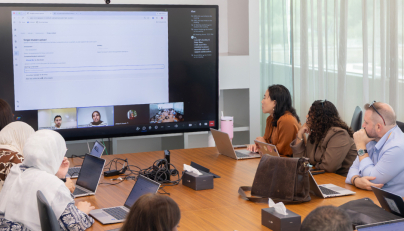
Doha, Qatar is witnessing a transformative shift in education as Qatar Foundation (QF) emphasizes the importance of active and learner-centered approaches. Traditionally, teachers have held the central role in the learning process, but now learners are increasingly taking on that responsibility. Amal Khamis Al-Hafi, an educator at Qatar Academy Msheireb, which is part of QF's Pre-University Education, has seen this evolution firsthand over her 15-year career.
She notes a move from a teacher-centric model to one where learners' voices are active and influential throughout the learning journey.
Al-Hafi highlights that impactful learning occurs when learners are given space to speak, ask questions, discover, and think independently. This shift goes beyond learners merely receiving knowledge; they become partners in shaping their own education. Manager of the Innovation and Testbed Program at the World Innovation Summit for Education (WISE), Shahd Dauleh, supports this view, citing research that shows active learning in classrooms improves outcomes significantly compared to traditional lecture settings.
Education Endowment Foundation research further supports the effectiveness of metacognition and self-regulation techniques, which can enhance learning without heavy financial investment.
Dauleh emphasizes that the shift doesn't mean replacing teachers with students but rather transforming teachers into facilitators of thinking rather than mere information providers. This involves giving learners a role in setting goals, providing meaningful choices in demonstrating understanding, receiving structured feedback, and participating in decisions about learning environments.
For teachers, this means evaluating the effectiveness of their methods based on classroom data and student feedback, fostering reflective and evidence-informed teaching practices.
To fully integrate learner-centered education, Dauleh identifies three key components: robust assessment methods, reliance on empirical evidence, and providing teachers with the necessary time and trust to innovate and experiment. This progressive approach marks the beginning of a new era in education, where every learner's voice is valued, every question is welcomed, and every experience is a learning opportunity.
Written by urgent.news from The Peninsula Qatar's reporting — not their text. Machine-written — may contain errors; check the original before relying on it.