Pilzbefall: Eschen: Darum geht es dem Klimawandel-Profi schlecht
Hitzebeständig, vielseitig nutzbares Holz - eigentlich ein Baum für die Zukunft. Doch der Esche geht es nicht gut. Vielerorts wird sie vorzeitig gefällt, gepflanzt wird sie praktisch gar nicht. Warum?
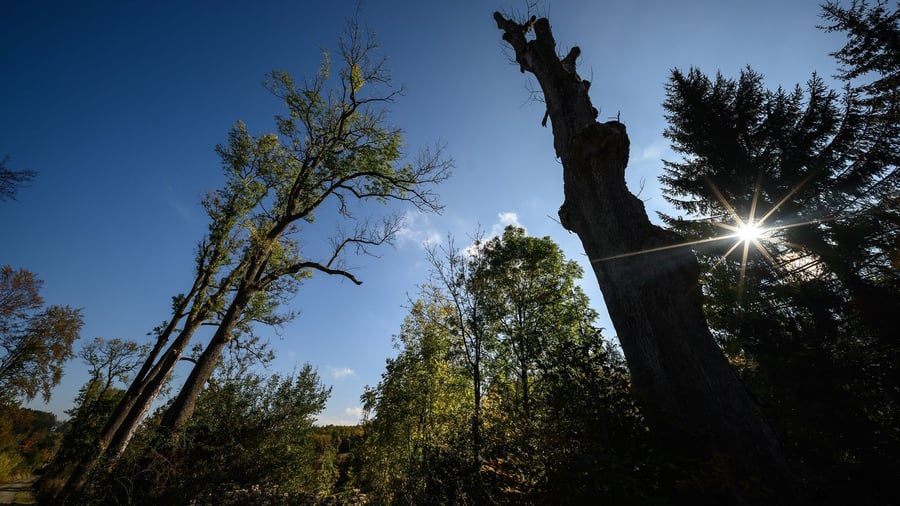
Germany's once majestic ash trees are rapidly succumbing to a foreign fungus, a symptom of climate change. This deadly pathogen, originating from Asia, has infiltrated the country over the past century, causing what's known as the ash shoot dieback. Christopher Sander, a researcher at the North-west German Forestry Research Institute, is leading efforts to save the ash tree, a species that's not only beautiful but also highly versatile in its use, from fuel to furniture and even home to over 900 other plant and animal species.
The ash's vulnerability to the fungus is particularly pronounced in dry, hot climates, making many German specimens susceptible to the disease. In Hendrik Büning's Solling forest, a collection of ash trees along an avenue faces an uncertain future. Büning admits these trees could be cut down or will inevitably fall due to the fungus, which primarily attacks the tree's wood, rather than its leaves, as is the case with native ash trees.
This unique feature makes the European ash particularly susceptible to the pathogen, leading to widespread infection.
The fungus not only kills the trees but also makes them more susceptible to other diseases. The extent of the infection is difficult to discern from the outside, with root fungi and a sparse crown being potential indicators of imminent death. But there's hope. Some promising trees have been identified and are being cultivated in laboratories.
However, these resilient ash trees are too few in number and have too limited genetic diversity to effectively replace the vulnerable species. Thus, scientists are exploring the possibility of crossbreeding with less resilient trees.
One potential solution lies in the trees themselves. In regions like Hardegsen, infected ash trees are being cut down, but in the Solling forest, the dead branches are left standing due to the presence of a rare lichen. The researchers also hope that the ash tree will adapt to the changing conditions, as other tree species have shown resilience in similar situations. However, the Asian ash bark beetle poses a new threat, especially to weakened trees, as it spreads quickly in already stressed trees.
Climate change might provide some relief, as the fungus's growth has been slowed down by higher temperatures. However, planting more foreign ash trees is not recommended due to the risk of introducing new pests. Even if the ash tree is saved, it remains uncertain whether it will become a significant part of Germany's forest landscape, given its relatively modest contribution to the overall forest area and its limited role in commercial forestry.
Written by urgent.news from Handelsblatt's reporting — not their text. Machine-written — may contain errors; check the original before relying on it.