NASA's Swift space telescope is about to crash to Earth. Where will it fall?
It's unclear at the moment exactly when and where the Swift observatory will plunge to Earth. But researchers definitely have their eyes peeled.
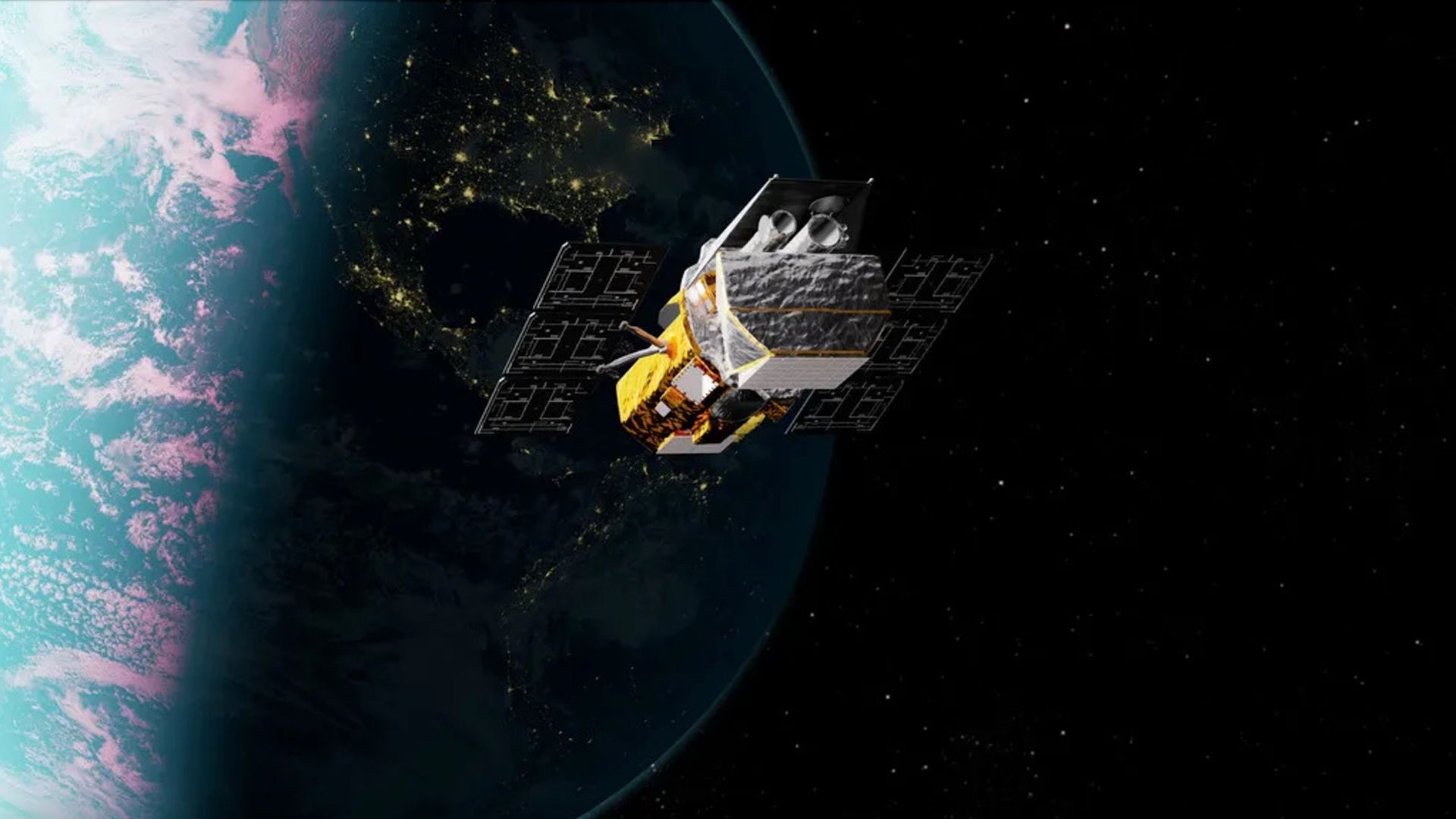
NASA's Swift space telescope, expected to reenter Earth's atmosphere in the coming days, is on a collision course with our planet. The Neil Gehrels Swift Observatory, launched in November 2004, spent two decades studying gamma-ray bursts and other cosmic phenomena with its trio of telescopes: the Burst Alert Telescope, X-ray Telescope, and Ultraviolet/Optical Telescope.
However, Swift's orbit decayed to 171 miles (275 kilometers) above Earth, rendering it unable to counteract increased atmospheric drag. The spacecraft entered safe mode, and its operations team at Pennsylvania State University shut down its systems to prevent a potential crash.
The precise time and location of Swift's descent remain uncertain, but researchers are monitoring its reentry. Darren McKnight, a senior technical fellow at LeoLabs, notes that the surge in low Earth orbit objects reentering annually is tenfold higher than just five years ago. While Swift's demise may not cause significant harm upon reentry, its titanium, steel, and glass components could survive and potentially reach the ground or ocean.
These resilient materials are more likely to make it to Earth compared to the aluminum and wiring that would likely disintegrate upon reentry.
Swift's orbit primarily traverses a 21-degree band around the equator, encompassing mostly ocean but also passing over parts of Africa, South and Southeast Asia, and Latin America. Dean Sladen, an aerospace engineer at the U.K. precision-components supplier Accu Components, explains that as Swift descends below 120 kilometers (75 miles), it will heat up and glow, with its solar panels and antennas breaking off first. The main body then disintegrates, leaving behind mostly melted and vaporized remnants.
Although the exact landing site remains unknown, Sladen emphasizes that the surviving fragments are expected to be small, heat-resistant, and likely composed of titanium, steel, and glass. These fragments are most likely to fall into the ocean rather than land on populated areas. NASA and the European Space Agency set a stringent risk assessment for human casualties during reentries, limiting the probability to one in 10,000.
Sladen believes that NASA likely completed a risk assessment for Swift's descent but has not publicly released it.
Design for demise, a practice involving the incorporation of propulsion systems or heat-resistant materials, has become more prevalent in recent satellite construction. NASA and the European Space Agency set a risk threshold of one in 10,000 for ground casualties, and any satellites failing to meet this criterion are expected to deorbit safely.
Following Swift's demise, McKnight and Sladen agree that the growing number of uncontrolled reentries due to the increasing number of satellites launched is a more significant concern.
Written by urgent.news from Space.com's reporting — not their text. Machine-written — may contain errors; check the original before relying on it.
This story
This is one outlet's version. Read the fullest account.
- NASA telescope is on the verge of plunging back to Earth after failed rescue mission winnipegfreepress.com
- NASA telescope is on the verge of plunging back to Earth after failed rescue mission toronto.citynews.ca
- NASA telescope on verge of plunging back to Earth after failed rescue mission thehindu.com
- NASA telescope on the verge of plunging back to Earth after failed rescue mission globalnews.ca
- NASA’s Swift telescope will face a fiery demise after a failed rescue sciencenews.org
- NASA telescope predicted to plunge back to Earth after failed rescue mission cbc.ca
- NASA's Swift observatory ends 22-year mission to study the most powerful explosions since the Big Bang r.smartbrief.com
- From Devanahalli to Nasa: Bengaluru girl building telescope to study dust in space indianexpress.com