Lahore Gymkhana: Colonial origins and politics of selective outrage
https://www.dawn.com/news/2041231
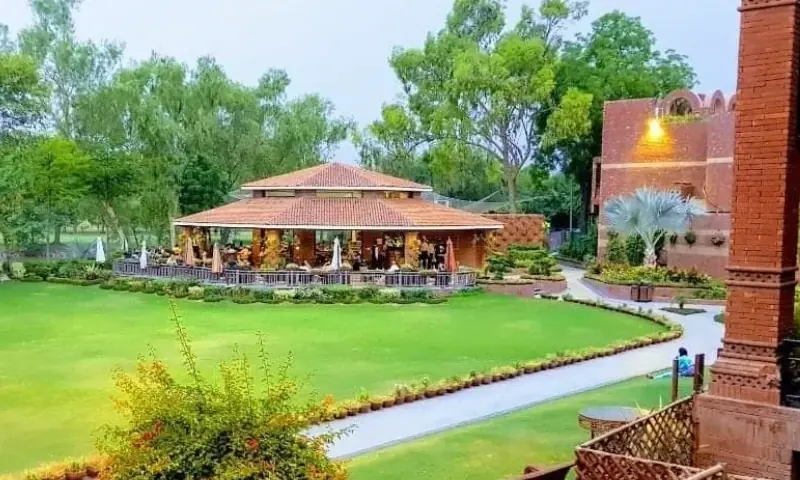
The British establishment of clubs in colonial India was not solely driven by recreational interests. These clubs served as essential social networks for civil and military officials, allowing them to maintain solidarity and sustain racial distinctions. The deliberate exclusion of Indians from these exclusively European spaces reinforced the perception of political dominance as a marker of social superiority.
While it is crucial to condemn the origins of such institutions, it is equally important to acknowledge that institutions, like societies, can evolve over time. Lahore Gymkhana, formed from this milieu of colonial exclusivity, adopted its current name on March 23, 1906. It is essential not to freeze this history at its inception.
Following the 1947 Partition, Lahore Gymkhana persisted despite the collapse of the political and social structures that once sustained colonial institutions. Gradually, it became an integral part of civilian life in newly independent Pakistan. Initially catering to a select group of foreigners, the club adapted to Pakistan's socio-economic landscape, attracting members from professional, business, and salaried classes.
While it retains a degree of selectivity and cannot claim complete egalitarianism, its modern identity diverges from the racial exclusivity of its founders. It is vital to remember that salaried employees contribute directly to government revenues through source-based taxation, alleviating the need for loans from international bodies.
Those criticizing the Gymkhana often belong to privileged backgrounds and may not shoulder an equitable share of the tax burden. Transitioning from colonial-era institutions to contemporary contexts is noteworthy. This evolution demonstrates that an institution can maintain its continuity while embracing a changed society. Lahore Gymkhana's significance lies in its capacity to preserve institutional continuity while adapting to a transformed society.
It should be evaluated based on its evolution rather than solely on its colonial origins. The club's internal electoral system represents a significant aspect of this transformation. Members elect office-bearers, providing a framework for representation and accountability, distinguishing member-based civilian governance from systems reliant on external authority or official appointments.
The transparency of these elections must be assessed based on their electoral rules, eligibility criteria, fairness, and the publication of results. However, the presence of an established electoral system does not guarantee flawless governance, nor should an established electoral system be dismissed without a thorough examination of its functioning.
This duality of historical continuity, social adaptation, and member-based governance renders Lahore Gymkhana a unique institution within Pakistan's civic sphere. Its survival is remarkable not just for its endurance but for its capacity to gain a place within a society vastly different from the one that birthed it. This transformation should neither be romanticized nor dismissed; instead, it demands recognition alongside a critical examination of the institution's remaining privileges and obligations.
The current criticism of the club warrants thoughtful analysis. While the centrally located land it occupies holds considerable value, questions surrounding its lease, construction approvals, taxation, and financial obligations are warranted. No institution should be exempt from legal scrutiny, and public property must be managed transparently.
However, credibility in accountability hinges on the evidence supporting it. The manner in which a member of the provincial assembly questioned the club’s chairman raises concerns if inaccurate examples or questionable comparisons are presented as established facts. Parliamentary oversight is a grave responsibility, not mere political theatrics.
An elected representative's authority should be demonstrated through the accuracy of their information and the fairness of their questions, not merely by the boldness of their confrontations. It is equally troubling that the selectivity of this criticism is mirrored by an inconsistency in how public land is scrutinized. If public land must be administered equitably, this principle should apply uniformly to all institutions, regardless of their influence or proximity to the state.
Are comparable investigations conducted regarding garrison clubs, golf courses, and other establishments linked to powerful constituencies? What criteria govern their leases, concessions, and utilization of public resources? These inquiries do not absolve Lahore Gymkhana from accountability but highlight the inconsistency of targeting a civilian institution while allowing others to operate under different standards.
Furthermore, the value of the club's land raises additional concerns: Are these investigations driven by a genuine public benefit, or do they present an opportunity to transfer a valuable asset from one privileged constituency to another? While the land's commercial potential necessitates vigilance, it does not inherently imply that any specific critic harbors land-grabbing motives.
If the lease is deemed legitimate, it does not automatically imply wrongdoing. The club's value makes it imperative to ensure that scrutiny is applied equitably across the board, ensuring that the same standards are upheld for all entities operating within the public domain.
Written by urgent.news from Dawn - Pakistan's reporting — not their text. Machine-written — may contain errors; check the original before relying on it.