Justiz: Verhärtete Fronten im Streit um Polens Verfassungsgericht
Beim Tauziehen um die Besetzung der Richterposten will weder Regierungschef Tusk noch Präsident Nawrocki nachgeben. Eine geplante Generalversammlung der Verfassungsrichter birgt neuen Zündstoff.
The standoff over Poland's Constitutional Court shows no signs of easing. Both the pro-European government led by Prime Minister Donald Tusk and the right-wing President Karol Nawrocki remained steadfast in their positions over the weekend. "In certain matters, there can be no compromise," emphasized Tusk in a speech on Saturday evening.
Four former presidents of the Polish Constitutional Court backed Tusk's government in a statement, criticizing President Nawrocki's actions as "an unprecedented violation of the court's autonomy." The European Commission stressed that it was the responsibility of the country's leadership to ensure the court operated in accordance with the Polish constitution and European Union (EU) case law.
The long-standing dispute escalated on Friday after the Constitutional Court announced that its president and deputy had been relieved of their duties and a newly-nominated judge would take on supervisory management. However, the root of the conflict runs deeper. The dispute between Tusk's liberal-conservative Civic Coalition and its allies, on one side, and the right-wing opposition party PiS and its ally President Nawrocki, on the other, represents a clash between Poland's two major political camps.
PiS, which governed the country from 2015 to 2023, occupied the court with judges who shared its political views. In 2023, Tusk's government aimed to reverse PiS's contentious judicial reforms. However, Nawrocki has been resisting the swearing-in of five judges nominated by the parliament. When these judges refused to take their oath before the parliament's speaker, the still-nominated Constitutional Court president Bogdan Swieczkowski refused them entry to the building.
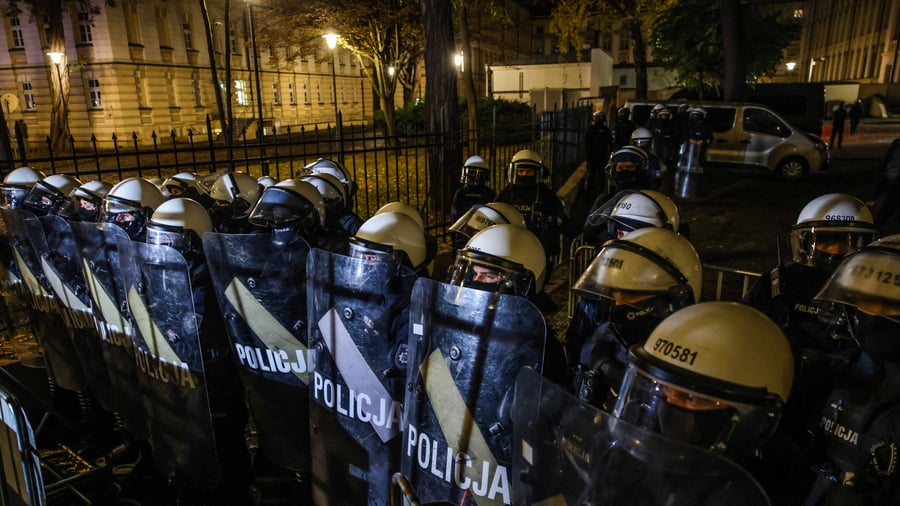
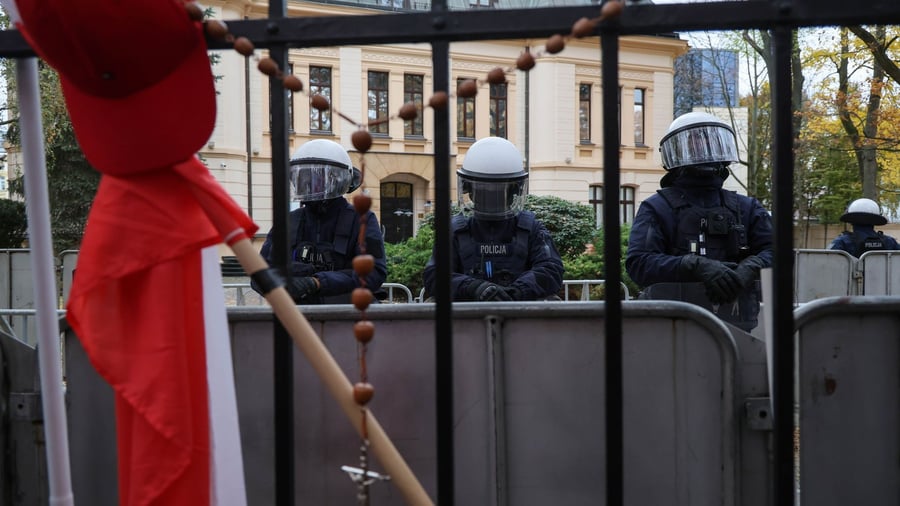
The situation escalated when it was announced that Judge Anna Korwin-Piotrowska intended to assume supervisory management from Swieczkowski and deputy. Swieczkowski refused, calling it a coup d'état. Demonstrators, mostly supporters of PiS and the right-wing spectrum, protested against this. Judge Korwin-Piotrowska, one of the five judges Nawrocki refused to swear in, was among those protesting.
Nawrocki and Tusk responded to the situation by further sharpening their stance against each other. Tusk criticized Nawrocki, saying "The rule of law differs from the law of the jungle because muscles and arrogance do not decide who is right." Nawrocki met with representatives of several parliamentary factions on Saturday, where Defense Minister Wladyslaw Kosiniak-Kamysz of the Christian PSL and Szymon Holownia of Poland 2050 attended.
Tusks Civic Coalition and the ruling coalition decided not to appear at the President's Palace. No concrete results were announced. Constitutional experts assessed the conflict as follows: Four former presidents of the Constitutional Court sided with the judges who replaced the current president. They stated that the judges lawfully appointed by the parliament had taken the necessary measures to restore the institution's functions and status, which are crucial for the rule of law and protection of civil rights and freedoms.
On Tuesday, Constitutional Court judge Korwin-Piotrowska convened a general assembly of all Constitutional Court judges. This body can decide on prosecuting Constitutional Court judges for criminal offenses and whether a judge should be retired due to permanent incapacity. Justice Minister and Prosecutor General Waldemar Zurek also requested that the general assembly discuss the waiver of immunity for Constitutional Court President Swieczkowski and his deputy.
Written by urgent.news from Handelsblatt's reporting — not their text. Machine-written — may contain errors; check the original before relying on it.