How Merz’s five-day Asia trip ended up being mostly about Europe
Security concerns are following the German Chancellor to Singapore, Japan and Korea. And his proposal for a new trade alliance is already facing hurdles.
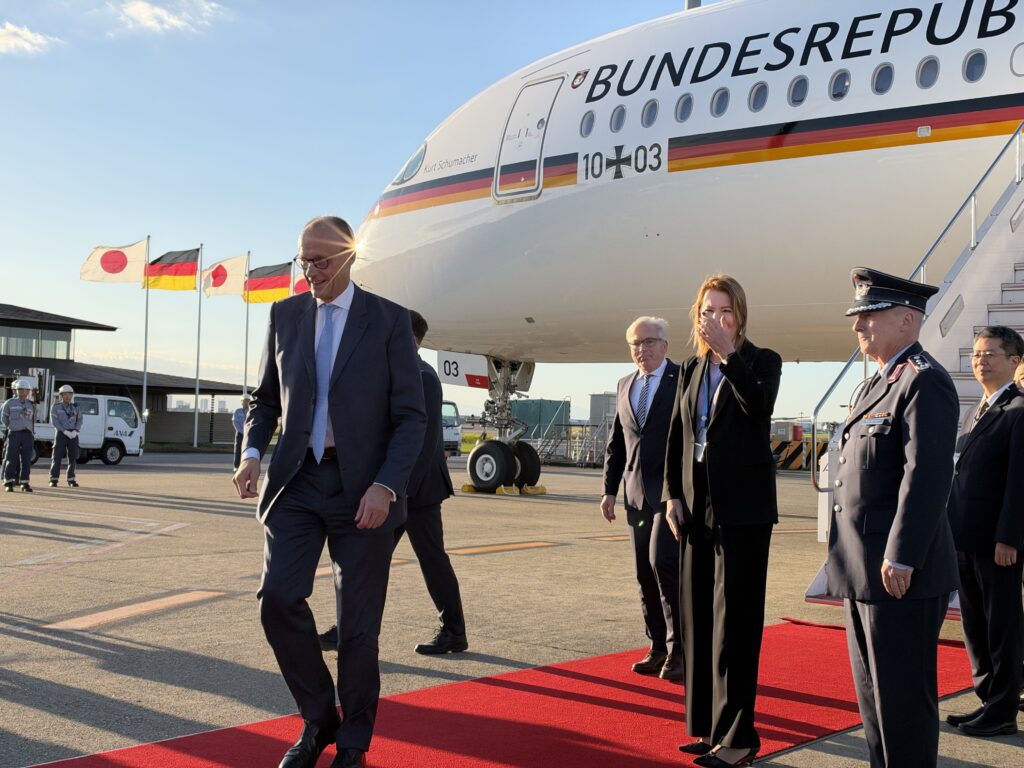
Friedrich Merz, German Chancellor, concluded his five-day Asian tour by reflecting on Europe's history and the region's interconnected security issues. During his visit to the Korean Demilitarized Zone, Merz was reminded of how the past turmoil in Asia is intertwined with Europe's precarious moment. North Korea's recent missile tests and cooperation with Russia, China's territorial claims in the South China Sea, and Russia's military ties with Beijing all pose significant security challenges to the Asia-Pacific region.
Merz's trip also involved discussions about collective security and the need for "middle powers" to work together to counter threats from more dominant nations. This approach, which includes countries like Germany, Japan, South Korea, Singapore, Canada, Australia, New Zealand, and the EU, aims to bolster international cooperation and rules-based trade.
However, the Chancellor faced resistance when proposing restrictions on foreign car manufacturing subsidies, with Asian countries protesting the proposed "Made in Europe" rules. Despite these challenges, Merz's trip highlighted the importance of collective security and the need for a more collaborative approach to address the complex security landscape in the Asia-Pacific region.
Written by urgent.news from Politico EU's reporting — not their text. Machine-written — may contain errors; check the original before relying on it.
This story
This is one outlet's version. Read the fullest account.