Erstmals seit 2022 könnte der Schweiz im Winter der Strom ausgehen. Doch im teuren Notfallplan klafft eine Lücke
Streng nach Vorschrift hat die Schweiz ihr altes Reservekraftwerk abgerissen und direkt daneben ein neues eingerichtet. Es ist erst ab Februar parat – und kann weniger als das alte.
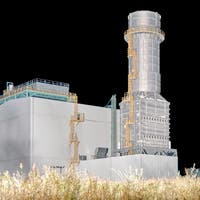
For the first time since 2022, Switzerland might face a winter without electricity, but there is a significant gap in their emergency plan. The old reserve power plant, which had eight gas generators, was dismantled and replaced with a new one that can only generate less power. The construction site in Birr, Aargau, is filled with heavy machinery, including trucks, excavators, and a planter, but it is not yet ready.
The old reserve power plant, which never saw use, disappeared just before the winter, and the authorities and courts opposed its restoration. This summer, there is an LNG shortage worldwide due to the Iran war, and Europe needs gas for power generation, competing with Asia for LNG deliveries. The European gas price has tripled since the beginning of the year, and gas storage in the continent is low.
The Swiss emergency plan has a gap that exposes the country to vulnerability if Europe experiences a power shortage. In winter, Switzerland must import electricity from Europe since domestic production is insufficient. However, the replacement for the dismantled generators in Birr is not ready, leaving a two-month gap in power supply.
"The energy crisis this year is surprising, but good planning should look different," says Jürg Rohrer, an energy researcher at the Swiss Federal Institute of Technology in Zurich. The plan dates back to 2022 after Russia's attack on Ukraine threatened a power gap in Europe. The Federal Council decided to seek additional power sources, with the German engineering firm GE Vernova playing a major role.
The largest role was played by GE Vernova, with its German turbine plants, and two smaller plants in Cornaux (Neuenburg) and Monthey (Wallis). The Bund missed its window to extend contracts for all three plants, which were supposed to provide a total of 336 megawatts. The reserve power plant in Birr was not obtained due to regulations that required cantonal approval, which was not possible.
The Federal Council's special authorization, which allowed the plant, could only be extended if there was an immediate power shortage. The Federal Administrative Court ruled against the plant in 2024, stating that the Bundesrat had not adequately proven the risk of a shortage. The court gave a verdict to an inhabitant who feared noise, leading to the demolition of the old plant and the construction of a new one.
The new reserve power plant, which is located 500 meters away in the same industrial park, is set to be ready on January 31, 2027, leaving the winter half over before it can be operational. "The extensive work for reassembly of the turbine test stand makes it impossible to negotiate an earlier date for the plant's availability," the Uvek states in response to a request.
"The timing is unfortunate," says energy expert Christoph Eisenring from the liberal think tank Avenir Suisse. While it was right to dismantle the GE plant due to the Notrecht rule, the transition was poorly executed. The company responsible, Ansaldo Energia, explains that the system was extensively checked to ensure safe and reliable operation, which was different from the GE Vernova plants.
The reserve power plant will be available from December 1st for the next three winters, starting from February. The Swiss authorities claim that the critical phase for energy supply security is February to April, which the new plant will cover.
Written by urgent.news from NZZ Wirtschaft's reporting — not their text. Machine-written — may contain errors; check the original before relying on it.