Democrats eye state supreme court races — this year and beyond
National groups are spending money in battleground judicial races with the hope of liberal majorities in two years.
In the 2024 United States midterm elections, liberal groups have invested heavily in a limited number of state supreme court races across battleground states, aiming to secure control of more courts in preparation for a pivotal redistricting cycle in 2028. The focus lies on races for Republican-majority state supreme courts in North Carolina and Ohio, where control of these courts could significantly impact the composition of the benches in 2028.
National groups are also contributing to defend the liberal majority on Michigan’s court and an open seat in Montana, where the voters will decide whether judicial elections remain nonpartisan.
These investments underscore the evolving nature of state supreme court elections as crucial national political battlegrounds, with high court justices increasingly becoming key players in major disputes, including abortion rights, election integrity, and redistricting. Winning in upcoming cycles could position the justices to oversee challenges to congressional and legislative maps drawn in several states following the 2022 midterm elections and the 2030 census.
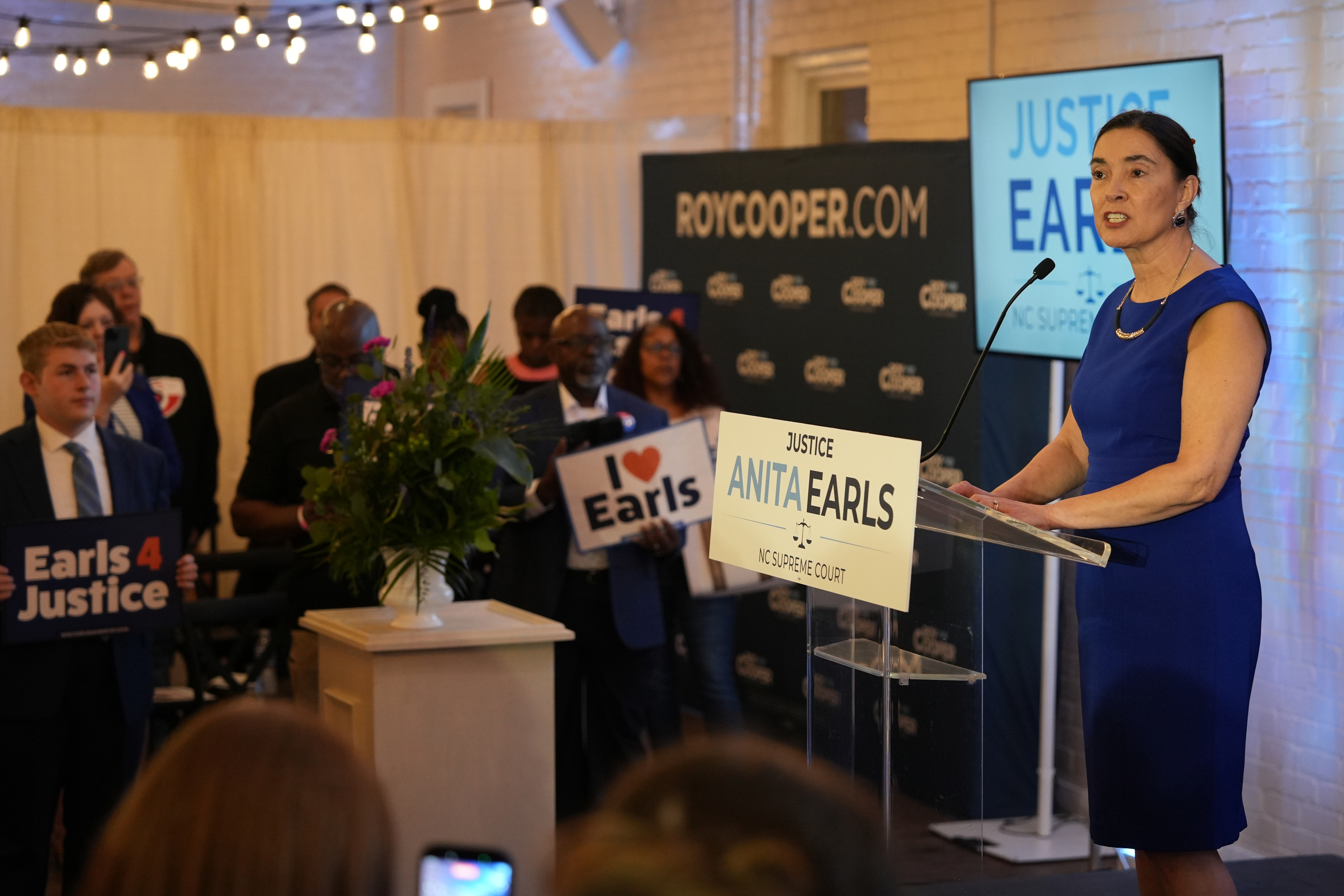
North Carolina has emerged as the most heated battleground, where Democrats aim to defend a seat currently held by Anita Earls, seen as a crucial step towards flipping the Republican-controlled North Carolina Supreme Court. Clayton, the Democratic Party chair, noted that the party aims to take three Republican seats on the court in 2028, reflecting a broader strategy to build the foundation for congressional majorities in 2032 and beyond.
Earls has received backing from prominent national Democrats like Pete Buttigieg and Maryland Governor Wes Moore, while her campaign has received over $1 million in support from Democrats.
The American Civil Liberties Union (ACLU) has also made substantial long-term investments in state supreme court races, funneling $8 million into races in North Carolina, Michigan, and Montana this year, alongside earlier investments in Georgia and Wisconsin. The ACLU's strategy targets pro-civil rights and civil liberties majorities in states such as Arizona, Pennsylvania, Kentucky, and Ohio, with plans to begin fundraising for 2028 races early next year.
Over $14 million has been spent on television ads in these four states, predominantly benefiting Democratic and liberal-leaning candidates, according to estimates from the liberal-leaning Brennan Center for Justice.
Most liberal candidates have outspent their conservative opponents, highlighting the financial advantage of the Democrats in these contests. Republican-aligned groups, such as the Republican State Leadership Committee, have largely refrained from engaging in these judicial races, warning of being overwhelmed by Democratic spending. The RSLC's judicial affiliate has reported over $5 million in expenditures across 2024 and 2025.
The National Democratic Redistricting Committee (NDRC), the party's primary redistricting-focused group, declined to disclose its total spending on judicial races this year. However, NDRC President John Bisognano emphasized that the upcoming 2026 and 2028 state supreme court elections are critical to the ongoing fight to protect democracy.
Key players in the state court battles believe that spending will continue to surge, particularly from major industry players, recognizing the pivotal role of state courts in controlling and leveraging interests to their advantage.
Written by urgent.news from POLITICO's reporting — not their text. Machine-written — may contain errors; check the original before relying on it.