At 97, China’s first female conductor still performs in public, wowing audiences
China’s first female conductor, Zheng Xiaoying, is 97 years old, but she continues to give outstanding performances to audiences. In August, the nonagenarian conducted the Chinese-language version of the opera Carmen in Xiamen, in southeastern China’s Fujian province, where she lives. Tickets for the performance were like gold dust, and audiences marvelled, as always, at her elegant, expressive…
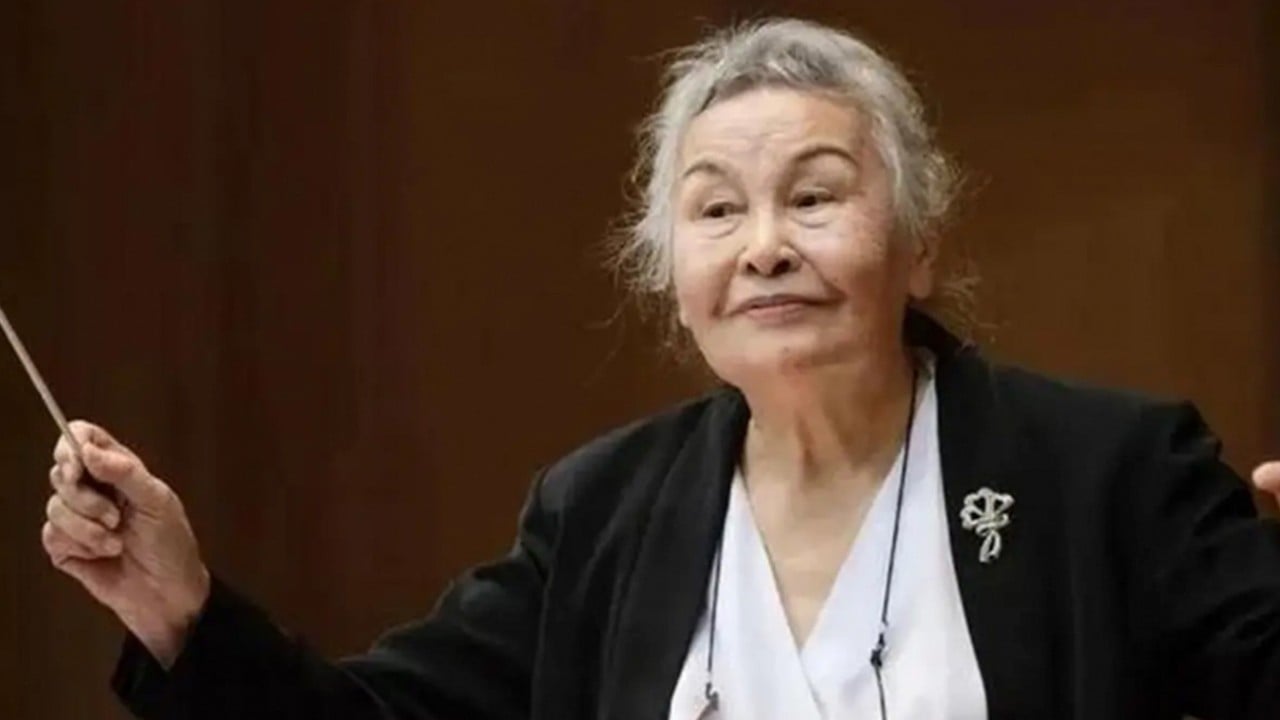
China's pioneering female conductor, Zheng Xiaoying, is 97 years young yet still graces public stages with her remarkable performances. Recently, in August, the octogenarian conducted the Chinese-language rendition of opera Carmen in Xiamen, Fujian province. Tickets for this performance were highly sought-after, and audiences were continually impressed by her elegant, expressive conducting.
Zheng's life story is one of remarkable determination and achievement. Born in Shanghai in 1929, she took up piano studies at the tender age of six. At university, she initially pursued biology and medicine at Peking Union Medical College Hospital. However, at the age of 19, driven by a desire for a new world, she fled to the liberated zone and enrolled in an arts training class. It was there that her talent for melody and rhythm was discovered, leading her to form a concert band and perform yangge opera.
Zheng's rise to prominence came in 1955 when an expert from the Soviet Union, Lenny Dumashev, held China's first conducting seminar. Zheng was selected as the sole female student in the class. Despite the auditorium being filled with more than a hundred people, Zheng was never daunted by stage fright, stating that hesitation would jeopardize the performance. After graduating from the Central Conservatory of Music in 1956, she became one of the institution's first conducting teachers.
In 1960, Zheng ventured to Russia for further studies. In 1962, she became the first Chinese conductor to perform on an international stage, leading Giacomo Puccini's Tosca at the Soviet State Moscow Musical Theatre. During China's Cultural Revolution (1966-1976), Zheng served as a conductor for the Peking Opera Troupe. Despite this being a punishment, she transformed her situation by learning to conduct the gongs and drums in Peking Opera.
Zheng's talent was acknowledged once more in 1978, when she became the chief conductor of the China National Opera House. Over the years, she dedicated herself to creating Chinese-language versions of classic Western operas, including Tosca, Carmen, and La Traviata. Her aim was to ensure that these operas would not present barriers for Chinese audiences unfamiliar with Western opera, allowing them to appreciate the beauty of the performances right from the start.
Zheng also emerged as a social activist, frequently giving audiences a 20-minute introduction to opera appreciation to encourage more people to enter the world of opera.
Though a career woman, Zheng expressed regret that she couldn't spend more time with her daughter. Her daughter highlighted how Zheng's belief in women gaining independence through their careers greatly influenced her. Zheng, who was diagnosed with cancer twice in 1997 and 2014, continued performing throughout her treatments. Even at her age, she still works ten hours a day, focusing on rehearsals, translating, revising scores, and teaching students.
Despite her fame, Zheng never sought recognition for herself, stating, "The important thing is that I never gave up halfway. I did my best in every performance, because the audience only gets to see me once. I need to be responsible to them."
Written by urgent.news from South China Morning Post's reporting — not their text. Machine-written — may contain errors; check the original before relying on it.