ARTIFICIAL INTELLIGENCE OP-ED: Forget future existential threats — AI is automating gendered violence and misogyny right now
The current alarm about the future dangers of agentic AI might distract us from the very real AI harms already happening. As we speculate about whether machines might one day become dangerous to humankind, AI is deepening misogyny, eroding safety and automating gendered abuse.
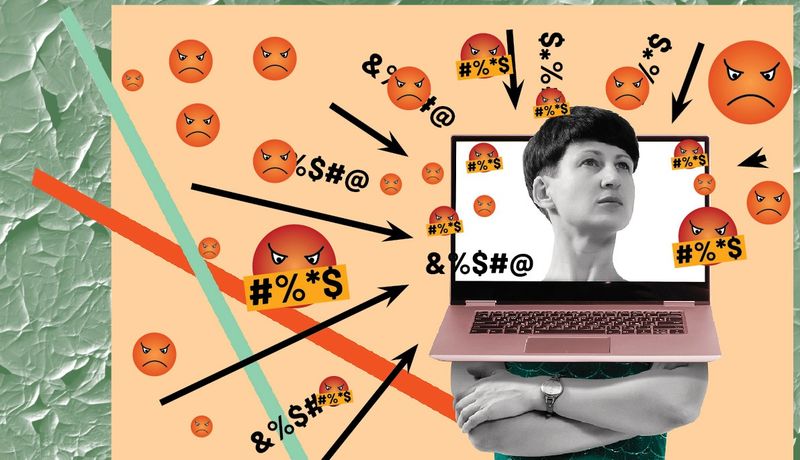
Recent debates about the potential dangers of AI, particularly the possibility of machines becoming a threat to humanity, can distract us from the current reality of AI's role in exacerbating gender-based violence and misogyny. Timnit Gebru, founder of the Distributed AI Research Institute, warns that AI companies often exploit fears of machine extinction to avoid addressing more pressing issues, such as the environmental impact of data centers and the use of AI in creating autonomous weapons.
However, we must also consider another significant concern: the intensification of violence against women and individuals with diverse sexual orientations, gender identities, and expressions.
Online and offline violence are often treated as separate issues, but harmful ideas circulating on social media do not stay confined to digital spaces. Misogynistic narratives, often spread by influencers like Andrew Tate, contribute to real-life stalking, harassment, intimidation, and physical violence against women. Research shows that gender inequality and discriminatory power relations rooted in societal norms play a pivotal role in driving intimate partner femicide.
These norms are now increasingly shaped by social media and the so-called manosphere, with influencers promoting misogynistic views that spread across Africa.
AI technologies are changing the scale and speed of gendered harms. Coordinated harassment campaigns or gender disinformation campaigns, once requiring human organization, can now run at unprecedented volumes and persistence at a lower technical cost. Generative AI can produce sexualized content from a single photo, with the majority of victims being women and gender-diverse persons. The majority of deepfake models available for public use target identifiable women.
The infrastructure of AI systems is not neutral, as they learn from training data that reproduces harmful stereotypes and racist ideas. Social media and AI systems form a closed loop, with AI-generated content amplified by AI-driven algorithms and modulated by AI, often prioritizing sensational material. These engagement-optimized algorithms fail to recognize gendered harm, particularly in Global South contexts, where women constitute only 22% of the world's AI professionals and rarely lead major social media companies.
Regulation focuses on content removal while leaving the highly profitable revenue models of these companies untouched. This neglect of accountability measures allows misogyny to generate revenue through algorithms and marketing schemes. To address these issues, we need to redesign power structures and challenge the motivations behind AI development.
Gender perspectives and harm analysis must inform solutions, such as chatbots offering survivor-centered information in local languages and policy playbooks demonstrating how AI can connect fragmented data to improve support for survivors. Ultimately, addressing the root causes of gender-based violence requires a fundamental shift in how we approach technology and its economic drivers.
Written by urgent.news from Daily Maverick's reporting — not their text. Machine-written — may contain errors; check the original before relying on it.