AI can make art in seconds – how are artists in Singapore fighting to keep their craft alive?
From illustrators protecting their work from AI training to designers navigating commercial pressures, Singapore’s creative community is finding ways to respond to generative AI while preserving the human touch in their art.
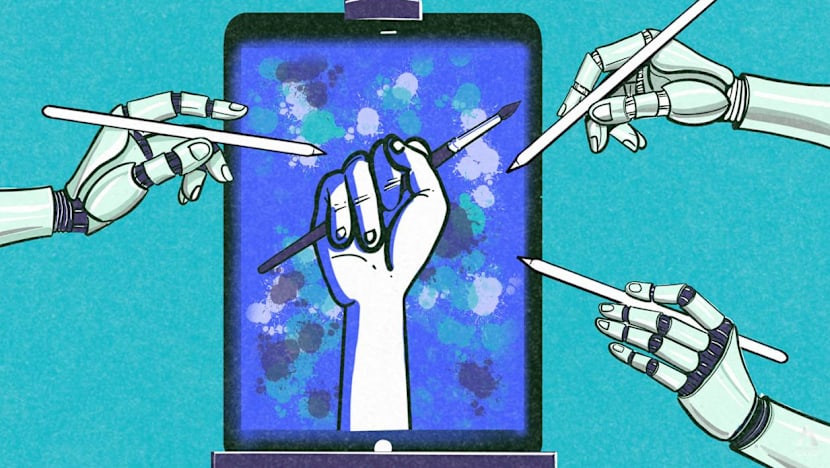
Singapore's creative scene is grappling with the rapid rise of generative AI, which can produce art in seconds from simple prompts. This technology has sparked a range of reactions from those in the industry, including curiosity, frustration, and outright rejection. Artists are concerned about copyright, consent, and the erosion of human creativity.
While machine learning has been used in animation for years, generative AI, trained on vast amounts of existing data, represents a new disruptive force. The main worry is that AI could generate art without the original creators' knowledge or consent, effectively stealing their work. OpenAI, the company behind ChatGPT, trains its models on publicly available online material, and illustrators like Goh Wei Choon find this practice unethical.
Some artists reject generative AI, while others use it for brainstorming or out of necessity. The debate extends to whether generative AI undermines the essence of art, which is individual expression shaped by personal experiences. Artists are employing various strategies to protect their work, such as adding restrictions in contracts and using tools like Glaze and Nightshade to make AI art harder to replicate.
However, the effectiveness of these measures remains uncertain as AI technology continues to evolve, and the provenance of generated images becomes increasingly difficult to trace.
Written by urgent.news from Channel News Asia's reporting — not their text. Machine-written — may contain errors; check the original before relying on it.