What’s the best way to deal with bunions? Experts share ways to ease pain and when to consider surgery
Foot specialists recommend shoes with ample toe space and softer materials to ease bunion discomfort. Properly fitted footwear can help reduce pressure and friction around the affected joint.
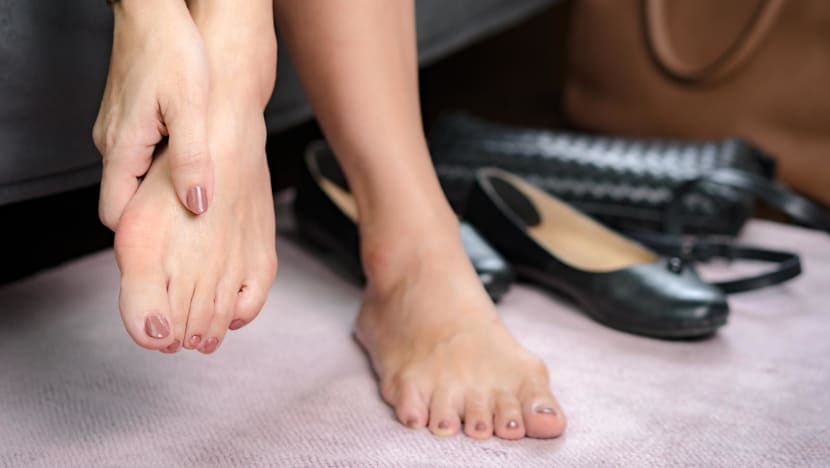
Bunions are bony bumps that form at the base of the big toe, causing the toe to angle towards other toes on the foot. These bumps can lead to pain, soreness, and difficulty walking or finding fitting shoes. Dr. Kelly Hynes, chief of the foot and ankle service at Washington University School of Medicine, explained that bunions tend to worsen over time but may not always require surgery.
The development of bunions is largely determined by genetics, with people who have flat feet, flexible joints, arthritis, or previous foot injuries being more at risk. Women are more likely to develop bunions due to their joint structure and the tightness of their shoes.
To ease bunion discomfort, foot specialists recommend wearing shoes with ample toe space and softer materials, as well as proper-fitting footwear that reduces pressure and friction around the affected joint. Using softer materials like mesh around the toe area can also provide relief compared to stiffer materials like leather. Additionally, strengthening the muscles that stabilise foot arches through exercises can reduce pain, and silicone toe spacers or splints may help slow the progression of bunions.
Over-the-counter pain relievers like ibuprofen and acetaminophen can provide temporary relief, and steroid injections may temporarily reduce inflammation and pain. However, these methods do not cure bunions or guarantee a cure. Surgery is typically considered only if conservative treatments fail to alleviate pain or if the bunion causes complications such as hammertoe.
Modern bunion surgeries involve smaller incisions and have fewer complications, but recovery still requires months. If you experience significant pain or difficulty in daily activities due to your bunion, consult a podiatric surgeon or orthopaedic surgeon specialising in foot and ankle procedures.
Written by urgent.news from Channel News Asia's reporting — not their text. Machine-written — may contain errors; check the original before relying on it.