We’re not in a cost-of-living crisis — yet
The U.S. appears to stand at the edge of a crisis. But it is under financial pressure, no doubt.
On November 3, a new U.S. Congress will be elected. Recent polls show that cost of living is a top concern for voters. In a recent poll, 84% of voters cited the cost of living as one of their most important issues. A KFF poll from September found that 52% of voters worried about affording food and 51% about utilities. Despite these concerns, most countries, including the U.S., have not yet reached a cost-of-living crisis level.
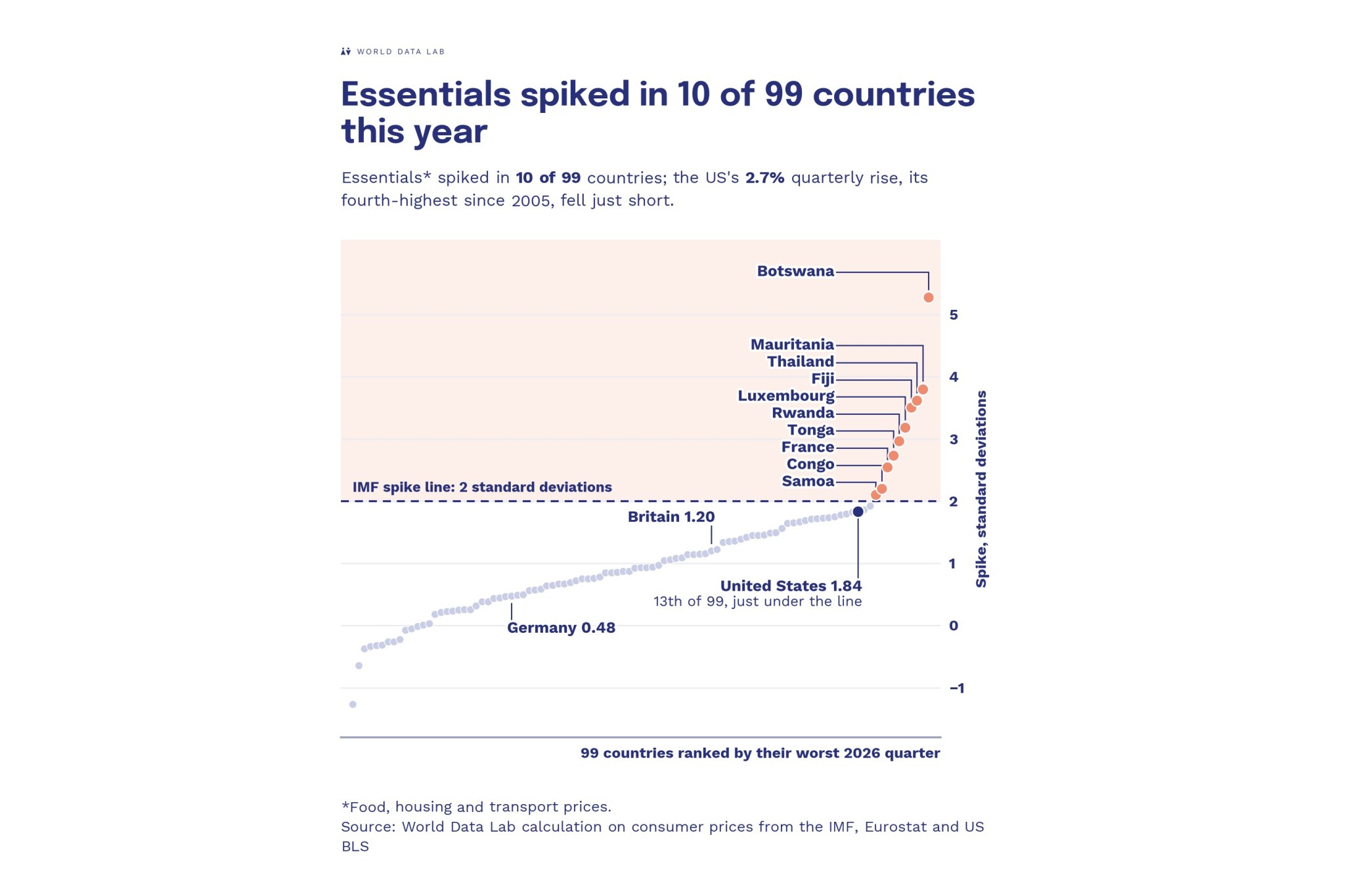
The IMF's definition of a crisis requires a spike in essential prices, which only happened in 10 of 99 selected countries this year. In the U.S., essentials rose 2.7% in Q2, the fourth-highest since 2005. However, this spike occurred during tough economic times, such as the 2008 recession and the worst inflation in 40 years in 2021 and 2022.
So far, the U.S. is still under financial pressure rather than in crisis. People still buy more extras, such as clothes, furniture, leisure, and meals out. In fact, the average person in the U.S. buys about 1.4% more of these extras this year, despite inflation. Higher prices are slowing the amount people can buy, but many still feel like a crisis because price increases are affecting their financial situation.
Consumer confidence in most countries is below its long-term average, but people are still buying more extras. Even in cities where prices spiked, such as Detroit, Boston, New York, San Francisco, and Philadelphia, people are still buying more extras. However, in 18 other countries, especially in Africa and the Middle East, people are falling into the poorest spending group due to higher prices.
These nations have seen 13 million more people join the poorest group this year, and many are buying less food and fewer extras than they did a year ago. Iran and Iraq, hit by the latest Middle Eastern war, have seen a significant drop in spending on extras, with Iraq's forecast to recover most of this loss by 2027. Overall, the cost of living crisis dominating the midterms has brought financial pressure rather than a crisis, as people pay more but still buy more.
Experts expect this trend to continue in 2027, with spending on extras rising in the U.S. and in most of the 18 countries, while those countries' share of world spending on extras remains low.
Written by urgent.news from Fortune's reporting — not their text. Machine-written — may contain errors; check the original before relying on it.