This Martian meteorite just got dubbed a Rosetta Stone. Heres why.
Geologists find Teghaza 001, a Martian meteorite that landed on Earth, among oldest ever discovered on Earth, according to NASA.
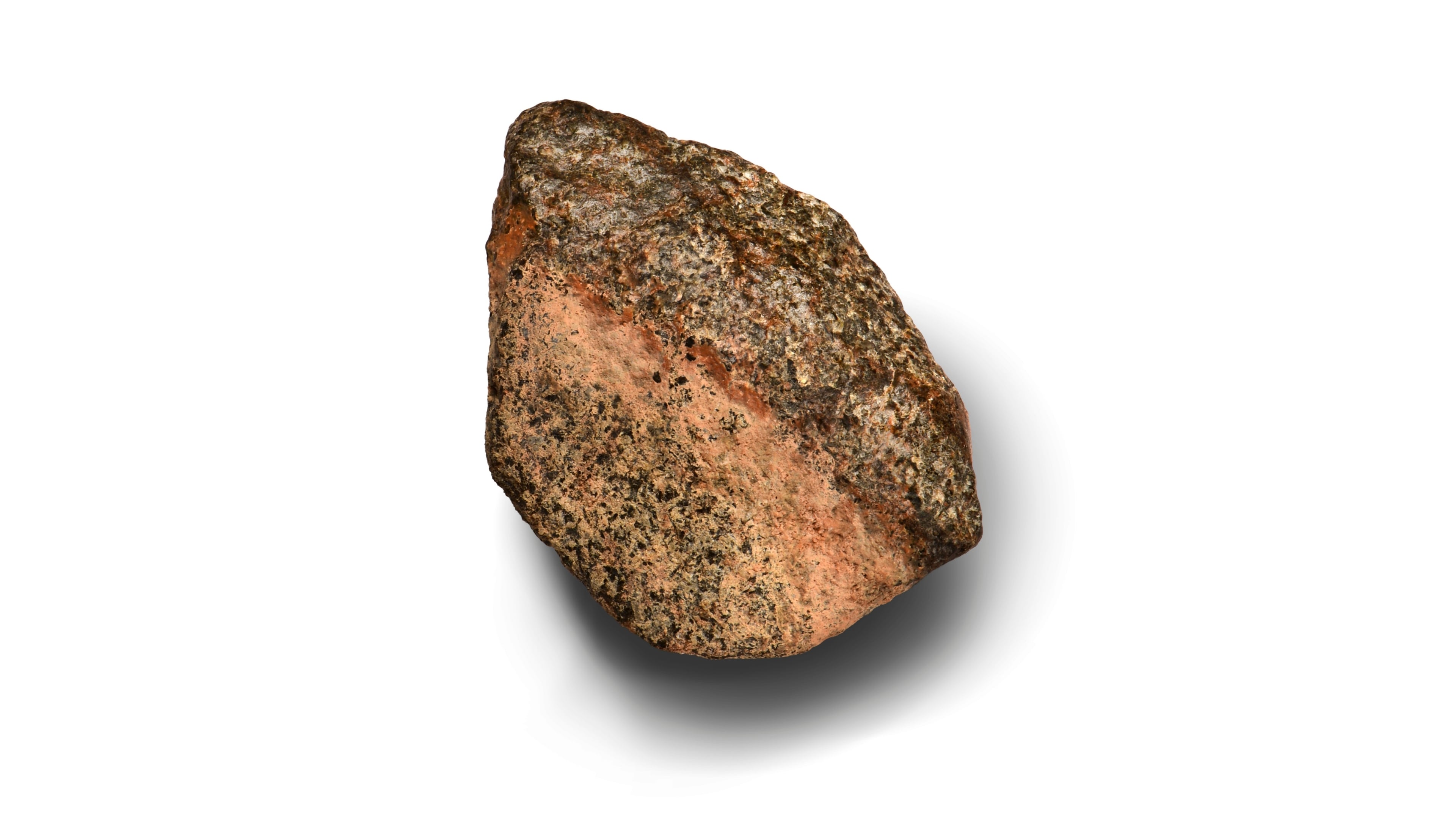
A Martian meteorite known as Teghaza 001 has been given a special title: a Rosetta Stone for Mars. <source 741d7f0a-dc6> This unique rock, discovered in the Sahara Desert in 2022, provides valuable insights into the early history of Mars. At over 4.1 billion years old, it is one of the oldest Martian meteorites ever found. The meteorite preserves a snapshot of Mars as it looked more than 4 billion years ago, likely less than 500 million years after the planet's formation.
Yang Liu, a geologist at NASA's Jet Propulsion Laboratory, initially overlooked the importance of the meteorite due to its common appearance. However, its unique texture and minerals led her to reconsider. Liu, the lead author of the findings, regards Teghaza 001 as a Rosetta Stone for Mars.
What sets Teghaza 001 apart is its distinct minerals and chemistry, which do not align with any of the three main groups of Martian meteorites: shergottites, nakhlites, and chassignites. The rock's minerals and chemistry suggest it originated from a specific location on Mars' southern highlands.
The discovery of Teghaza 001 sheds light on the early water cycle on Mars. The meteorite contains water locked inside its minerals, with some water having already lost its lighter hydrogen to space, indicating that Mars began losing its water almost immediately after its formation. This finding provides context for discussions about the potential existence of early life on Mars, as any biology would have faced a planet already drying out.
Written by urgent.news from Mashable's reporting — not their text. Machine-written — may contain errors; check the original before relying on it.