No party commands majority support as SA moves deeper into coalition politics, Ipsos survey finds
No party commands majority support ahead of South Africa's local elections, as voter disillusionment grows and half of registered voters say no party represents their views, an Ipsos survey finds.
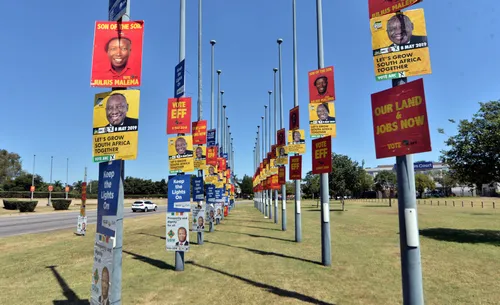
South Africa's political landscape is shifting towards coalition politics, with no single party commanding majority support, according to a recent Ipsos survey. The African National Congress (ANC), the country's largest political party, has witnessed a decline in support, dropping to 30%, while the Democratic Alliance (DA) has narrowed the gap.
The latest Khayabus Pulse of the People study, conducted between September 12 and October 13, 2026, found that no party secured a majority of support nationally. The Democratic Alliance (DA) emerged as the second-largest party, garnering 28% support, up from 19.9% in 2021. The ANC, now at 30%, saw a significant drop from 47.5% in the 2021 local government elections.
Other parties, including the uMkhonto weSizwe (MK) Party, the Economic Freedom Fighters (EFF), ActionSA, and the Inkatha Freedom Party (IFP), also made the cut, securing between 4% and 12% support. The survey revealed voter disillusionment, with 53% of eligible voters stating that they could not identify a political party that represented their views.
Voter apathy and frustration over poor service delivery were identified as key factors contributing to this disenchantment. Despite the widespread dissatisfaction, 62% of respondents expressed enthusiasm for participating in the 2026 local government elections. However, concerns were raised about voter registration and turnout, with only 29.2 million of South Africa's 44.9 million voting-age adults registered to vote.
If participation mirrors the 2021 local government elections, around 12.8 million people are expected to cast their ballots. If turnout aligns with the 2024 national and provincial elections, the figure could rise to 16.3 million. Political analyst Mari Harris warned that coalition negotiations following the elections could be fraught with uncertainty, particularly in councils where no party secures an outright majority.
Written by urgent.news from IOL's reporting — not their text. Machine-written — may contain errors; check the original before relying on it.